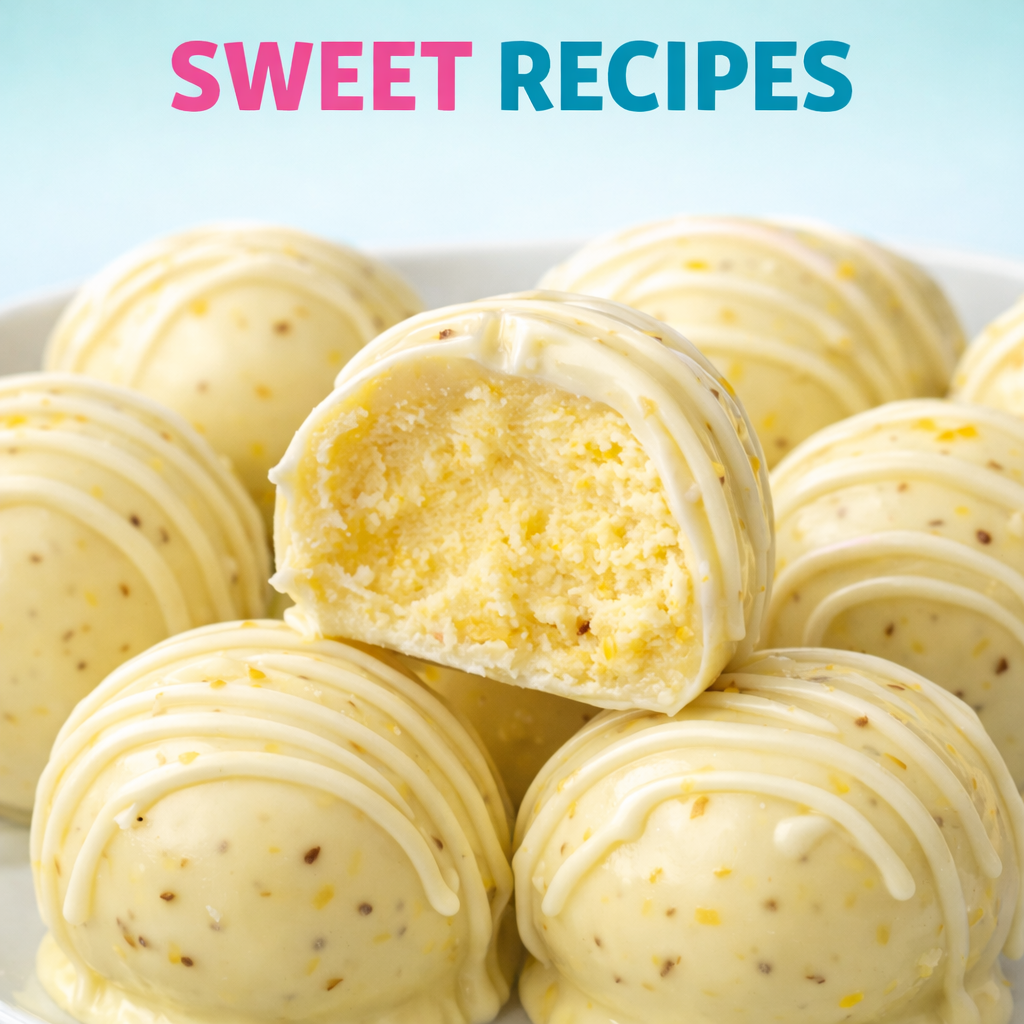
The Best White Chocolate Lemon Truffles (No-Bake)
Easy no-bake lemon truffles made with cream cheese, cookies, and fresh lemon zest, coated in white chocolate. A quick, creamy, and refreshing dessert perfect for any occasion.
📋 Table of Contents
Why You’ll Love This Recipe
White chocolate and lemon is a difficult pairing for a technical reason, not a culinary one. White chocolate contains cocoa butter but no cocoa solids, so it seizes on contact with even a small amount of water. Lemon juice is mostly water.
The answer is to take the flavour from the zest instead. The aromatic oils in the peel carry the lemon character without the liquid, and oil is entirely compatible with a chocolate ganache. Where juice is genuinely needed, it goes in with the warm cream rather than into the chocolate directly.
White chocolate also melts at a lower temperature than dark and scorches easily. Melt it gently and stop while a few pieces remain solid; residual heat finishes the job without overheating the rest.
Chill the ganache until firm before rolling, and work in short sessions. Warm hands soften the surface faster than you would expect, and a softened truffle will not hold a round shape.
White Chocolate Lemon Truffles (No-Bake)
Ingredients
Equipment
Method
- Make the filling
- In a bowl, mix cream cheese and butter until smooth.
- Add powdered sugar, lemon juice, zest, and vanilla.
- Mix until creamy.
- Fold in crushed cookies until a soft dough forms.
- Shape
- Scoop about 1 tablespoon of mixture.
- Roll into smooth balls.
- Place on a lined tray.
- Chill
- Refrigerate for 30–45 minutes (or freeze 15–20 min).
- 👉 This step is crucial so they don’t fall apart when dipping.
- Melt chocolate
- Melt white chocolate in short bursts (microwave) or over a double boiler.
- Stir until smooth. Add coconut oil if needed.
- Coat
- Dip each ball into melted chocolate.
- Let excess drip off, then place back on tray.
- Decorate
- Drizzle extra white chocolate on top (like in your image).
- Optional: sprinkle extra lemon zest.
- Set
- Chill again for 15–20 minutes until coating hardens.
Notes
- If mixture is too soft → add more crushed cookies.
- If too dry → add a little more cream cheese.
- Use high-quality white chocolate for smooth coating (cheap ones crack).
- Keep truffles cold while dipping.
Handling the Hot Mixture
For the smoothest White Chocolate Lemon Truffles, make sure the cream cheese is fully softened before mixing. Cold cream cheese leaves tiny lumps that become more noticeable after chilling. In professional pastry kitchens, we often let cream cheese sit at room temperature for about 30 minutes before using it in no-bake fillings.
Finely crushing the cookies also makes a major difference. Larger crumbs create rough edges that can crack through the chocolate coating during dipping. A food processor gives the most even texture, but sealing the cookies in a zip bag and crushing them with a rolling pin works surprisingly well too.
White chocolate can be tricky because it overheats faster than dark chocolate. During testing, batches melted too quickly in the microwave became thick and grainy. Heating in short bursts and stirring often keeps the cocoa butter stable and creates a glossy coating. Adding a teaspoon of coconut oil improves fluidity and helps the coating look smoother once set.
If the filling feels too soft while shaping, refrigerate it for 10 minutes before rolling. Warm kitchens can soften the butter and cream cheese faster than expected. On the other hand, if the mixture becomes dry or crumbly, mixing in an extra spoonful of cream cheese restores the creamy texture without affecting flavor.
Store the finished truffles in an airtight container in the refrigerator for up to five days. They taste best slightly chilled because the coating stays firm while the center remains creamy and rich. For cleaner presentation, wipe the dipping fork between batches to prevent hardened chocolate from creating rough surfaces.
Why Fudge and Caramel Turn Grainy
A boiled sugar syrup is a supersaturated solution: it holds more sugar than the water can normally dissolve. That state is unstable. One stray crystal is enough to start a chain reaction that turns the whole batch sandy, and it happens in seconds.
Three things trigger it. Stirring once the syrup is boiling. Undissolved sugar clinging to the side of the pan, which falls back in and seeds the mixture. And disturbing the syrup while it is still hot instead of letting it cool undisturbed first.
The fixes follow directly. Wash the pan walls down with a wet pastry brush early on. Stop stirring once it boils, and swirl the pan instead if you need to even out the heat. For fudge, cool it to about 43 °C (110 °F) before you beat it. Beating hot fudge is the single most common reason a batch turns grainy.
Some ingredients block crystals physically. Corn syrup, honey, butter, and cream all get in the way of the sugar lattice forming, which is why nearly every reliable caramel recipe includes at least one of them. They are not there for flavour alone.
Temperature decides the final texture, and the margins are narrow. Soft-ball, 112 to 116 °C, gives fudge and fondant. Firm-ball, 118 to 121 °C, gives chewy caramels. Hard-crack, 149 to 154 °C, gives brittle and toffee. A few degrees is the difference between a caramel you can cut and one you cannot chew.
Coatings and Finishes
These lemon truffles adapt beautifully to different flavors and dietary needs. For a stronger citrus profile, add a little orange zest alongside the lemon for a brighter and slightly floral aroma. Some testers also enjoyed mixing finely shredded coconut into the filling because it added a subtle chewiness that paired well with the creamy center.
Gluten-free vanilla cookies can easily replace regular cookies without changing the texture too much. For a lighter flavor, mascarpone cheese may be used instead of cream cheese, creating a softer and silkier filling. If you prefer a sharper lemon taste, a few drops of lemon extract intensify the citrus notes without making the mixture too wet.
Dark or ruby chocolate coatings also work well when a less sweet finish is preferred. Dark chocolate creates a richer contrast against the tangy lemon center, while ruby chocolate adds a subtle berry flavor and natural pink color that looks beautiful on dessert trays.
Frequently Asked Questions
- Q: Why are my truffles falling apart during dipping? This usually means they were not chilled long enough. Refrigerating until firm helps the centers stay stable while coating with melted chocolate.
- Q: Can I freeze White Chocolate Lemon Truffles? Yes. Freeze them in a sealed container for up to two months. Thaw overnight in the refrigerator to prevent condensation from softening the coating.
- Q: What is the best white chocolate for coating? High-quality white chocolate bars or couverture chocolate melt more smoothly and create a thinner, shinier shell compared to lower-cost baking chips.
- Q: Can I make these without cream cheese? Mascarpone cheese can replace cream cheese for a milder flavor and softer texture. The filling may need extra chilling before shaping.
- Q: Why did my white chocolate crack? Cracking often happens when the chocolate coating is too thick or the truffles are extremely cold. Let the chilled centers sit at room temperature for 2 minutes before dipping.
- Q: How far in advance can I prepare them? These truffles can be made 2 to 3 days ahead. In fact, the lemon flavor becomes more balanced and fragrant after resting overnight.