The Best Nutella Swirl Easter Bread (Soft Braided Sweet Bread)
Soft and fluffy Nutella swirl Easter bread made with rich brioche dough and chocolate hazelnut filling. Perfect for brunch, dessert, or holiday baking.
📋 Table of Contents
Why You’ll Love This Recipe
An enriched, braided bread with a filling has two failure points, and they are unrelated to each other.
The first is the rise. Butter, eggs, and sugar all slow yeast activity, so a sweet dough takes considerably longer to prove than a plain one of the same weight. That is normal rather than a sign of dead yeast. Judge it by the dough: a floured finger pressed in should leave a dent that springs back slowly and stays slightly visible.
The second is the filling escaping. Nutella softens to a liquid at oven temperature and will run out of any open seam. Spread it thinly, leave a clear border, and pinch the seams firmly closed before shaping.
Chilling the rolled log for twenty minutes before cutting and braiding makes it far easier to handle. Cold filling stays put while you work, where a room-temperature one smears across everything.
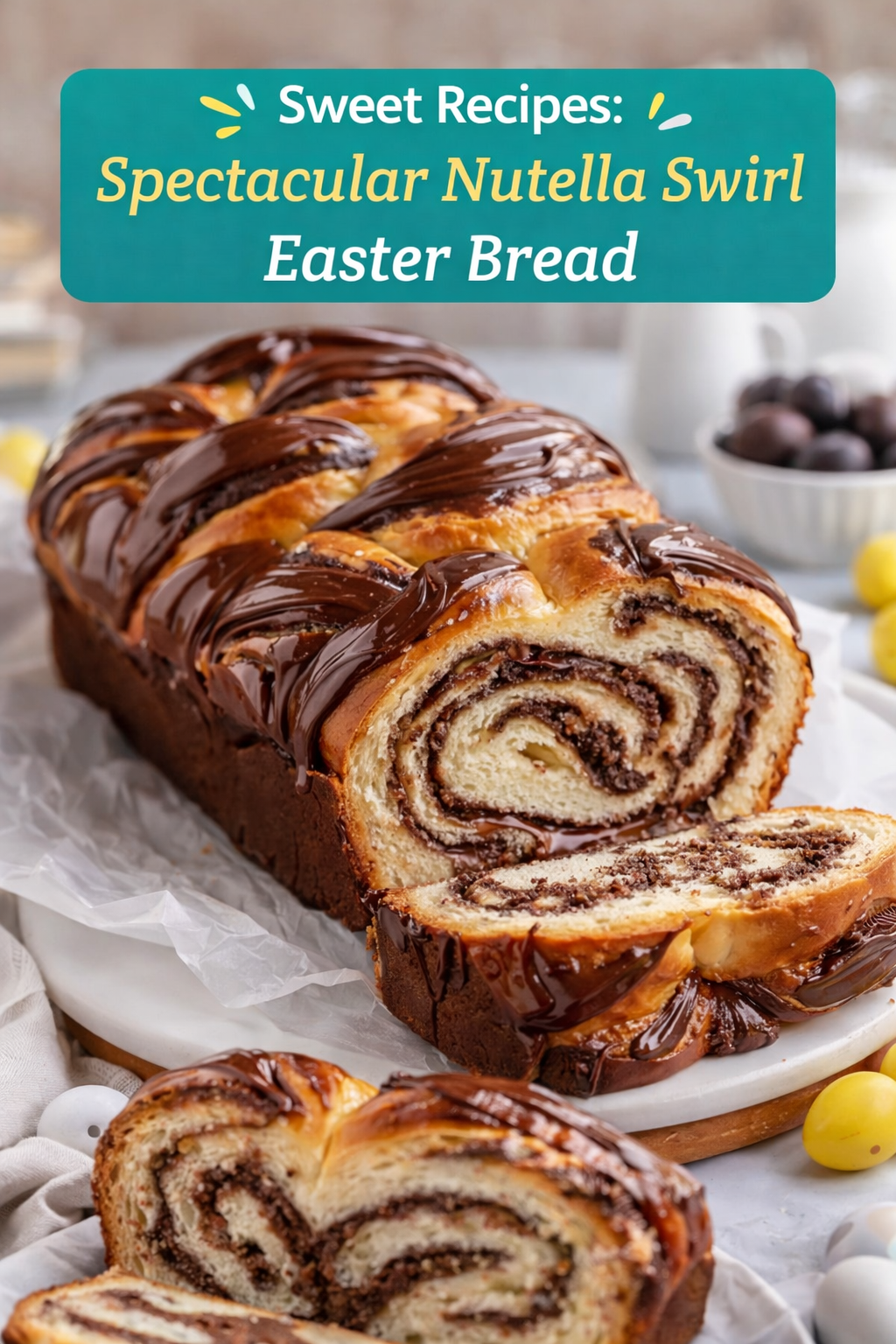
Nutella Swirl Easter Bread (Soft Braided Sweet Bread)
Ingredients
Equipment
Method
- Activate Yeast
- In a bowl, combine warm milk + yeast + 1 tsp sugar
- Let sit 5–10 minutes until foamy
- Make Dough
- Add sugar, eggs, butter, vanilla, and salt
- Gradually mix in flour until a soft dough forms
- Knead 8–10 minutes (by hand or mixer) until smooth and elastic
- First Rise
- Place dough in a greased bowl
- Cover and let rise 1–1.5 hours until doubled
- Shape & Fill
- Roll dough into a rectangle (~10×16 inches)
- Spread Nutella evenly (leave edges clean)
- Roll tightly into a log
- Create Swirl
- Slice the log lengthwise (exposes layers)
- Twist the two halves together (cut side up)
- Form into a braid or loaf shape
- Second Rise
- Place on lined baking sheet
- Cover loosely and rise 30–45 minutes
- Bake
- Preheat oven to 350°F (175°C)
- Brush with egg wash
- Bake 25–30 minutes until golden brown
- 🍽️ Serving
- Cool slightly before slicing
- Best served warm
- Optional: dust with powdered sugar or drizzle glaze
Notes
Chill Nutella slightly if too runny
Use a sharp knife when slicing dough for clean swirls
If browning too fast, cover loosely with foil
Shaping and Handling
Temperature plays a major role in the success of enriched dough recipes like this Nutella Swirl Easter Bread. Milk that feels too hot to the touch can weaken or kill the yeast, leading to poor rise and a heavy texture. Warm milk around body temperature works best because it activates the yeast gently while still encouraging steady fermentation.
Kneading the dough fully is another important step. The dough should become smooth, stretchy, and slightly tacky rather than dry. During recipe testing, under-kneaded dough tore easily when twisted and baked into a tighter crumb. Proper gluten development creates the soft pull-apart texture associated with bakery brioche breads.
If the Nutella becomes too runny while spreading, refrigerate it briefly before use. Slightly chilled chocolate spread stays in place better during rolling and creates cleaner swirls once sliced. Using a sharp knife to cut the dough log lengthwise also exposes the layers neatly and prevents the filling from smearing.
One common mistake is over-proofing during the second rise. If the braid becomes overly puffy before baking, it may spread sideways and lose definition in the oven. The dough should look slightly expanded and airy but still hold its shape.
For storage, keep the bread wrapped tightly at room temperature for up to two days. Reheating slices for a few seconds restores the soft crumb and slightly melts the Nutella again. This bread can also be frozen after baking; wrap individual slices well to prevent freezer dryness.
Fillings and Finishes
This braided Easter bread adapts beautifully to different fillings and seasonal flavors. Cinnamon sugar and chopped pecans create a warmer, more traditional holiday version, while raspberry jam layered with dark chocolate produces a slightly tart contrast against the rich dough.
For extra texture, sprinkle finely chopped toasted hazelnuts over the Nutella before rolling. The nuts add crunch and intensify the roasted hazelnut aroma already present in the chocolate spread. Some bakers also enjoy adding orange zest directly into the dough for a citrus note that balances the sweetness.
A dairy-free version can be prepared using plant-based butter and oat milk, although the crumb may be slightly less rich. Bread flour may also replace all-purpose flour if a chewier texture is preferred. For a festive finish, drizzle vanilla glaze over the cooled braid or top with sliced almonds before baking for added crunch and visual contrast.
Proofing and Frying, by Feel and by Thermometer
Rising times in a recipe are an estimate, not an instruction. Dough responds to the temperature of your kitchen, so the same dough can take fifty minutes in July and over two hours in a cold room. Judge it by the dough itself.
Use the poke test. Flour a fingertip and press about a centimetre into the dough. If the dent springs back immediately, it needs more time. If it springs back slowly and stays slightly visible, it is ready. If it does not spring back at all and the surface sighs or deflates, it has gone too far, and the finished crumb will be coarse with a faint alcoholic edge.
Enriched doughs behave differently from lean ones. Butter, eggs, and sugar all slow yeast down, so a sweet dough takes noticeably longer than a plain bread dough of the same weight. That is normal, not a sign the yeast is dead.
If the recipe is fried, oil temperature is the whole game. Hold it at 175 °C (350 °F). Below roughly 165 °C the dough sits in the oil too long and absorbs it, which is exactly what makes a doughnut greasy. Above about 190 °C the outside colours before the middle is cooked. Every piece you add drops the temperature, so fry in small batches and let the oil come back up between them. This is one of the few places in baking where guessing does not work.
Frequently Asked Questions
- Q: Why didn’t my dough rise properly? The yeast may have been expired or the milk too hot. Yeast should foam during activation before mixing into the dough.
- Q: Can I prepare the dough overnight? Yes. After the first rise, refrigerate the dough overnight. This slow fermentation actually improves flavor and makes shaping easier the next day.
- Q: How do I prevent Nutella from leaking out? Leave a clean border around the edges and avoid overfilling. Chilled Nutella also stays more stable during shaping and baking.
- Q: Can I use homemade chocolate spread? Absolutely. Homemade hazelnut spread works well as long as it is thick enough to spread without becoming watery.
- Q: Why is my bread dense instead of fluffy? Dense texture usually comes from under-kneading or adding too much flour. The dough should remain soft and slightly sticky before rising.
- Q: What’s the best way to serve this bread? Slightly warm is best. The crumb becomes softer and the Nutella swirls turn creamy again, giving the bread its best texture and flavor.