The Best Easy Creamy Lemon Cheesecake Bars
Creamy lemon cheesecake bars with a buttery graham cracker crust and tangy citrus flavor. Easy homemade dessert recipe perfect for any occasion.
📋 Table of Contents
Why You’ll Love This Recipe
Lemon in a cheesecake does two things at once, and the second one is easy to miss. It adds flavour, and it adds acid, which reacts with the dairy proteins and firms the set. That means a lemon cheesecake needs slightly gentler treatment than a plain one.
Most of the flavour lives in the zest rather than the juice. The aromatic oils are in the coloured outer skin; the juice is mostly water and acid. Chasing more lemon flavour by adding juice adds liquid and loosens the set, while zest gives aroma without it.
Mix on low speed once the eggs are in. Air beaten into the batter expands in the oven, lifts the surface, and collapses as it cools, which is what cracks the top.
Pull them while the centre still wobbles like loose jelly. Bars keep cooking in the hot tin, and a filling that is firm all the way through in the oven is dry once cold.
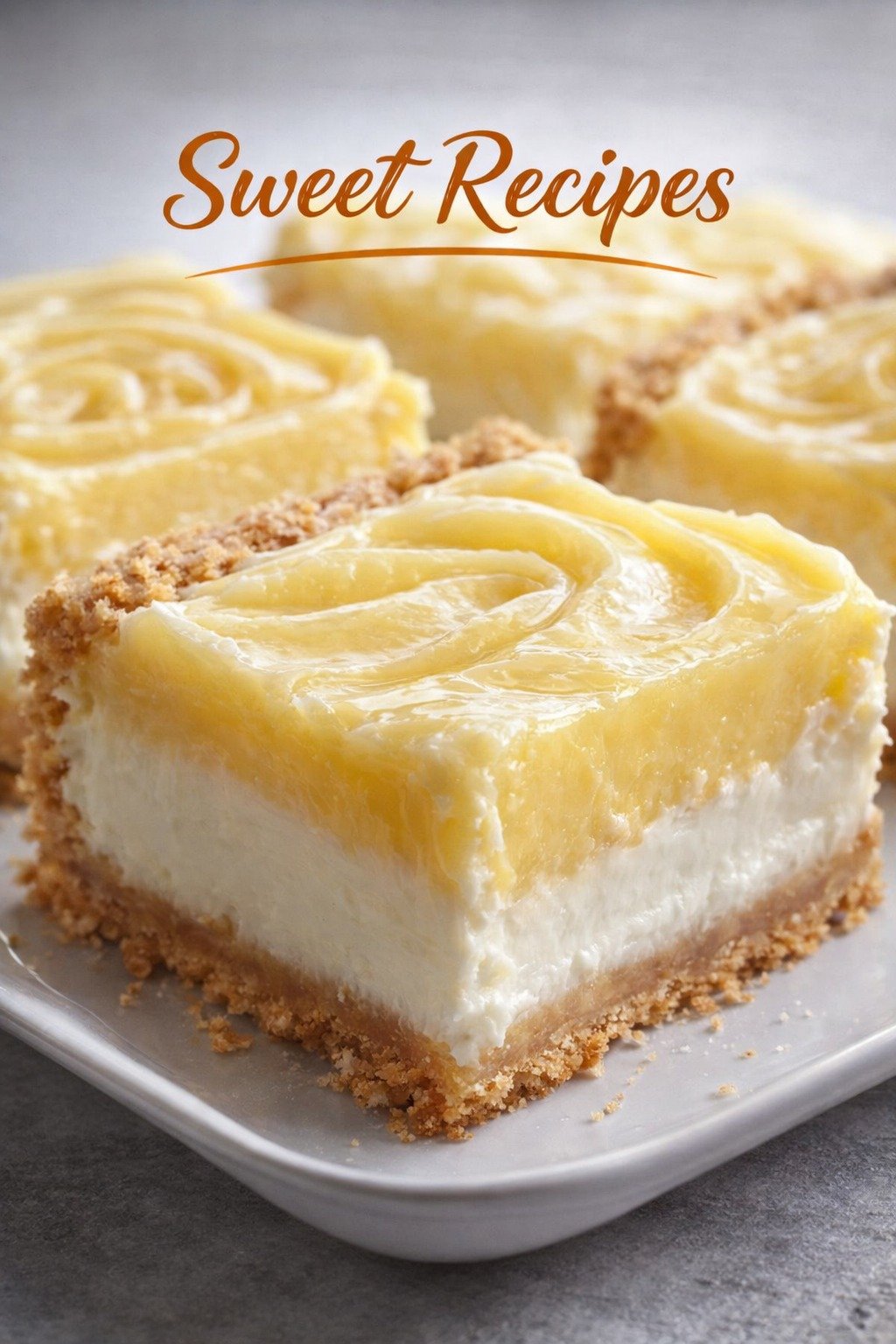
Creamy Lemon Cheesecake Bars
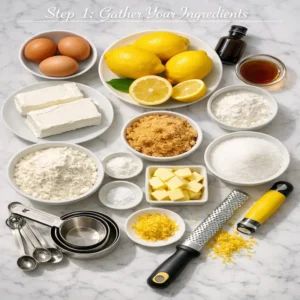
Ingredients
Equipment
Method
- Prepare the crust
- Preheat oven to 325°F (160°C).
- Line an 8×8-inch (20×20 cm) baking pan with parchment paper.
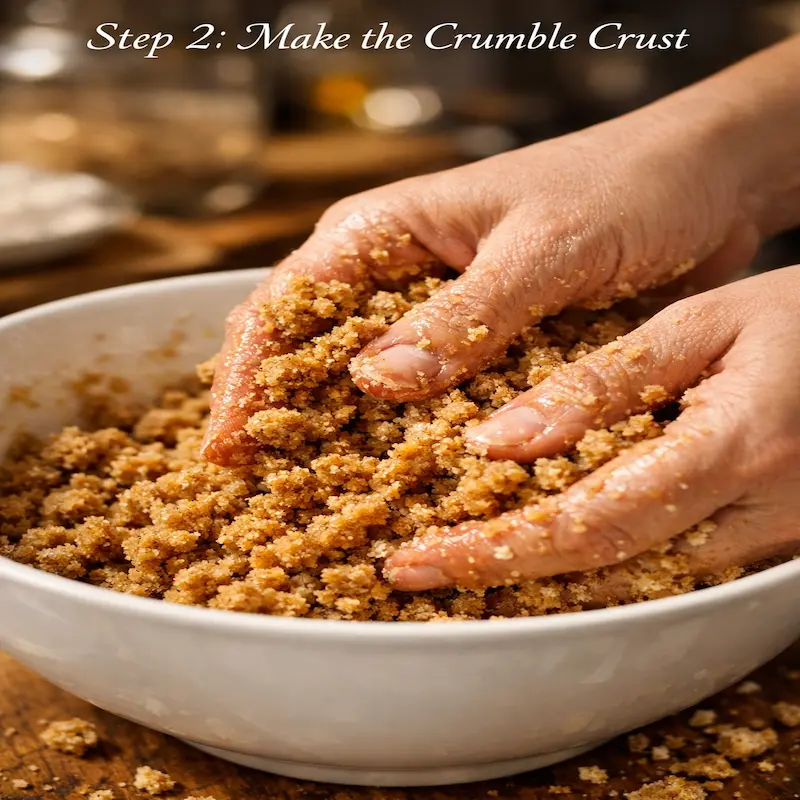
- Mix graham crumbs, sugar, and melted butter until combined.
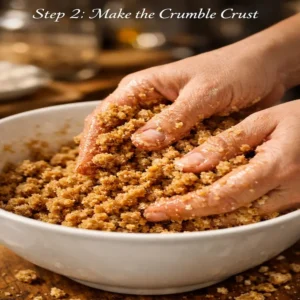
- Press firmly into the bottom of the pan.
- Bake for 8–10 minutes, then let cool slightly.
- Make the filling
- Beat cream cheese until smooth and creamy.
- Add sugar and mix until combined.
- Beat in eggs one at a time.
- Add sour cream, lemon juice, zest, and vanilla.
- Mix until smooth (avoid overmixing).
- Assemble & bake
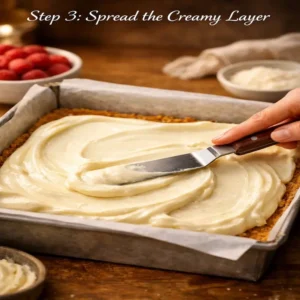
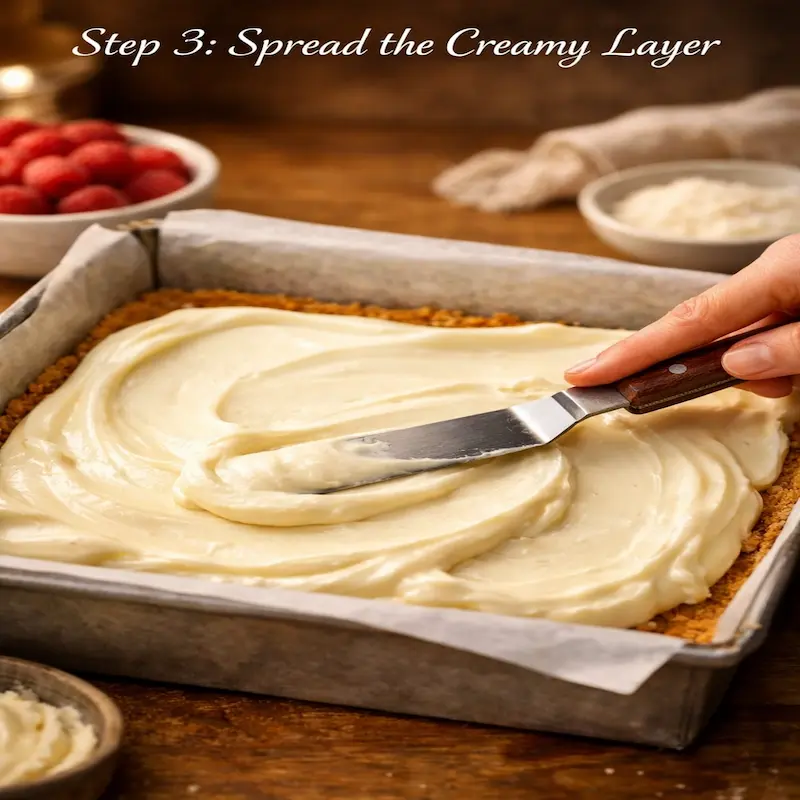
- Pour filling over the crust.
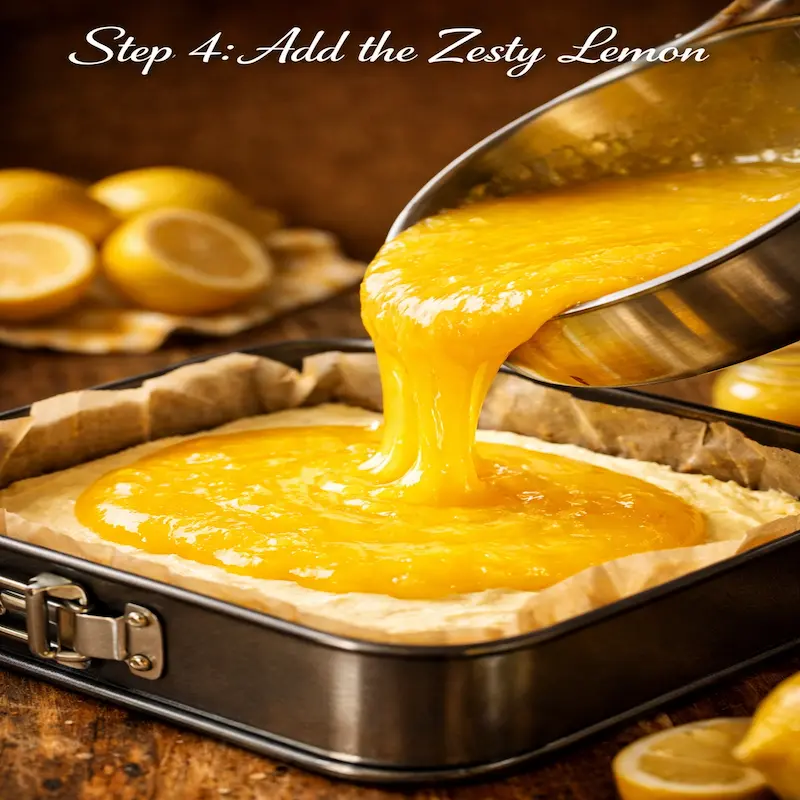
- If using lemon curd, drop small spoonfuls on top and swirl with a knife.
- Bake for 30–35 minutes, until center is slightly set but still soft.
- Cool & chill
- Let cool at room temperature for 1 hour.
- Refrigerate for at least 3 hours (preferably overnight).

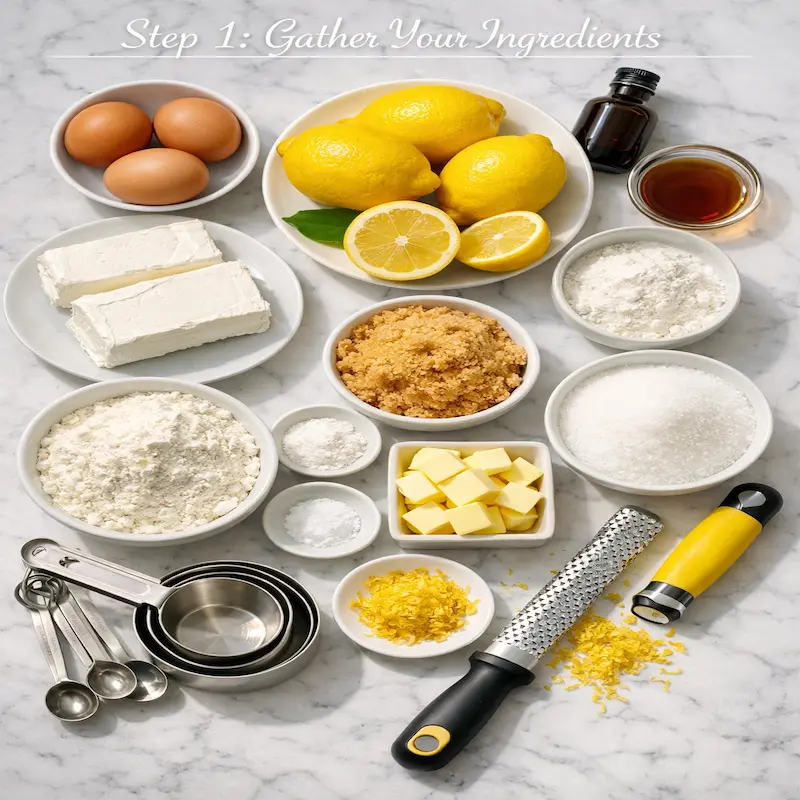
- Slice into squares using a clean, sharp knife.


Notes
- Use room temperature cream cheese for smooth texture
- Don’t overbake—center should jiggle slightly
- Chill fully before cutting for clean edges
- Wipe knife between cuts for neat squares
Notes on the Method
The most important factor in achieving a smooth cheesecake layer is ingredient temperature. Cream cheese must be fully softened before mixing; otherwise, small lumps will remain and affect the final texture. In our tests, even slight chill in the cream cheese resulted in a grainy batter that never fully corrected after baking.
Another common mistake is overmixing after adding the eggs. This introduces excess air, which causes the cheesecake to puff up in the oven and then collapse while cooling, sometimes leading to cracks. The correct approach is to mix just until combined, keeping the batter dense and stable.
For clean slicing, chilling overnight is not optional. It allows the fats to fully stabilize. A warm knife wiped between cuts ensures sharp, bakery-style edges.
Cracks, Water Baths, and the Jiggle Test
A crack is a structural failure, not bad luck. It has two causes, and they compound.
The first is over-baking. Egg proteins set, then keep tightening if the heat continues, squeezing water out and pulling the surface apart. The second is the cake shrinking as it cools while its edges are still stuck to the pan. The middle pulls inward, the rim holds, and the top tears between them.
Air is the third factor. Beating vigorously after the eggs go in whips bubbles into the batter. Those bubbles expand in the oven, lift the surface, then collapse. Mix on low speed once eggs are in, and only until combined.
A water bath is not fussiness. Surrounding the pan with hot water caps the temperature at the edges near 100 °C and keeps the oven humid, so the outside cannot race ahead of the centre. Wrap the pan base well, or set it inside a larger pan rather than directly in the water.
For doneness, use the jiggle test rather than a timer. Nudge the pan. The outer few centimetres should be set, and a circle in the middle roughly the size of your palm should still wobble like loose jelly. It looks underdone, and it is meant to. It carries on setting as it cools. A cheesecake firm all the way through in the oven is already over-baked.
Then run a thin knife around the rim as soon as it comes out, so the cake can shrink freely, and cool it slowly: oven off, door ajar, an hour inside before it goes anywhere near the fridge.
Flavour Variations
For a more intense citrus profile, add a touch of lime or orange zest alongside the lemon. This creates a layered citrus aroma that feels brighter and more complex. A graham crust can also be replaced with digestive biscuits or even crushed vanilla wafers for a sweeter base.
If you prefer a lighter version, replace sour cream with Greek yogurt. For a richer dessert, swirl lemon curd into the batter before baking to create pockets of tangy sweetness throughout each slice.
Frequently Asked Questions
- Q: Why did my cheesecake crack? It was likely overbaked or cooled too quickly. Bake until slightly jiggly and cool gradually.
- Q: Can I skip sour cream? Yes, but the texture will be slightly less creamy and more dense.
- Q: How long should I chill it? At least 3 hours, but overnight chilling gives the best structure and flavor.
- Q: Can I freeze these bars? Yes, they freeze well for up to 1 month when tightly wrapped.