The Best Fresh Mango Strawberry Swirled Slushies
Mango Strawberry Swirled Slushies are a refreshing and bright summer drink made by blending sweet mango and tangy strawberry into beautifully swirled frozen layers. Perfect for hot days, parties, or a quick fruity treat, this slushie delivers a cool and colorful burst of flavor.
📋 Table of Contents
Why You’ll Love This Recipe
A slushie is a texture problem disguised as a drink. What separates a smooth one from a glassful of ice shards is the size of the crystals, and that is controlled by sugar.
Sugar lowers the freezing point of the mixture, so at freezer temperature part of the liquid stays unfrozen and the ice that does form stays fine. A slushie made from fruit and ice alone freezes into coarse crystals and separates within minutes. This is also why reducing the sugar makes it icier, not lighter.
Use frozen fruit rather than fresh fruit plus ice. Ice dilutes the flavour as it melts; frozen fruit chills the mixture with fruit rather than with water, so the taste stays concentrated.
For the swirl, blend the two purées separately and layer them without mixing. Pour one down the side of the glass, then the other. Any stirring at all turns the two colours into a single muddy one.
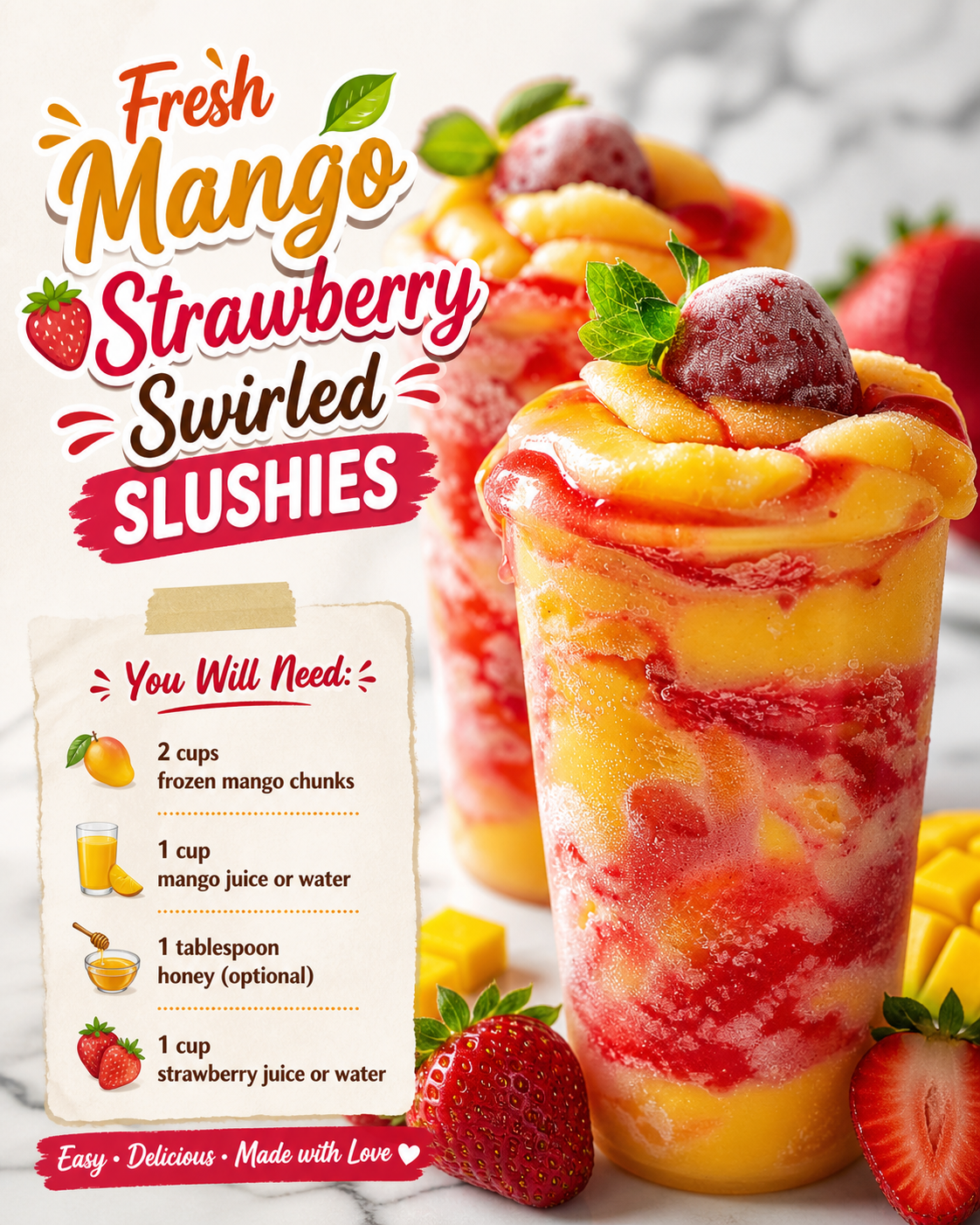
Fresh Mango Strawberry Swirled Slushies
Ingredients
Equipment
Method
- Make the Mango Slush
- Add frozen mango chunks, mango juice, and honey into a blender.
- Blend until smooth and thick (slushie consistency).
- If too thick, add a splash more liquid; if too thin, add more frozen mango.
- Set aside or place in freezer while making the second layer.
- Make the Strawberry Slush
- Add strawberries, strawberry juice, and sweetener into the blender.
- Blend until smooth and slightly thick.
- Adjust consistency the same way as above.
- Assemble the Swirl
- Spoon a layer of mango slush into a glass.
- Add a layer of strawberry slush.
- Repeat layers until the glass is full.
- Use a spoon or straw to gently swirl for that signature marbled look.
- Garnish & Serve
- Top with fresh fruit and mint leaves.
- Serve immediately with a straw or spoon.
Notes
For stronger flavor, use juice instead of water.
Chill your glasses beforehand for longer-lasting slushiness.
Blend layers separately to keep colors vibrant.
Freezer Notes
The secret to thick, frosty slushies without watered-down flavor is controlling the liquid ratio carefully. Start with less juice than you think you need and blend gradually. Mangoes naturally release moisture while blending, especially if they are fully ripe before freezing. If the mixture becomes too loose, add more frozen fruit rather than ice cubes. Ice melts faster and weakens the fruit flavor noticeably after a few minutes.
A high-speed blender creates the smoothest texture, but even a standard blender works well if you pulse in short bursts first. Over-blending generates heat, which melts the frozen fruit and turns the slush thin. I usually blend for 20–30 seconds, scrape down the sides, then pulse again briefly until the texture looks thick and spoonable.
For a cleaner swirl effect, freeze the mango layer for 5 minutes while preparing the strawberry layer. This slight temperature difference helps the colors stay separated instead of blending together too quickly. Chilled glasses also slow down melting and keep the slushie frosty longer, especially outdoors on hot days.
Taste your strawberries before adding sweetener. Very ripe strawberries often need little or no honey. If the berries are tart, a small drizzle of honey softens the acidity without overpowering the fruit. Fresh lime juice is another professional trick that brightens both flavors and adds freshness without making the drink sour.
Leftovers can be frozen in airtight containers for several hours. Before serving again, let the slush soften slightly and re-blend briefly for the best texture. Stirring by hand alone usually leaves icy chunks behind.
Swaps and Substitutions
This mango strawberry slushie recipe adapts well to different fruits and dietary preferences. For a creamier tropical version, replace part of the juice with coconut milk. The coconut adds richness while complementing the mango beautifully. Pineapple also works especially well in the mango layer and adds a sharper tropical note.
If you prefer a lower-sugar version, skip the honey entirely and rely on naturally sweet ripe fruit. Frozen peaches can replace mango when mangoes are out of season, while raspberries create a more tart berry layer with a deeper red color.
For parties, turn the recipe into frozen mocktails by adding sparkling water just before serving. Adults sometimes enjoy a splash of coconut rum or strawberry liqueur blended into the fruit for summer gatherings. To make the drink extra refreshing, freeze mint leaves into ice cubes and use them as garnish.
Vegan and dairy-free drinkers can enjoy the recipe exactly as written, especially when using water instead of juice for a lighter finish. Adding chia seeds after blending creates a thicker texture and a subtle nutritional boost without changing the flavor significantly.
Why Homemade Freezes Harder Than Store-Bought
Texture in a frozen dessert comes down to one thing: the size of the ice crystals. Small crystals read as smooth, large ones read as icy. Crystals grow when water freezes slowly and when a partly thawed mixture refreezes, which is why the freezer door matters as much as the recipe.
Two ingredients work against large crystals. Sugar lowers the freezing point, so more of the water stays liquid at freezer temperature. Fat physically blocks crystals from joining up. That is why a low-fat, low-sugar version of the same recipe always comes out harder and grainier, and why cutting the sugar “to make it lighter” backfires.
Commercial ice cream is softer for two reasons you cannot fully copy at home: stabilisers that bind free water, and overrun, which is air whipped in during churning. A tub from the shop can be up to half air by volume. A homemade batch is much denser, so it freezes harder.
What does work at home: a tablespoon or two of a liquid that will not freeze, such as corn syrup or a spirit, keeps the mixture softer without changing the flavour much. Freeze in a shallow container rather than a deep one so the whole batch passes through the crystal-forming range quickly. Press a sheet of plastic wrap directly onto the surface before the lid goes on, which keeps ice from forming on top. And let it sit at room temperature for ten to fifteen minutes before scooping.
Frequently Asked Questions
- Q: Can I use fresh fruit instead of frozen fruit? Yes, but the texture will be thinner unless you add ice. Frozen fruit creates a smoother, richer slush without diluting the flavor.
- Q: Why did my slushie separate so quickly? Too much liquid or over-blending usually causes separation. Adding extra frozen fruit and serving immediately helps maintain the thick texture.
- Q: Can I prepare these slushies ahead of time? You can freeze the blended layers separately for a few hours. Re-blend briefly before serving to restore the smooth consistency.
- Q: What is the best mango variety for this recipe? Ataulfo or honey mangoes work especially well because they have a naturally creamy texture and less fibrous flesh.
- Q: How do I create bright swirl layers? Keep both fruit mixtures thick and spoon them gently into the glass instead of pouring too quickly. Swirl lightly with a spoon to avoid blending the colors completely.