The Best Raspberry Cheesecake with a Creamy Homemade Filling
This raspberry cheesecake recipe is ultra creamy, rich, and easy to make. Made with fresh raspberries and a buttery graham cracker crust, it’s the perfect homemade dessert for any occasion.
📋 Table of Contents
Why You’ll Love This Recipe
A raspberry cheesecake asks a crumb crust to stay crisp underneath a wet filling for hours. Nothing about that is automatic.
Pressing the crust firmly and chilling it before filling helps. Sealing the surface with a thin brush of melted chocolate helps more, because it puts a genuine waterproof layer between the biscuit and everything above it.
Raspberries bring their own complication. They carry a lot of liquid and a great many seeds. Straining the purée removes the seeds and lets you reduce the liquid over gentle heat, which concentrates the flavour and takes out the water that would otherwise soften the set.
For the filling itself, mix on low once the eggs go in. Beating air into a cheesecake batter gives bubbles that expand in the oven, lift the surface, then collapse, and that collapse is what tears the top.
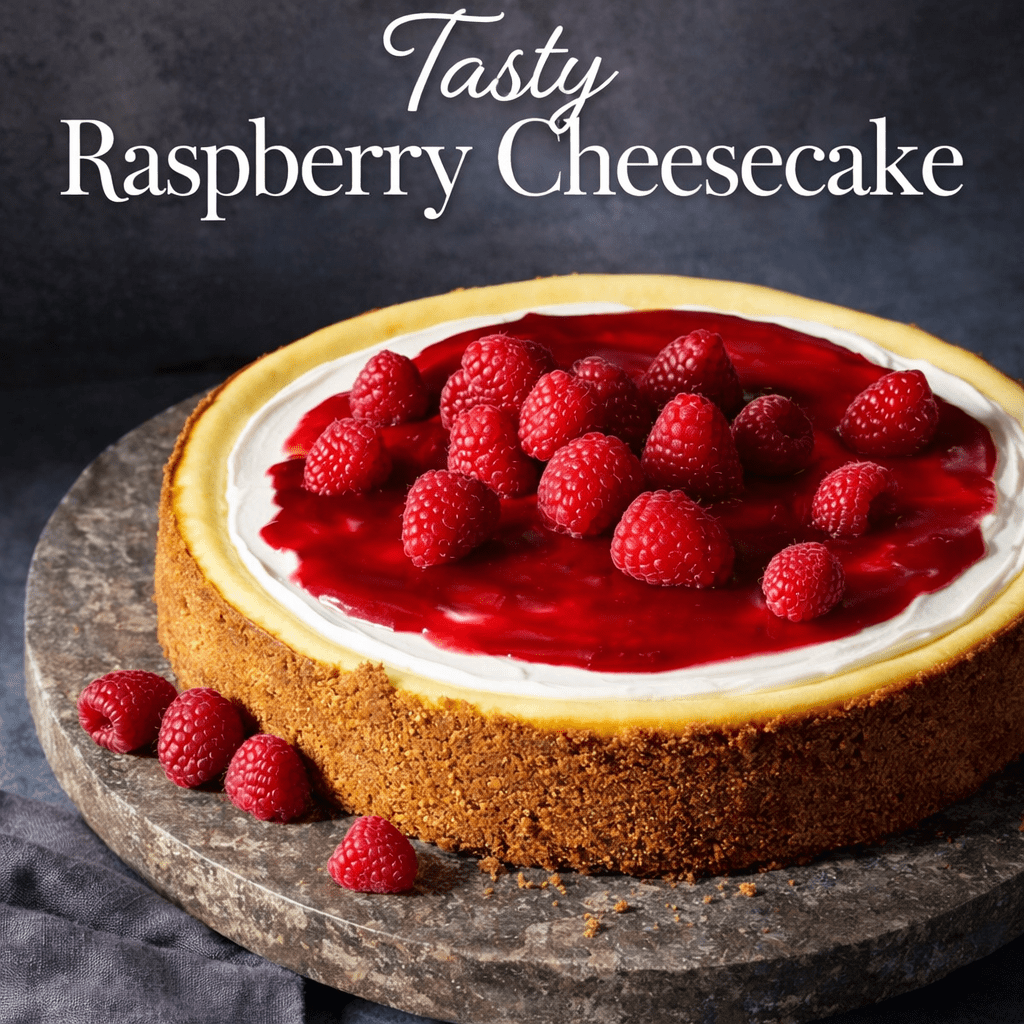
Ultra Creamy Raspberry Cheesecake
Ingredients
Method
- Step 1 – Prepare the Crust
- Preheat oven to 325°F (160°C).
- Mix graham cracker crumbs, melted butter, and sugar.
- Press mixture firmly into the bottom of a 9-inch springform pan.
- Bake for 10 minutes, then let cool.
- Step 2 – Make the Filling
- Beat softened cream cheese until smooth and creamy.
- Add sugar and mix well.
- Add eggs one at a time, mixing gently.
- Mix in sour cream, vanilla extract, and flour until smooth (do not overmix).
- Step 3 – Bake
- Pour filling over cooled crust.
- Bake for 50–55 minutes until center is slightly jiggly.
- Turn off oven and leave cheesecake inside for 1 hour with door slightly open.
- Refrigerate for at least 4 hours (preferably overnight).
- Step 4 – Raspberry Topping
- Heat raspberry jam and lemon juice in a small saucepan until smooth.
- Let cool slightly.
- Spread over chilled cheesecake.
- Top with fresh raspberries.
Notes
Cracks, Water Baths, and the Jiggle Test
A crack is a structural failure, not bad luck. It has two causes, and they compound.
The first is over-baking. Egg proteins set, then keep tightening if the heat continues, squeezing water out and pulling the surface apart. The second is the cake shrinking as it cools while its edges are still stuck to the pan. The middle pulls inward, the rim holds, and the top tears between them.
Air is the third factor. Beating vigorously after the eggs go in whips bubbles into the batter. Those bubbles expand in the oven, lift the surface, then collapse. Mix on low speed once eggs are in, and only until combined.
A water bath is not fussiness. Surrounding the pan with hot water caps the temperature at the edges near 100 °C and keeps the oven humid, so the outside cannot race ahead of the centre. Wrap the pan base well, or set it inside a larger pan rather than directly in the water.
For doneness, use the jiggle test rather than a timer. Nudge the pan. The outer few centimetres should be set, and a circle in the middle roughly the size of your palm should still wobble like loose jelly. It looks underdone, and it is meant to. It carries on setting as it cools. A cheesecake firm all the way through in the oven is already over-baked.
Then run a thin knife around the rim as soon as it comes out, so the cake can shrink freely, and cool it slowly: oven off, door ajar, an hour inside before it goes anywhere near the fridge.
Notes on the Method
The texture of a baked cheesecake depends heavily on ingredient temperature. Cold cream cheese almost always creates tiny lumps that remain visible even after baking. For the smoothest filling, leave the cream cheese, eggs, and sour cream at room temperature for about 45 minutes before mixing. This allows the batter to blend evenly without excessive beating.
One professional technique that consistently improves cheesecake texture is mixing on low speed. High-speed mixing incorporates too much air, which can lead to cracks and an uneven surface. The filling should look glossy and creamy, not whipped or foamy. If bubbles appear, gently tap the pan on the counter before baking.
Another detail many home bakers overlook is crust compression. Pressing the graham cracker crust firmly with the bottom of a measuring cup creates a stable base that slices cleanly after chilling. A loose crust tends to crumble once the cheesecake is cut.
If the top begins browning too quickly near the end of baking, loosely tent the cheesecake with foil. Overbaking dries the edges and reduces that signature creamy center. The middle should still have a slight jiggle when the oven is turned off. Residual heat finishes the baking process gently.
For storage, keep the cheesecake refrigerated and covered to prevent it from absorbing refrigerator odors. It tastes best within three days, although the flavor remains excellent for up to five days. For freezing, chill the cheesecake completely first, then wrap individual slices tightly to maintain texture and freshness.
Flavour Variations
This raspberry cheesecake recipe adapts beautifully to different flavors and dietary preferences. For a deeper berry flavor, replace half the raspberries with blackberries or strawberries. Blueberries also pair especially well with the creamy vanilla filling and create a slightly sweeter finish.
Chocolate lovers can add a thin layer of dark chocolate ganache over the chilled cheesecake before adding raspberries. The bittersweet chocolate balances the fruity topping and creates a more elegant dessert presentation for dinner parties or holiday tables.
To make a gluten-free version, simply substitute gluten-free graham crackers in the crust. The texture remains crisp and buttery with very little difference in flavor. For a lighter variation, Greek yogurt may replace sour cream, although the cheesecake will be slightly tangier and less rich.
If fresh raspberries are unavailable, frozen raspberries work well for the topping sauce. Simmer them gently and strain the seeds for a smoother finish. A touch of lemon zest in the filling can also brighten the flavor and enhance the natural tartness of the berries.
Frequently Asked Questions
- Q: Why did my cheesecake crack on top? Cracks usually happen from overmixing or sudden temperature changes. Mix gently after adding eggs and allow the cheesecake to cool slowly inside the oven before refrigerating.
- Q: Can I make this cheesecake a day ahead? Yes. In fact, the texture becomes creamier after resting overnight in the refrigerator. Many pastry chefs prefer serving cheesecake the next day for cleaner slices and fuller flavor.
- Q: How do I know when the cheesecake is done baking? The edges should look set while the center still has a slight wobble. If the middle is completely firm in the oven, the cheesecake may become dry after chilling.
- Q: Can I freeze raspberry cheesecake? Absolutely. Chill it fully first, then wrap tightly in plastic wrap and foil. Thaw overnight in the refrigerator for the best texture.
- Q: Why is my crust soggy? A soggy crust often comes from excess moisture or insufficient baking time. Pre-baking the crust for 10 minutes helps keep it crisp and sturdy.