Best Strawberry Chocolate Cheesecake Recipe (Creamy & Rich)
Make the best strawberry chocolate cheesecake with creamy filling, fresh strawberries, and rich chocolate ganache. Easy baked recipe
📋 Table of Contents
Why You’ll Love This Recipe
The recurring problem in a fruit cheesecake is water. Strawberry purée is mostly liquid, and adding it directly to the filling both softens the set and threatens the crust underneath.
Reducing the purée first is what solves it. Cooking it down concentrates the flavour and removes the water that would otherwise loosen the filling, so you get more strawberry taste and a firmer set at the same time.
The crust needs its own protection. A biscuit base sitting under a wet filling turns to paste unless it is sealed. Pressing it firmly, chilling it, and brushing the surface with a thin layer of melted chocolate creates a barrier that keeps it crisp.
Cocoa and strawberry work together for a specific reason: the acid in the fruit cuts through the fat of the chocolate, which is what stops a rich cheesecake from feeling heavy by the third forkful.
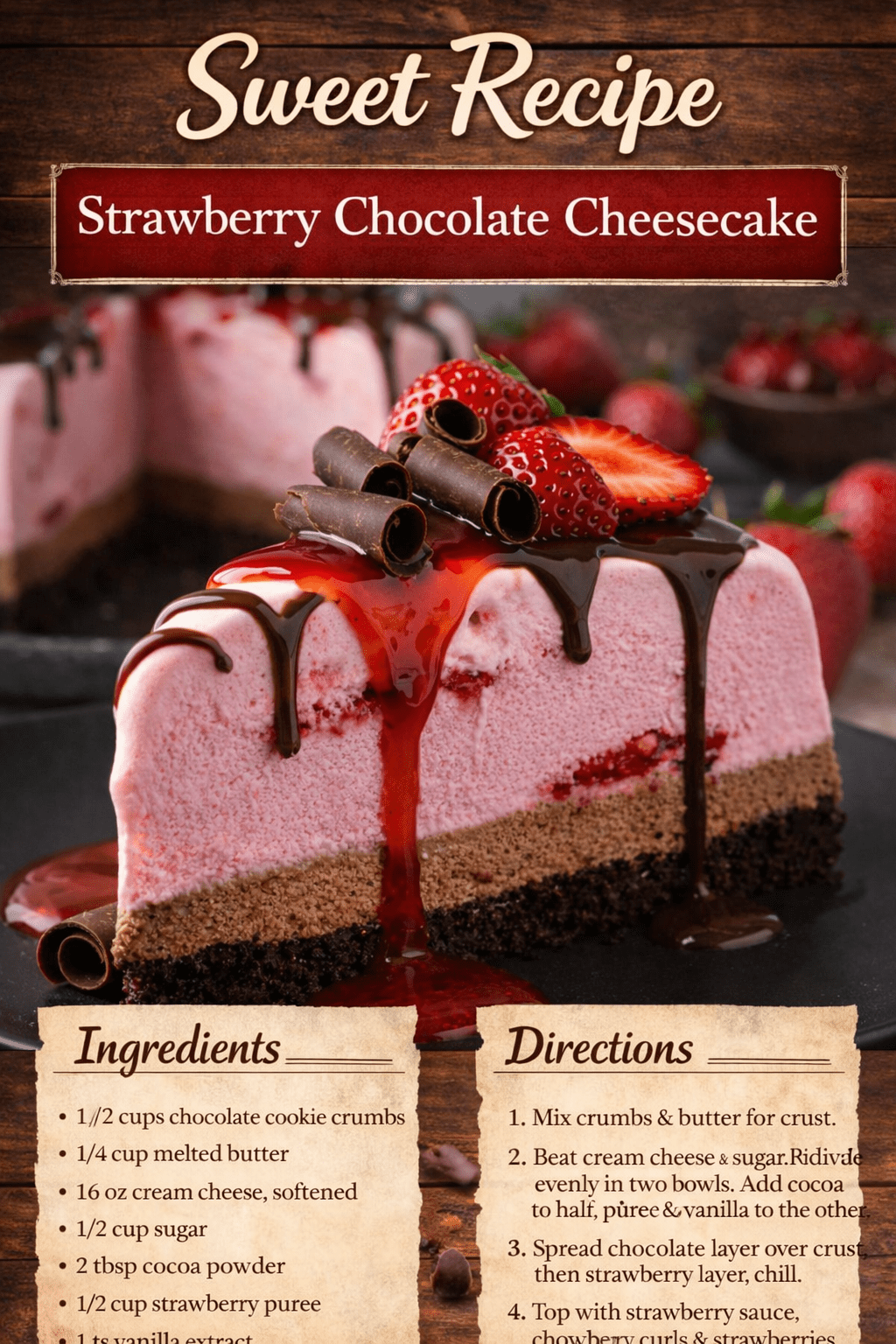
Strawberry Chocolate Cheesecake
Ingredients
Equipment
Method
- 1️⃣ Prepare the Crust
- Preheat oven to 170°C (340°F).
- Crush biscuits into fine crumbs.
- Mix with melted butter until combined.
- Press firmly into the bottom of a 9-inch (23 cm) springform pan.
- Bake for 10 minutes. Let cool.
- 2️⃣ Make the Cheesecake Filling
- Beat cream cheese and sugar until smooth and creamy.
- Add eggs one at a time, mixing gently after each addition.
- Stir in heavy cream and vanilla extract.
- Fold in strawberry puree.
- Pour mixture over the cooled crust.
- 3️⃣ Bake
- Bake for 50–55 minutes, until the center is slightly set but still jiggly.
- Turn off oven and let cheesecake cool inside with the door slightly open for 1 hour.
- Refrigerate for at least 4 hours (preferably overnight).
- 4️⃣ Prepare the Ganache
- Heat heavy cream until just simmering (do not boil).
- Pour over chopped dark chocolate.
- Let sit 2 minutes, then stir until smooth and glossy.
- Pour over chilled cheesecake and spread evenly.
- 5️⃣ Decorate & Serve
- Top with fresh strawberries and chocolate shavings.
- Slice with a warm knife for clean cuts.
Notes
Notes on the Method
The biggest difference between an average cheesecake and a bakery-quality cheesecake comes down to temperature control and mixing technique. Always start with room-temperature cream cheese, eggs, and cream. Cold ingredients resist blending smoothly and often leave tiny lumps that become visible after baking. In professional kitchens, cream cheese is usually left out for at least 90 minutes before mixing.
When adding the eggs, mix slowly and only until incorporated. Overbeating after the eggs go in traps excess air inside the batter, which causes the cheesecake to rise too quickly in the oven and collapse while cooling. If the top develops a few small cracks anyway, do not panic. The chocolate ganache was intentionally included as both a flavor layer and a flawless finish.
For an extra creamy texture, place the springform pan inside a larger roasting tray filled with hot water halfway up the sides. This water bath, known as a bain-marie, keeps the heat gentle and prevents the edges from overcooking before the center sets. During testing, the cheesecakes baked with a water bath had noticeably silkier centers and fewer cracks.
Refrigeration time also matters more than many home bakers expect. After four hours the cheesecake is sliceable, but overnight chilling improves both flavor and texture. The strawberry notes become more pronounced, and the ganache firms into a smooth, truffle-like layer. Store leftovers covered in the refrigerator for up to four days. For freezing, wrap individual slices tightly without fresh strawberry garnish to prevent icy moisture from affecting the surface.
Crusts and Toppings
This strawberry chocolate cheesecake adapts beautifully to seasonal ingredients and dietary needs. For a deeper berry flavor, replace part of the strawberry puree with raspberry puree, which adds extra tartness against the dark chocolate ganache. If strawberries are out of season, roasted frozen berries work surprisingly well because roasting concentrates their flavor and removes excess moisture.
A gluten-free version can be made using gluten-free digestive biscuits or almond cookies for the crust. Some pastry chefs even add finely ground toasted almonds to create a nuttier base that pairs especially well with dark chocolate. For a lighter finish, milk chocolate may replace dark chocolate in the ganache, though the final dessert will taste sweeter and less intense.
To create a more dramatic presentation, swirl melted white chocolate into the strawberry filling before baking. The marbled effect gives each slice a slightly different appearance while adding a creamy vanilla note. For summer gatherings, fresh mint leaves and macerated strawberries make a refreshing garnish that brightens the richness of the cheesecake.
Baking It Without Splitting the Top
A crack is a structural failure, not bad luck. It has two causes, and they compound.
The first is over-baking. Egg proteins set, then keep tightening if the heat continues, squeezing water out and pulling the surface apart. The second is the cake shrinking as it cools while its edges are still stuck to the pan. The middle pulls inward, the rim holds, and the top tears between them.
Air is the third factor. Beating vigorously after the eggs go in whips bubbles into the batter. Those bubbles expand in the oven, lift the surface, then collapse. Mix on low speed once eggs are in, and only until combined.
A water bath is not fussiness. Surrounding the pan with hot water caps the temperature at the edges near 100 °C and keeps the oven humid, so the outside cannot race ahead of the centre. Wrap the pan base well, or set it inside a larger pan rather than directly in the water.
For doneness, use the jiggle test rather than a timer. Nudge the pan. The outer few centimetres should be set, and a circle in the middle roughly the size of your palm should still wobble like loose jelly. It looks underdone, and it is meant to. It carries on setting as it cools. A cheesecake firm all the way through in the oven is already over-baked.
Then run a thin knife around the rim as soon as it comes out, so the cake can shrink freely, and cool it slowly: oven off, door ajar, an hour inside before it goes anywhere near the fridge.
Frequently Asked Questions
- Q: Why did my cheesecake crack on top? Cracks usually happen from overmixing the batter or cooling the cheesecake too quickly. Leaving it in the turned-off oven with the door slightly open helps the custard settle gradually.
- Q: Can I make this cheesecake a day ahead? Yes. In fact, the flavor and texture improve after resting overnight in the refrigerator. The filling becomes denser and creamier, and the chocolate ganache firms perfectly for clean slices.
- Q: Can I use frozen strawberries? Absolutely. Thaw and drain them first to remove excess water. Simmering them briefly before pureeing also concentrates the flavor and prevents the filling from becoming watery.
- Q: How do I know when the cheesecake is fully baked? The outer edges should look set while the center still has a slight wobble when gently shaken. The cheesecake continues cooking from residual heat as it cools.
- Q: What is the best chocolate for the ganache? Dark chocolate between 60% and 70% cocoa creates the best balance with the sweet strawberry filling. Lower cocoa chocolate can make the dessert overly sweet.
- Q: Can this cheesecake be frozen? Yes. Freeze it without fresh strawberry garnish. Wrap slices individually and thaw overnight in the refrigerator for the best texture.