The Best Homemade Cinnamon Rolls You’ll Ever Make (Soft & Gooey)
These homemade cinnamon rolls are soft, fluffy, and topped with rich cream cheese frosting. Easy bakery-style recipe perfect for breakfast or holidays.
📋 Table of Contents
Why You’ll Love This Recipe
These cinnamon rolls are the kind of bake that fills the kitchen with a warm, buttery aroma that lingers long after they leave the oven. The dough is enriched with eggs, butter, and milk, which creates a soft, almost pillowy texture that tears apart in delicate strands rather than dense chunks. When I first tested this recipe, my mistake was rushing the first rise. Resulting in tight, underdeveloped rolls that baked up heavy. The fix was simple but important: allowing the dough to double slowly in a slightly warm environment, which improved gluten relaxation and gave that signature airy pull-apart texture.
The brown sugar and cinnamon filling melts during baking into a glossy, caramel-like layer that seeps slightly into the dough, creating sticky spirals with a deep, spiced sweetness. When properly balanced, the aroma is almost intoxicating. Warm cinnamon, toasted sugar, and soft yeast bread notes blending together. One key insight from testing: spreading the butter too cold leads to uneven filling pockets. Soft, spreadable butter ensures the cinnamon sugar adheres evenly, giving consistent flavor in every bite.
The cream cheese frosting adds a cool contrast. Slightly tangy, creamy, and rich enough to melt into the warm swirls. The temperature contrast between warm rolls and cold frosting is intentional; it creates a soft glaze-like layer that seeps into the spirals. These rolls are ideal for anyone who enjoys bakery-style pastries at home but wants something reliable and forgiving once you understand the fermentation and dough handling process.
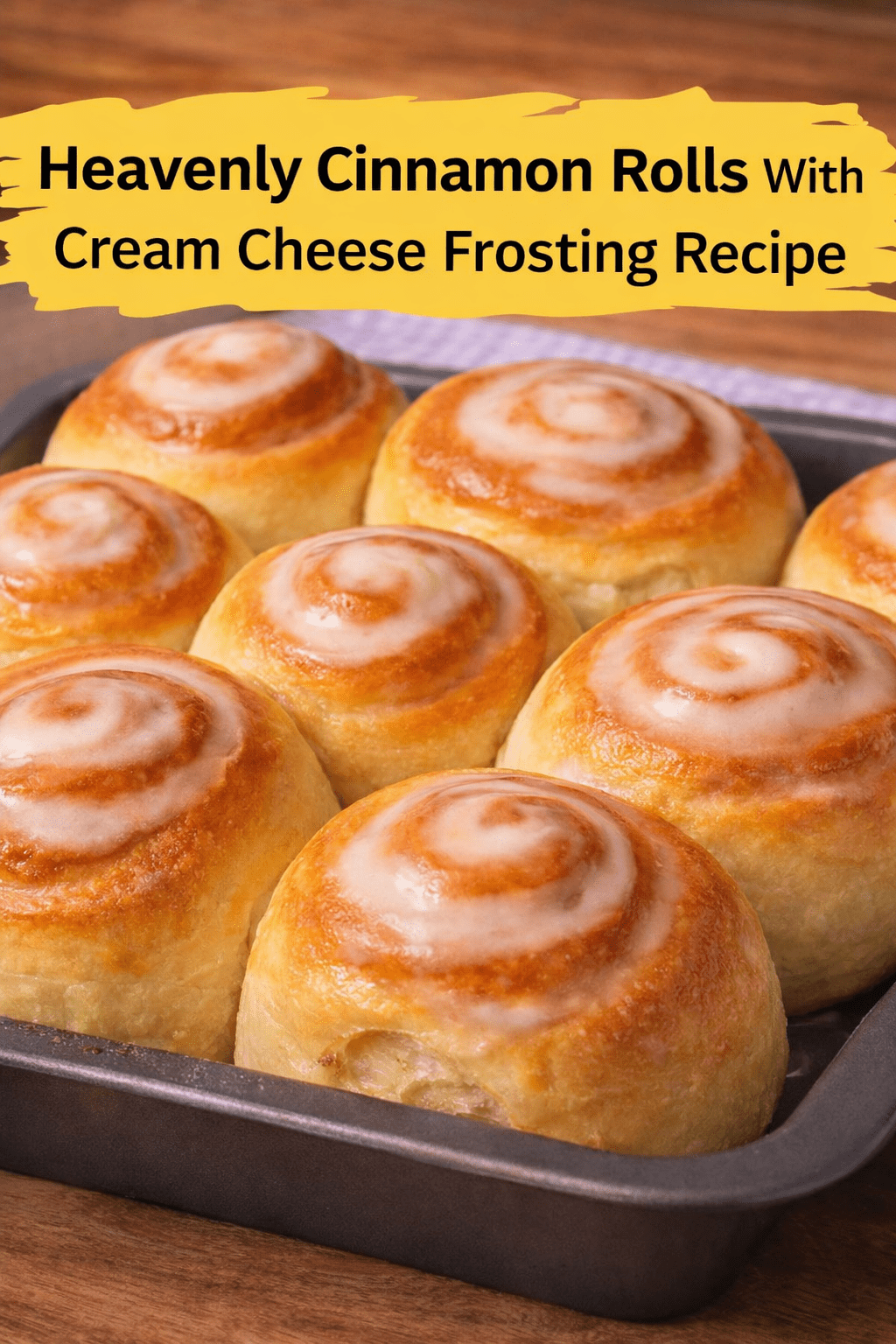
Heavenly Cinnamon Rolls with Cream Cheese Frosting
Ingredients
Equipment
Method
- Activate the Yeast
- In a bowl, combine warm milk and sugar. Sprinkle yeast over the top and let sit for 5–10 minutes until foamy.
- Make the Dough
- Add melted butter, eggs, and salt. Gradually mix in flour until a soft dough forms. Knead for 8–10 minutes until smooth and elastic.
- First Rise
- Place dough in a greased bowl, cover, and let rise in a warm place for 1–1.5 hours or until doubled in size.
- Prepare the Filling
- Mix brown sugar and cinnamon in a bowl.
- Roll & Fill
- Roll dough into a 14×9 inch rectangle. Spread softened butter evenly. Sprinkle cinnamon sugar mixture over the top.
- Shape the Rolls
- Roll tightly from the long side. Slice into 12 equal rolls.
- Second Rise
- Place rolls in a greased baking dish. Cover and let rise 30–45 minutes.
- Bake
- Bake at 350°F (175°C) for 22–25 minutes until golden brown.
- Make the Frosting
- Beat cream cheese and butter until smooth. Add powdered sugar and vanilla. Mix until creamy. Add milk as needed.
- Frost & Serve
- Spread frosting over warm rolls. Serve immediately and enjoy!
Notes
• The milk should feel warm, not hot (about 110°F / 43°C). Too hot will kill the yeast.
• If your kitchen is cold, let the dough rise inside the oven with the light on.
• For ultra-gooey rolls, pour ¼ cup warm heavy cream over the rolls before baking.
• Use dental floss (unflavored) to cut perfect, clean slices without flattening the dough.
• For overnight cinnamon rolls, refrigerate after shaping and bake fresh in the morning.
• Frost while slightly warm for melt-in-your-mouth texture.
• Add chopped pecans or walnuts for extra crunch.
Shaping and Handling
Always check yeast activity before mixing. If the milk mixture doesn’t foam within 10 minutes, the yeast is inactive and will result in dense rolls. A common mistake is adding too much flour during kneading; the dough should remain slightly tacky but elastic. Too much flour leads to dry rolls instead of soft layers. For storage, wrap tightly once cooled; reheating for 10–15 seconds restores that fresh-baked softness thanks to butter re-melting in the crumb structure.
Proofing and Frying, by Feel and by Thermometer
Rising times in a recipe are an estimate, not an instruction. Dough responds to the temperature of your kitchen, so the same dough can take fifty minutes in July and over two hours in a cold room. Judge it by the dough itself.
Use the poke test. Flour a fingertip and press about a centimetre into the dough. If the dent springs back immediately, it needs more time. If it springs back slowly and stays slightly visible, it is ready. If it does not spring back at all and the surface sighs or deflates, it has gone too far, and the finished crumb will be coarse with a faint alcoholic edge.
Enriched doughs behave differently from lean ones. Butter, eggs, and sugar all slow yeast down, so a sweet dough takes noticeably longer than a plain bread dough of the same weight. That is normal, not a sign the yeast is dead.
If the recipe is fried, oil temperature is the whole game. Hold it at 175 °C (350 °F). Below roughly 165 °C the dough sits in the oil too long and absorbs it, which is exactly what makes a doughnut greasy. Above about 190 °C the outside colours before the middle is cooked. Every piece you add drops the temperature, so fry in small batches and let the oil come back up between them. This is one of the few places in baking where guessing does not work.
Fillings and Finishes
You can replace cinnamon filling with cardamom sugar for a Scandinavian twist, or add cocoa powder for chocolate cinnamon rolls. For a dairy-free version, use plant-based butter and oat milk, though the crumb will be slightly less rich. Adding chopped pecans introduces crunch that contrasts beautifully with the soft dough.
Frequently Asked Questions
- Q: Why are my cinnamon rolls dense? The dough likely didn’t rise long enough or yeast was inactive.
- Q: Can I prepare them overnight? Yes, refrigerate after shaping and bake fresh in the morning.
- Q: Why use dental floss for cutting? It prevents flattening the rolled dough compared to a knife.