How to Make Quick Homemade Bread No Yeast in 20 Minutes (Soft & Fluffy)
Make quick homemade bread no yeast in just 20 minutes ,This soft and fluffy loaf is easy to prepare and perfect for sandwiches or toast.
📋 Table of Contents
Why You’ll Love This Recipe
This no-yeast bread is the kind of emergency recipe that becomes a permanent habit once you realize how reliable it is. I still remember the first time I tested it during a busy service prep day: no time for proofing, no patience for waiting, just flour, baking powder, and a hot oven. The result surprised me—the crumb was soft, slightly springy, and had a gentle milk aroma that felt closer to a fresh bakery scone than traditional bread.
The key here is the chemical leavening from baking powder, which creates immediate gas bubbles when it meets liquid and heat. Unlike yeast, there is no fermentation flavor, but the trade-off is speed and consistency. One mistake I made early on was overmixing the batter, thinking it would improve structure. Instead, it activated too much gluten and produced a dense, rubbery loaf. The fix was simple: mix only until the flour disappears, even if the batter looks slightly uneven.
When baked correctly, the bread develops a light golden crust that cracks slightly at the edges while the interior stays moist and tender. The smell is warm and milky with a faint buttery aroma if you use olive oil or melted butter. It slices cleanly once cooled slightly, revealing a fine crumb structure that holds butter beautifully without collapsing. This is not a rustic sourdough-style loaf—it’s a soft, quick bread designed for immediacy and comfort.
It works especially well for mornings when you want fresh bread without planning ahead, or for last-minute sandwiches where texture matters more than fermentation depth.
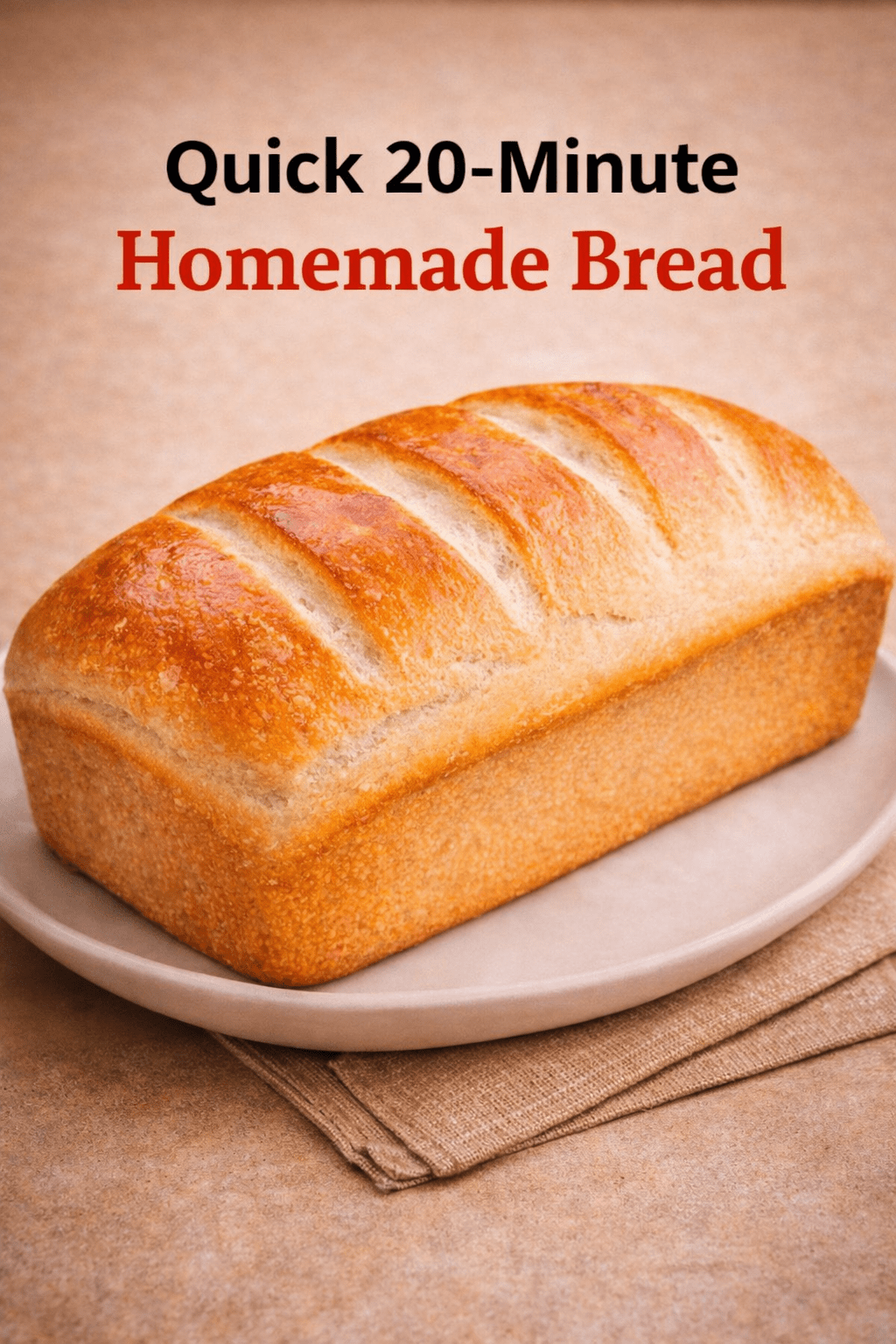
Quick Homemade Bread No Yeast (Soft & Fluffy 20-Minute Recipe)
Ingredients
Equipment
Method
- Preheat the oven to 375°F (190°C). Grease a loaf pan or line it with parchment paper.
- Mix dry ingredients in a large bowl: flour, sugar, baking powder, and salt.
- Add wet ingredients: Pour in warm milk and olive oil. Stir until just combined. Do not overmix.
- Transfer to pan: Spread the batter evenly into the prepared loaf pan. Smooth the top.
- Bake for 15–20 minutes or until the top is golden brown and a toothpick inserted in the center comes out clean.
- Cool slightly before slicing. Serve warm with butter or jam.
Notes
- This quick homemade bread uses baking powder instead of yeast, making it perfect when you don’t have time to wait for dough to rise.
- For best texture, avoid overmixing the batter — this keeps the bread soft and tender.
- Warm (not hot) milk helps create a light, fluffy crumb.
- You can substitute olive oil with melted butter for a richer flavor.
- For a golden bakery-style crust, brush the top with milk or melted butter before baking.
- This bread works great for sandwiches, toast, garlic bread, or French toast.
- To make it dairy-free, use plant-based milk and oil instead of butter.
- Add-ins like shredded cheese, chopped herbs, or garlic powder can boost flavor and engagement.
Expert Tips & Techniques
The biggest success factor in this bread is temperature control. Warm milk (not hot) activates baking powder evenly without prematurely breaking down its leavening power. A common mistake is adding too much flour during mixing, which leads to a dry crumb—this dough should stay slightly sticky. If your loaf feels heavy after baking, it usually means overmixing or insufficient oven heat. Always preheat fully so the structure sets quickly in the first 8–10 minutes of baking.
Variations & Alternatives
You can turn this base dough into garlic bread by adding minced garlic and parsley, or create a cheese loaf by folding in shredded cheddar. For a dairy-free version, replace milk with oat or almond milk and use olive oil instead of butter. A savory herb version with rosemary also works well for soups and stews.
Frequently Asked Questions
- Q: Why is my bread dense? Overmixing or too much flour reduces air pockets.
- Q: Can I use self-raising flour? Yes, but reduce baking powder to avoid bitterness.
- Q: Can I store it? Yes, keep in an airtight container for 2–3 days or freeze slices.