The Best Easy Chocolate-Dipped Ice Cream Sandwich Bars
Make these easy chocolate-dipped ice cream sandwich bars with vanilla ice cream, graham crackers, and a crisp chocolate shell
📋 Table of Contents
Why You’ll Love This Recipe
Dipping something frozen into melted chocolate is a collision of temperatures, and it goes wrong in a predictable way.
The bar has to be frozen absolutely solid, not merely cold. Any softness and it slumps in the warm chocolate or leaves smears behind. Several hours in the freezer, and work with one or two at a time while the rest stay in.
The chocolate needs to be barely warm rather than hot. Hot chocolate melts the surface of the ice cream on contact, and the water released makes it seize. Around body temperature is the working range: fluid enough to coat, cool enough not to do damage.
Add a little neutral oil or coconut oil to the chocolate. At freezer temperature plain chocolate becomes brittle and shatters at the first bite, sending the coating off in shards. A small amount of extra fat keeps the shell thin and crisp instead of glassy.
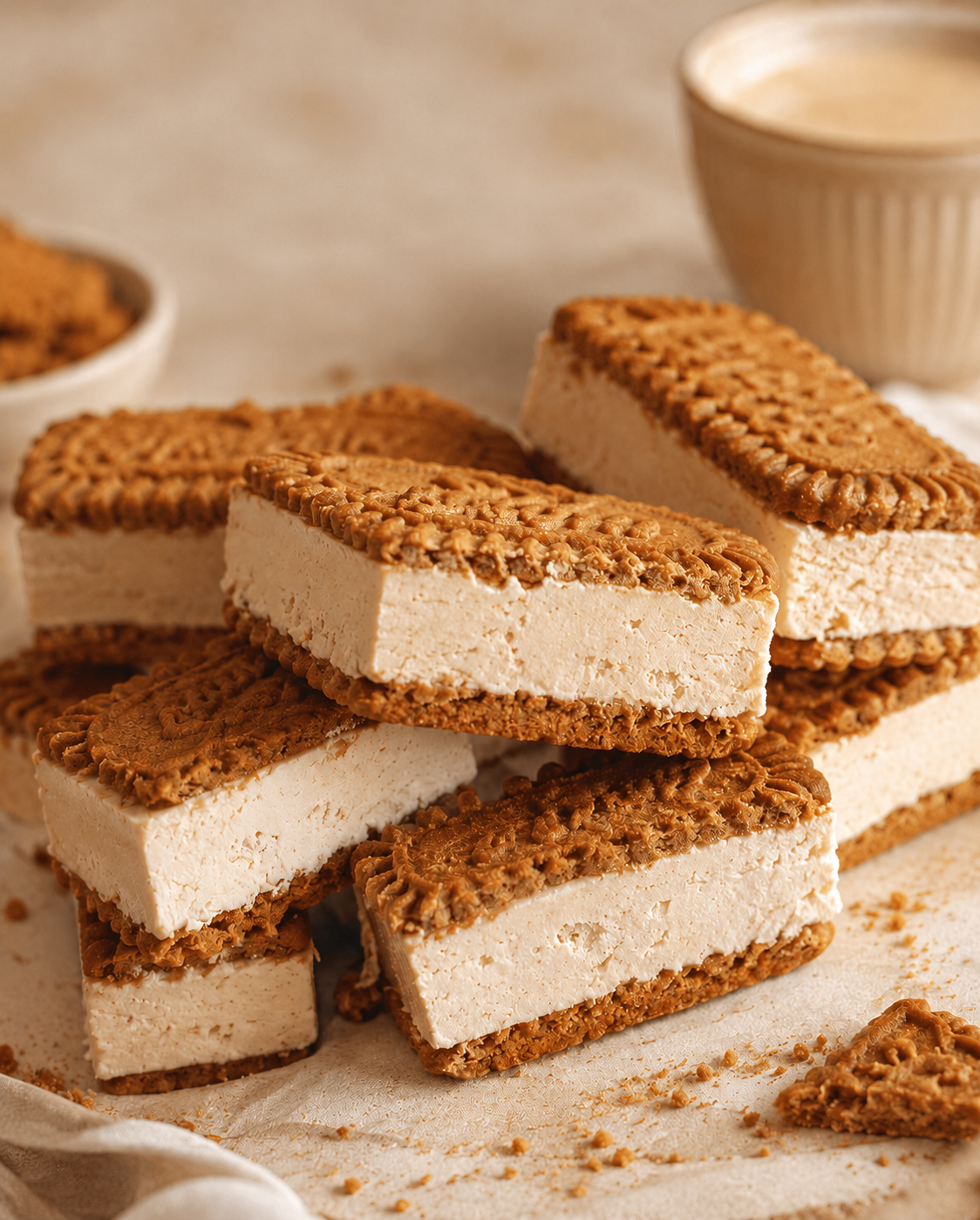
Chocolate-Dipped Ice Cream Sandwich Bars
Ingredients
Equipment
Method
- Step 1: Prepare the Pan
- Line a 9×13-inch baking dish with parchment paper, leaving some overhang on the sides for easy removal.
- Step 2: Create the Bottom Layer
- Arrange 12 graham cracker sheets in a single layer across the bottom of the pan. Break crackers as needed to fit.
- Step 3: Add Ice Cream
- Spread the softened vanilla ice cream evenly over the graham crackers. Smooth the surface using an offset spatula.
- Step 4: Add the Top Layer
- Place the remaining 12 graham cracker sheets over the ice cream, creating a sandwich layer.
- Step 5: Freeze
- Cover tightly with plastic wrap and freeze for at least 4 hours or until completely firm.
- Step 6: Cut into Bars
- Remove from the freezer and lift the dessert from the pan using the parchment paper. Cut into 12 rectangular bars.
- Step 7: Make Chocolate Coating
- In a microwave-safe bowl, combine chocolate chips and coconut oil. Heat in 30-second intervals, stirring between each, until smooth.
- Step 8: Dip the Bars
- Dip each frozen bar halfway into the melted chocolate. Allow excess chocolate to drip off.
- Step 9: Decorate
- Immediately sprinkle with crushed graham crackers, sprinkles, or mini chocolate chips if desired.
- Step 10: Freeze Again
- Place coated bars on a parchment-lined tray and freeze for 15–20 minutes until the chocolate is set.
Notes
- Work quickly when handling the bars to prevent melting.
- For cleaner cuts, warm the knife under hot water and wipe dry between cuts.
- Chocolate shell coating hardens faster if bars are very cold.
- Store in an airtight container in the freezer for up to 2 weeks.
Why Homemade Freezes Harder Than Store-Bought
Texture in a frozen dessert comes down to one thing: the size of the ice crystals. Small crystals read as smooth, large ones read as icy. Crystals grow when water freezes slowly and when a partly thawed mixture refreezes, which is why the freezer door matters as much as the recipe.
Two ingredients work against large crystals. Sugar lowers the freezing point, so more of the water stays liquid at freezer temperature. Fat physically blocks crystals from joining up. That is why a low-fat, low-sugar version of the same recipe always comes out harder and grainier, and why cutting the sugar “to make it lighter” backfires.
Commercial ice cream is softer for two reasons you cannot fully copy at home: stabilisers that bind free water, and overrun, which is air whipped in during churning. A tub from the shop can be up to half air by volume. A homemade batch is much denser, so it freezes harder.
What does work at home: a tablespoon or two of a liquid that will not freeze, such as corn syrup or a spirit, keeps the mixture softer without changing the flavour much. Freeze in a shallow container rather than a deep one so the whole batch passes through the crystal-forming range quickly. Press a sheet of plastic wrap directly onto the surface before the lid goes on, which keeps ice from forming on top. And let it sit at room temperature for ten to fifteen minutes before scooping.
Freezer Notes
Keep the bars as cold as possible during dipping. This is the difference between a clean chocolate shell and a streaky coating. I learned early on that even 2–3 minutes outside the freezer can cause the ice cream edges to soften just enough to slide during dipping. Work in small batches and return unused bars to the freezer immediately. One mistake I still see often is overheating chocolate. If it becomes too hot, it loses its glossy finish and turns dull after setting. Melt it gently in short bursts and stir continuously so residual heat finishes the job. Coconut oil is not optional here. It stabilizes texture and ensures a thin, snappy shell. For cleaner slicing, run your knife under hot water, dry it completely, then cut in a single motion. This prevents cracking and dragging through the ice cream layer. Store finished bars in a sealed container with parchment between layers to prevent freezer burn and sticking.
Swaps and Substitutions
Swap vanilla ice cream for coffee, strawberry, or mint chip to shift the flavor profile dramatically. For a richer version, use dark chocolate coating instead of semi-sweet for a more pronounced cocoa bitterness against the sweetness of the ice cream. For a gluten-free adaptation, replace graham crackers with gluten-free digestive biscuits or almond-based cookies. A dairy-free version also works well using coconut milk ice cream and dairy-free chocolate chips, though freezing time may need to be extended slightly for firmer structure.
Frequently Asked Questions
- Q: Why is my chocolate coating cracking off? A: The bars may be too warm or the chocolate layer too thick; thin coating and colder bars fix this.
- Q: Can I make these ahead of time? A: Yes, they hold well for up to 2 weeks if tightly wrapped to prevent freezer burn.
- Q: Why are my graham crackers soggy? A: The ice cream was likely too soft during assembly; freeze immediately after layering.