The best Chocolate Caramel Layered Squares
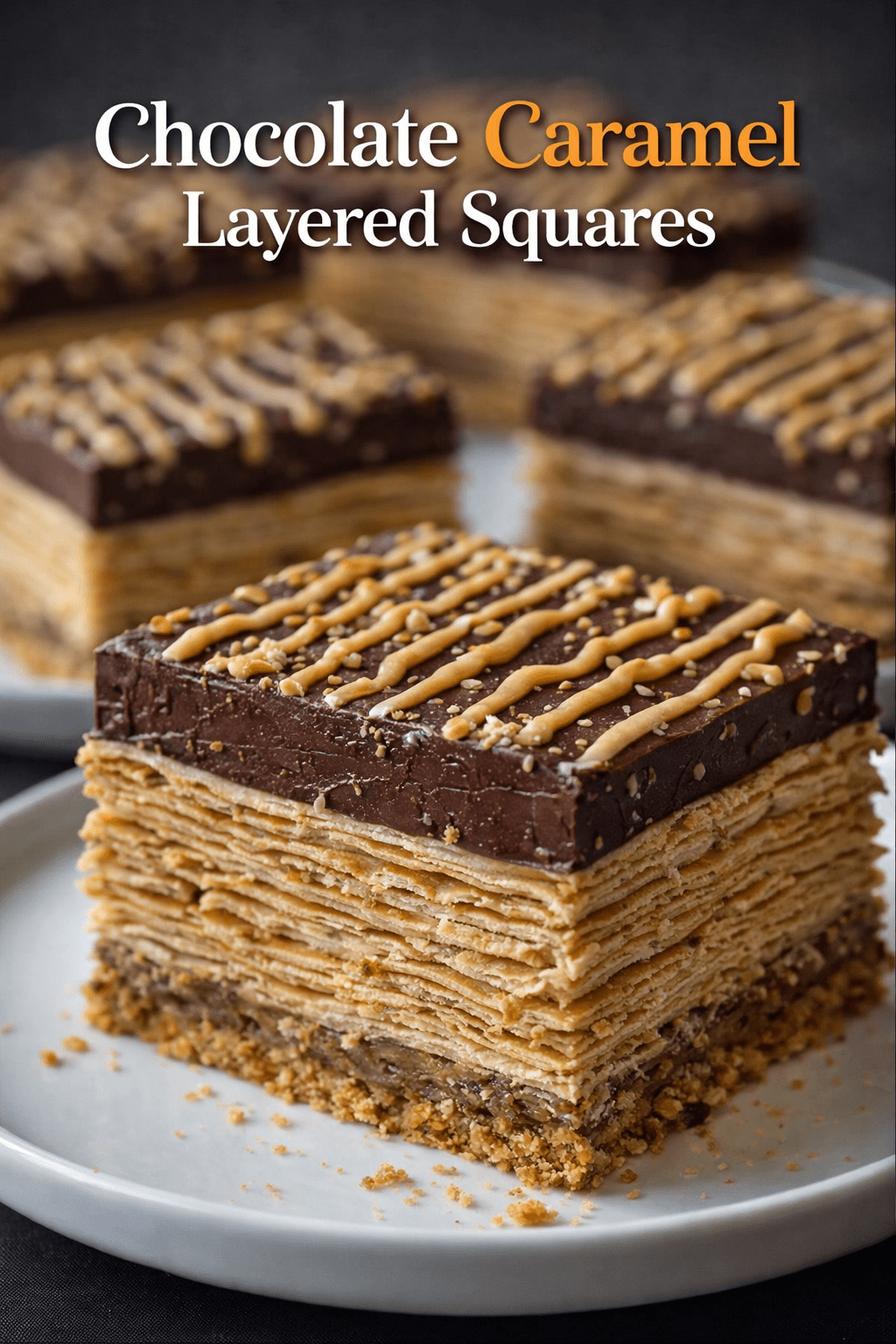
Easy Chocolate Caramel Layered Squares made with crispy biscuit layers, creamy filling, rich chocolate, and sweet caramel drizzle. A simple dessert recipe perfect for parties and holidays.
📋 Table of Contents
Why You’ll Love This Recipe
The appeal of a layered square is textural contrast, and contrast only survives if the layers stay separate. Most of the technique here is about preventing them from bleeding into one another.
The biscuit base gives a firm, slightly crunchy bite, and it holds that only if the butter-to-crumb ratio is right. Roughly one part melted butter to three or four parts crumbs by weight: too little and it collapses when cut, too much and it hardens into something closer to toffee once chilled.
The caramel must cool before it is poured. Hot caramel soaks straight into the base and the crunch is gone. A few minutes off the heat, until it thickens visibly, is enough.
Cut with a hot dry knife, one pass per slice, wiping between cuts. Sawing drags the caramel through the chocolate and smears every face.
The best Chocolate Caramel Layered Squares
Ingredients
Equipment
Method
- Step 1 – Prepare the Base
- In a bowl, mix crushed biscuits, melted butter, and brown sugar until well combined. Press the mixture firmly into the bottom of a lined square baking dish. Refrigerate for 20 minutes.
- Step 2 – Make the Cream Layer
- In a mixing bowl, combine sweetened condensed milk, whipped cream, and vanilla extract. Spread the mixture evenly over the chilled biscuit base.
- Step 3 – Prepare the Chocolate Ganache
- Heat the heavy cream until warm but not boiling. Pour it over chopped dark chocolate and stir until smooth and glossy.
- Step 4 – Add Chocolate Layer
- Pour the chocolate ganache over the cream layer and spread evenly.
- Step 5 – Caramel Drizzle
- Warm the caramel sauce with butter until smooth. Drizzle over the chocolate layer using a spoon.
- Step 6 – Chill
- Refrigerate the dessert for at least 2 hours until fully set.
- Step 7 – Serve
- Cut into squares and serve chilled.
Notes
- You can substitute digestive biscuits with graham crackers or tea biscuits.
- Add chopped nuts between layers for extra crunch.
- Store leftovers in the refrigerator for up to 3 days.
Cooling and Beating
Achieving clean, bakery-style layers in chocolate caramel squares depends on temperature control and timing. One of the most important techniques is allowing each layer to set properly before adding the next. When I rushed this step during testing, the cream layer shifted under the weight of the ganache, creating uneven slices. A quick chill between layers prevents this.
For the biscuit base, crushing the biscuits finely ensures a tighter structure. Larger chunks may feel rustic, but they create weak spots that can cause the base to crack. Press the mixture firmly using the bottom of a glass. This distributes pressure evenly and results in a compact, sliceable layer.
The ganache itself should be glossy and smooth. If it looks grainy, it usually means the chocolate overheated or the cream was too hot. Let the cream cool slightly before combining, and stir gently from the center outward to emulsify properly.
Storage matters as well. Keep the bars refrigerated in an airtight container to maintain structure and prevent the cream from softening. For serving, letting them sit at room temperature for 5–10 minutes enhances flavor and gives a softer, creamier texture.
The Difference Between Smooth and Sandy
A boiled sugar syrup is a supersaturated solution: it holds more sugar than the water can normally dissolve. That state is unstable. One stray crystal is enough to start a chain reaction that turns the whole batch sandy, and it happens in seconds.
Three things trigger it. Stirring once the syrup is boiling. Undissolved sugar clinging to the side of the pan, which falls back in and seeds the mixture. And disturbing the syrup while it is still hot instead of letting it cool undisturbed first.
The fixes follow directly. Wash the pan walls down with a wet pastry brush early on. Stop stirring once it boils, and swirl the pan instead if you need to even out the heat. For fudge, cool it to about 43 °C (110 °F) before you beat it. Beating hot fudge is the single most common reason a batch turns grainy.
Some ingredients block crystals physically. Corn syrup, honey, butter, and cream all get in the way of the sugar lattice forming, which is why nearly every reliable caramel recipe includes at least one of them. They are not there for flavour alone.
Temperature decides the final texture, and the margins are narrow. Soft-ball, 112 to 116 °C, gives fudge and fondant. Firm-ball, 118 to 121 °C, gives chewy caramels. Hard-crack, 149 to 154 °C, gives brittle and toffee. A few degrees is the difference between a caramel you can cut and one you cannot chew.
Other Directions
This recipe adapts well to different flavor profiles. For a nuttier version, add a thin layer of toasted hazelnuts or almonds between the biscuit base and cream layer. The crunch adds contrast to the smooth filling.
If you prefer a lighter option, swap the dark chocolate for milk chocolate, which creates a sweeter, softer ganache. For a more intense flavor, a high-percentage cocoa chocolate deepens the richness and slightly reduces sweetness.
You can also experiment with flavored caramel. Adding a pinch of espresso powder or a splash of bourbon transforms the overall profile. For dietary adjustments, dairy-free cream and coconut condensed milk work surprisingly well, though the flavor becomes slightly tropical.
Frequently Asked Questions
- Q: Why are my layers mixing together? This usually happens when layers are added while still warm. Chill each layer before adding the next to maintain structure.
- Q: Can I freeze these bars? Yes, they freeze well for up to one month. Thaw in the refrigerator to preserve texture.
- Q: How do I get clean slices? Use a sharp knife and wipe it clean between cuts. Chilling the bars fully before slicing also helps create neat edges.