The best Creamy Strawberry Swirl Fudge
Creamy white chocolate fudge swirled with sweet strawberry jam for a stunning marbled dessert. This easy no-bake treat is perfect for holidays, Valentine’s Day, and satisfying any sweet craving.
📋 Table of Contents
Why You’ll Love This Recipe
This creamy strawberry swirl fudge has the look of a candy-shop treat, but the method stays practical for a home kitchen. The base is smooth, sweet, and milky from white chocolate and sweetened condensed milk, while the strawberry jam adds a bright fruit ribbon that cuts through the richness. When the fudge is chilled properly, each square has a firm, creamy bite with a soft strawberry swirl running through it, almost like strawberries and cream in candy form.
The key to this strawberry fudge recipe is gentle heat. White chocolate is more delicate than dark chocolate because it contains cocoa butter, milk solids, and sugar, but no cocoa solids to help buffer the heat. If it gets too hot, it can turn thick, oily, or grainy instead of glossy. I have tested batches where the pan was left over the burner for just a little too long, and the mixture lost its silky texture. The fix is to use low heat, stir constantly, and remove the pan as soon as the chips are mostly melted. The remaining warmth will finish the job.
The swirl is another place where small technique matters. Strawberry jam should be warmed only until pourable, not hot. If the jam is too cold, it sits in heavy clumps and makes thick pockets that can loosen the fudge. If it is too hot, it can sink too deeply into the white chocolate base and blur the marbled pattern. A knife or skewer works best with slow, shallow figure-eight motions. A few passes create pretty ribbons; too much swirling turns the top pink instead of marbled.
A pinch of salt may seem minor, but it improves the entire batch. It softens the sweetness of the white chocolate, sharpens the strawberry flavor, and gives the fudge a cleaner finish. The vanilla adds a warm bakery aroma that makes the chilled fudge taste less one-note. Serve the squares cold for a firmer texture, or let them sit at room temperature for 5 minutes so the strawberry aroma opens up and the center becomes creamier.
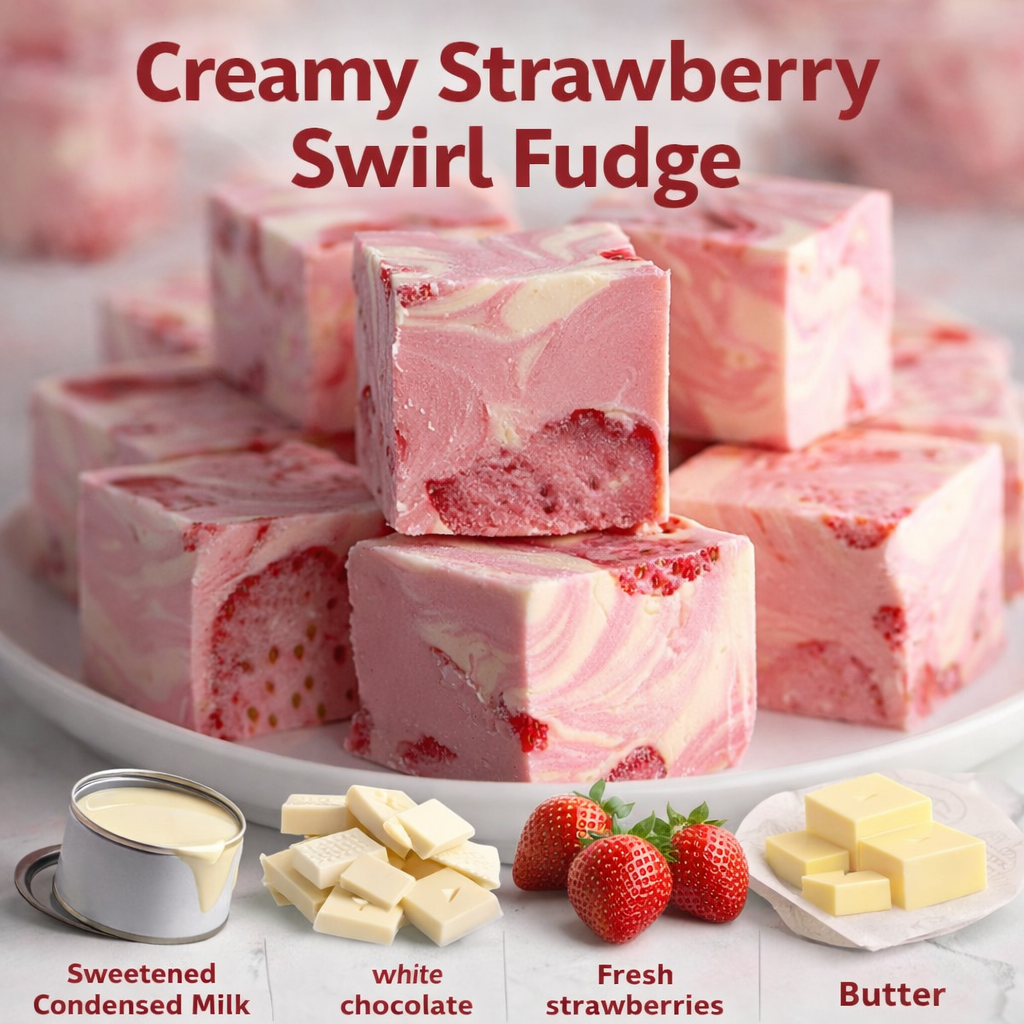
🍓🍬 Creamy Strawberry Swirl Fudge 🍬🍓
Ingredients
Equipment
Method
- Prepare the Pan:
- Line an 8×8-inch baking dish with parchment paper, allowing a bit of overhang for easy removal. Lightly grease the paper with non-stick spray or butter.
- Melt the Fudge Base:
- In a medium saucepan over low heat, combine the white chocolate chips, sweetened condensed milk, and a pinch of salt. Stir constantly until the mixture is fully melted and smooth. Be careful not to overheat.
- Add Vanilla:
- Remove the saucepan from heat and stir in the vanilla extract until well combined.
- Create the Strawberry Swirl:
- In a small bowl, warm the strawberry jam slightly in the microwave (about 10–15 seconds) until pourable. If desired, add food coloring to the jam for a vibrant swirl effect.
- Assemble the Fudge:
- Pour the white chocolate mixture into the prepared baking dish and spread evenly. Drop spoonfuls of strawberry jam on top of the fudge in several spots. Use a knife or skewer to gently swirl the jam into the fudge, creating a marbled pattern.
- Chill to Set:
- Refrigerate the fudge for at least 3 hours, or until firm.
- Cut and Serve:
- Once set, lift the fudge out of the pan using the parchment paper. Cut into small squares with a sharp knife. Store in an airtight container in the refrigerator for up to 1 week.
Common Missteps
Use a heavy-bottomed saucepan if melting the fudge base on the stove. Thin pans create hot spots, and white chocolate can scorch before it looks fully melted. Stir with a flexible spatula, scraping the corners and bottom of the pan where thickened condensed milk tends to settle. The mixture should look glossy, smooth, and pourable before the vanilla goes in. If it becomes too thick, remove it from the heat and stir patiently; extra heat usually makes the texture worse.
Choose smooth, seedless strawberry jam or preserves for the cleanest swirl. Seeds are not a problem for flavor, but they interrupt the creamy texture and can drag through the top when you swirl. If your jam is chunky, warm it briefly and press it through a small sieve before using. This extra step gives the fudge a more polished finish and a cleaner strawberry ribbon.
Do not rush the chill time. Three hours gives the white chocolate base enough time to firm all the way through, not just around the edges. Cutting too soon is a common mistake; the center will drag under the knife and the strawberry swirl may smear. For neat squares, lift the slab out with the parchment, use a sharp knife, and wipe the blade between cuts. Store the fudge in an airtight container in the refrigerator for up to one week. Separate layers with parchment so the pieces do not stick together or mark the marbled tops.
Other Directions
This creamy strawberry swirl fudge can move in several flavor directions while keeping the same no-bake method. For a stronger berry flavor, use strawberry preserves with a concentrated fruit taste, or add 1 tablespoon of crushed freeze-dried strawberries to the jam before swirling. Freeze-dried strawberries bring tartness without adding extra moisture, which helps the fudge stay firm and sliceable.
For a strawberries-and-cream look, keep the white base plain and use only a small amount of red or pink coloring in the jam. For a brighter Valentine’s Day or spring dessert tray, add a few drops of coloring to make the swirl more vivid. Raspberry jam, cherry preserves, or mixed berry preserves also work well, but avoid very loose fruit sauces because they can prevent the fudge from setting cleanly.
For texture, sprinkle crushed vanilla wafers, shortbread crumbs, or freeze-dried strawberry pieces over the top before chilling. For a more elegant finish, drizzle the set fudge with melted white chocolate after slicing. A dairy-free version can be made with dairy-free white chocolate chips and a dairy-free sweetened condensed milk alternative, though the set may be softer and may need extra chilling. For a less sweet version, add a thin layer of crushed salted pretzels on top; the salt and crunch balance the creamy white chocolate base beautifully.
The Difference Between Smooth and Sandy
A boiled sugar syrup is a supersaturated solution: it holds more sugar than the water can normally dissolve. That state is unstable. One stray crystal is enough to start a chain reaction that turns the whole batch sandy, and it happens in seconds.
Three things trigger it. Stirring once the syrup is boiling. Undissolved sugar clinging to the side of the pan, which falls back in and seeds the mixture. And disturbing the syrup while it is still hot instead of letting it cool undisturbed first.
The fixes follow directly. Wash the pan walls down with a wet pastry brush early on. Stop stirring once it boils, and swirl the pan instead if you need to even out the heat. For fudge, cool it to about 43 °C (110 °F) before you beat it. Beating hot fudge is the single most common reason a batch turns grainy.
Some ingredients block crystals physically. Corn syrup, honey, butter, and cream all get in the way of the sugar lattice forming, which is why nearly every reliable caramel recipe includes at least one of them. They are not there for flavour alone.
Temperature decides the final texture, and the margins are narrow. Soft-ball, 112 to 116 °C, gives fudge and fondant. Firm-ball, 118 to 121 °C, gives chewy caramels. Hard-crack, 149 to 154 °C, gives brittle and toffee. A few degrees is the difference between a caramel you can cut and one you cannot chew.
Frequently Asked Questions
- Q: Why did my strawberry fudge turn grainy? Graininess usually comes from overheating the white chocolate. Melt it over low heat, stir constantly, and remove the pan once the mixture is mostly smooth so residual heat can finish melting it.
- Q: Can I use strawberry jelly instead of jam? Yes, but jam or preserves give a fuller fruit flavor. Jelly can work if it is warmed slightly and swirled lightly, but avoid using too much because it may make the top sticky.
- Q: Why did my swirl sink into the fudge? The jam may have been too hot or too thin. Warm it only until pourable, then swirl gently across the surface instead of stirring deeply into the base.
- Q: How do I get clean fudge squares? Chill the fudge until completely firm, lift it out with the parchment, and cut with a sharp knife. Wiping the knife between cuts keeps the white chocolate and strawberry layers neat.
- Q: Can I freeze creamy strawberry swirl fudge? Yes. Freeze the cut pieces in an airtight container with parchment between layers. Thaw in the refrigerator to reduce condensation and protect the smooth texture.