Irresistibly Moist Condensed Milk Coffee Cake You’ll Love (Easy Recipe)
This ultra moist condensed milk coffee cake is soft, rich, and easy to make. Perfect for breakfast, dessert, or afternoon coffee lovers.
📋 Table of Contents
Why You’ll Love This Recipe
Condensed milk behaves quite differently from ordinary milk in a batter, and the differences all point the same way.
It is roughly half sugar and has had most of its water removed. That means it sweetens and adds moisture at the same time, and because sugar holds onto water, the finished cake stays moist for days longer than a butter-and-milk equivalent. It also browns faster, since there is more sugar available to caramelise at the surface.
Two adjustments follow. Reduce any other sugar in the recipe, or the cake turns cloying. And watch the top: it can colour fully while the centre is still underbaked. Covering loosely with foil part way through solves it.
The coffee is not there to taste of coffee at the quantities used. It deepens and rounds the other flavours by suppressing some sweetness, the same way a pinch of salt does.
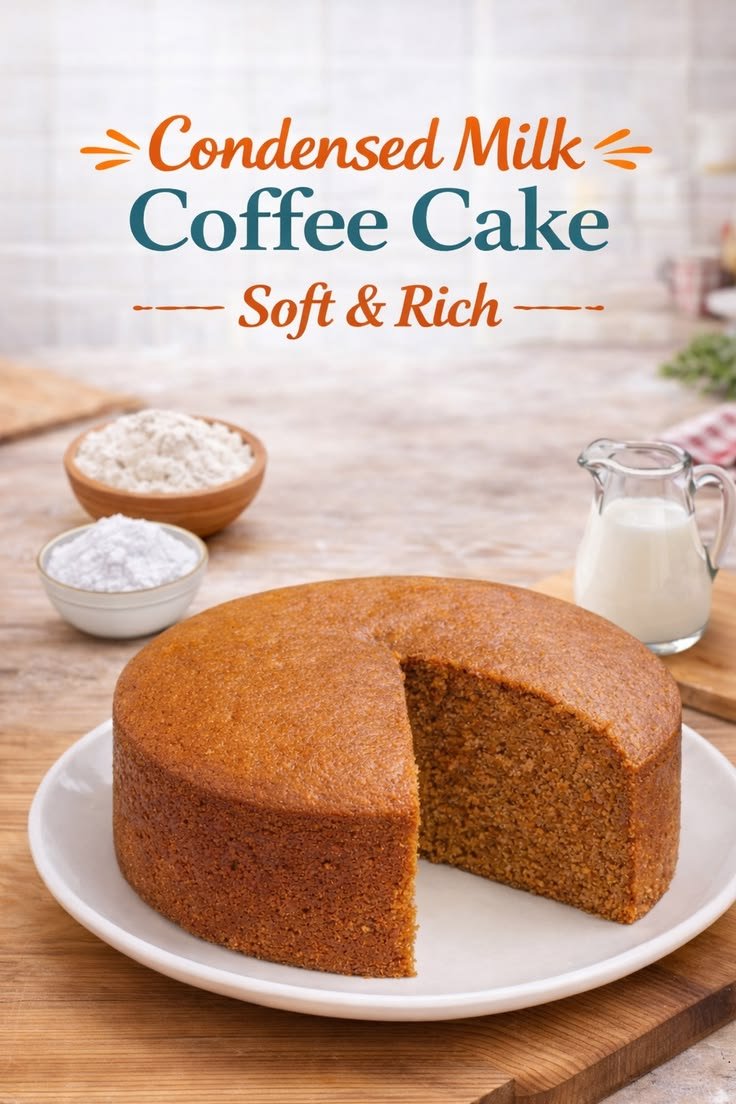
Condensed Milk Coffee Cake (Ultra Moist & Soft)
Ingredients
Equipment
Method
- Preheat Oven
- Preheat to 170°C (340°F). Grease and line an 8-inch round cake pan.
- Cream Butter & Sugar
- Beat softened butter and sugar until light and fluffy (3–4 minutes).
- Add Eggs
- Add eggs one at a time, mixing well after each addition.
- Add Condensed Milk & Vanilla
- Mix in condensed milk and vanilla extract until smooth.
- Combine Dry Ingredients
- In a separate bowl, whisk flour, baking powder, and salt.
- Combine Everything
- Add dry ingredients in batches, alternating with brewed coffee. Mix gently. Do not overmix.
- Bake
- Pour batter into prepared pan. Bake for 45–50 minutes or until a toothpick inserted comes out clean.
- Cool
- Let cool 10 minutes in the pan, then transfer to a wire rack.
- Decorate & Serve
- Dust with powdered sugar or drizzle with coffee glaze.
Notes
- Use room temperature butter and eggs for a smooth batter and better rise.
- Do not overmix once the flour is added to keep the cake soft and fluffy.
- For stronger coffee flavor, add 1 tsp instant espresso powder.
- If the cake browns too quickly, cover loosely with foil during the last 15 minutes.
- Store in an airtight container for 3 days at room temperature or 5 days refrigerated.
- Freeze slices for up to 2 months.
How to Tell When It Is Actually Done
The toothpick test is the standard advice and it is unreliable for anything rich. In a batter containing melted chocolate or a lot of fat, the streaks left on the skewer are simply the fat, not raw batter, so a fully baked cake reads as underdone and gets returned to the oven. That is a common route to a dry result.
Internal temperature is the honest measure. Most butter cakes are done between 93 and 96 °C. Leaner sponges run a little higher, around 96 to 99 °C. An instant-read thermometer in the centre removes the guesswork entirely, and once you have checked a few bakes against it you start recognising the visual cues properly.
Those cues are worth learning. The edges pull very slightly away from the sides of the tin. The top springs back rather than holding a fingerprint. And the sound changes: a baking cake hisses quietly as steam escapes, and that noise fades as it finishes.
One more thing decides the crumb, and it happens early. Do not open the oven during the first two thirds of the bake. Until the structure sets, the batter is essentially a liquid held up by expanding gas, and the temperature drop from an open door is enough to collapse it. Once the top has domed and coloured, a quick look does no harm.
What to Watch For
One of the most important steps for achieving a bakery-style condensed milk coffee cake is properly creaming the butter and sugar. Many home bakers stop too early, but allowing the mixture to beat for a full 3 to 4 minutes creates tiny air pockets that give the cake its soft, fluffy structure. The batter should look pale and slightly airy before adding the eggs.
Another detail professionals pay attention to is coffee temperature. Hot coffee can partially melt the butter in the batter, leading to a greasy texture and uneven rise. Let the brewed coffee cool fully before mixing it in. The cooler coffee blends more evenly and preserves the smooth emulsion created during creaming.
If your cake sinks slightly in the center, the oven temperature may be running low or the batter may have been overmixed. In our kitchen tests, using an oven thermometer improved consistency dramatically because many ovens bake 10–15 degrees off. A gentle hand during the final mixing stage also keeps the crumb tender rather than rubbery.
For extra depth, dissolve one teaspoon of espresso powder directly into the brewed coffee. This intensifies the aroma without making the cake bitter. If serving for guests, warming slices for 10 seconds in the microwave brings back the fresh-baked softness and releases the buttery coffee fragrance again.
Storage matters too. Wrap the cooled cake tightly once it reaches room temperature to lock in moisture. Because condensed milk naturally retains moisture, this cake often tastes even softer the next morning.
Frostings and Finishes
This moist coffee cake adapts beautifully to different flavors and dietary preferences. For a richer dessert version, fold dark chocolate chips into the batter before baking. The slight bitterness of chocolate pairs naturally with the caramel notes from the condensed milk and brewed coffee.
A cinnamon swirl variation also works especially well during colder months. Mix brown sugar with cinnamon and layer it through the batter before baking for a warm spiced aroma similar to classic coffee shop pastries. Chopped walnuts or pecans add crunch and contrast against the soft crumb.
For a lighter citrus version, add orange zest to the batter. Coffee and orange create a surprisingly balanced flavor combination with subtle brightness. If you prefer less sweetness, reduce the sugar slightly since the condensed milk already contributes richness.
Gluten-free flour blends designed for cakes generally work well in this recipe, though the texture may be slightly more delicate. For dairy-free adjustments, plant-based butter and condensed coconut milk can be substituted successfully, though the flavor becomes slightly more tropical and less buttery.
Frequently Asked Questions
- Q: Can I use instant coffee instead of brewed coffee? Yes. Dissolve 1 to 2 teaspoons of instant espresso powder into warm water. Instant espresso tends to produce a slightly stronger coffee aroma than regular brewed coffee.
- Q: Why did my coffee cake turn dense? Dense texture is usually caused by overmixing after adding flour or using cold ingredients. Mixing gently and using room temperature eggs and butter helps maintain a softer crumb.
- Q: Can this cake be made ahead of time? Absolutely. In fact, the flavor becomes deeper after several hours because the coffee and condensed milk settle into the crumb. Store tightly covered overnight for best texture.
- Q: What’s the best glaze for this cake? A simple coffee glaze made with powdered sugar and brewed espresso complements the cake beautifully without overpowering the buttery flavor.
- Q: Can I freeze individual slices? Yes. Wrap slices tightly in plastic wrap and freeze for up to two months. Thaw at room temperature and warm slightly before serving for the best texture.