Easy Rich Chocolate Cake Recipe (Ultra Moist & Rich)
This rich chocolate cake is ultra moist, rich, and easy to make. Perfect homemade dessert for chocolate lovers and special occasions.
📋 Table of Contents
Why You’ll Love This Recipe
Three specific choices make a chocolate cake moist, and each has a reason behind it.
The first is hot liquid poured over the cocoa. Cocoa powder holds its flavour compounds in fat and starch that only release properly with heat, which is why recipes call for boiling water or hot coffee. The coffee is not there to taste of coffee; it deepens the cocoa by suppressing some of its bitterness.
The second is oil rather than butter. Butter is around eighteen per cent water and firms up when cold, so a butter cake tastes drier straight from the fridge. Oil stays liquid at every temperature, which is why an oil-based chocolate cake keeps its texture for days.
The third is the acid. Buttermilk or sour cream reacts with baking soda for lift, and the acid also tenderises the crumb by weakening gluten. Swapping it for plain milk changes both the rise and the texture.
Easy Decadent Chocolate Cake Recipe (Ultra Moist & Rich)
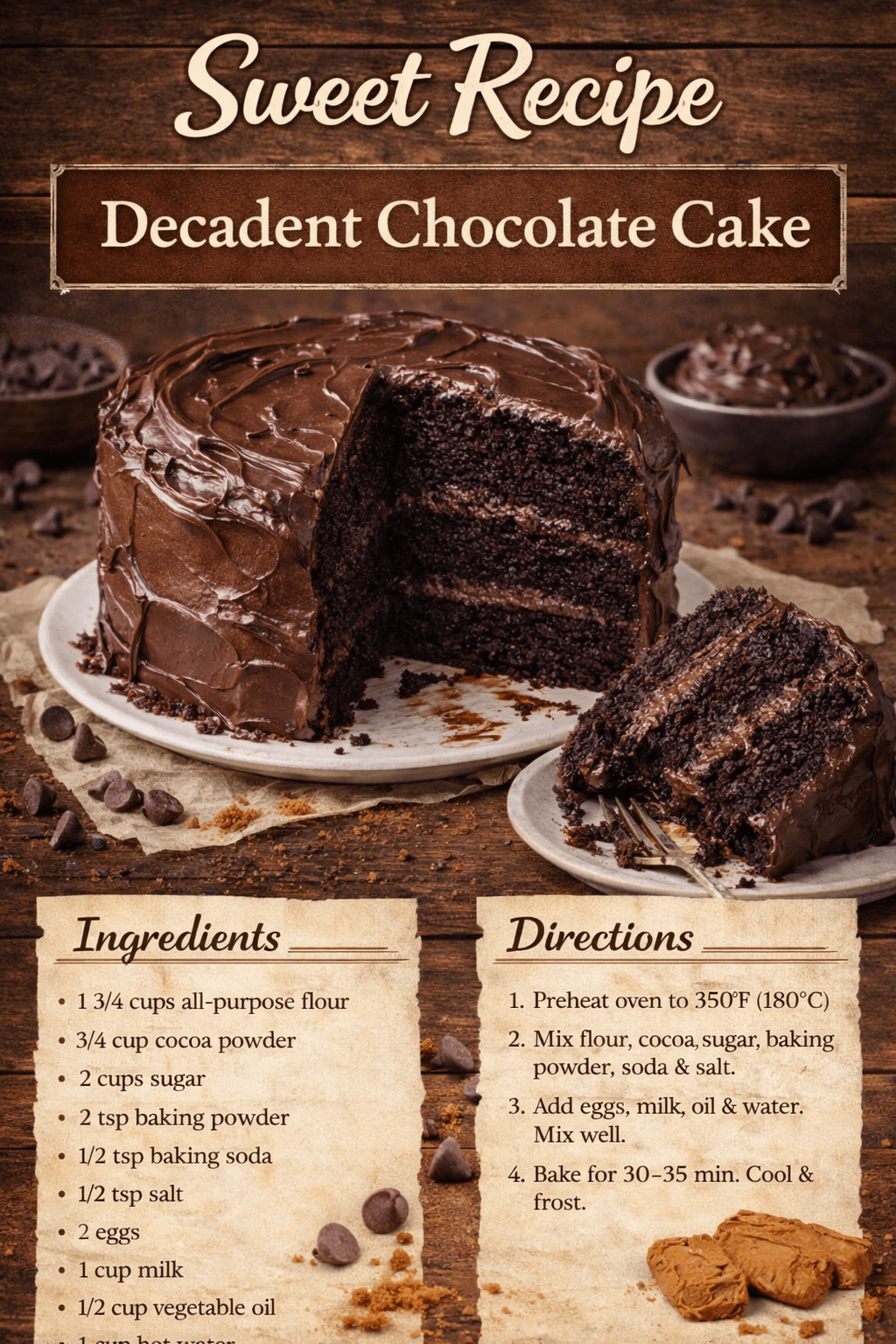
Ingredients
Equipment
Method
- Preheat oven to 350°F (180°C). Grease and line a round cake pan.
- In a large bowl, mix flour, cocoa powder, sugar, baking powder, baking soda, and salt.
- Add eggs, milk, oil, and hot water. Mix until smooth.
- Pour batter into the prepared pan.
- Bake for 30–35 minutes, or until a toothpick comes out clean.
- Let the cake cool completely before frosting.
- Frost, slice, and serve.
Notes
- Use hot water to intensify the chocolate flavor.
- Let the cake cool fully to avoid melting the frosting.
- Stores well covered at room temperature for 2 days or refrigerated for 4 days.
What to Watch For
For the richest flavor in this ultra moist chocolate cake, use high-quality unsweetened cocoa powder rather than overly sweet hot cocoa mixes. A darker cocoa gives the cake a more intense chocolate aroma and a deeper color once baked. When combining the wet and dry ingredients, whisk gently instead of beating aggressively. Overworking the batter develops gluten and can turn the crumb dense instead of soft and velvety.
One technique that consistently improves texture is bringing eggs and milk to room temperature before mixing. Cold ingredients can cause the batter to separate slightly, which affects how evenly the cake rises in the oven. During recipe testing, a chilled egg mixture produced a tighter crumb with small tunnels through the center.
Another common mistake is overbaking. Chocolate cakes continue cooking slightly after leaving the oven because of retained heat. Pull the cake out when a toothpick has a few moist crumbs attached rather than waiting for it to come out completely dry. That small difference keeps the interior soft and fudgy instead of crumbly.
If your frosting feels too thick, add milk one teaspoon at a time instead of pouring in too much at once. Frosting that is overly loose tends to slide off the cake layers, especially in warm kitchens. For cleaner slices, chill the frosted cake for 20 minutes before cutting. This helps the frosting set while keeping the crumb tender.
Leftovers store surprisingly well. Cover the cake tightly to prevent it from drying out, and let refrigerated slices sit at room temperature for about 15 minutes before serving. The chocolate flavor becomes smoother and more pronounced as the cake warms slightly.
Reading the Bake Instead of the Timer
The toothpick test is the standard advice and it is unreliable for anything rich. In a batter containing melted chocolate or a lot of fat, the streaks left on the skewer are simply the fat, not raw batter, so a fully baked cake reads as underdone and gets returned to the oven. That is a common route to a dry result.
Internal temperature is the honest measure. Most butter cakes are done between 93 and 96 °C. Leaner sponges run a little higher, around 96 to 99 °C. An instant-read thermometer in the centre removes the guesswork entirely, and once you have checked a few bakes against it you start recognising the visual cues properly.
Those cues are worth learning. The edges pull very slightly away from the sides of the tin. The top springs back rather than holding a fingerprint. And the sound changes: a baking cake hisses quietly as steam escapes, and that noise fades as it finishes.
One more thing decides the crumb, and it happens early. Do not open the oven during the first two thirds of the bake. Until the structure sets, the batter is essentially a liquid held up by expanding gas, and the temperature drop from an open door is enough to collapse it. Once the top has domed and coloured, a quick look does no harm.
Other Tins and Shapes
This rich chocolate cake recipe adapts beautifully to different flavors and dietary preferences. For a deeper mocha flavor, replace the hot water with hot brewed coffee. Coffee does not make the cake taste like espresso; instead, it enhances the cocoa notes and creates a fuller chocolate finish.
Fresh raspberries or sliced strawberries between the cake layers add a bright contrast to the richness of the frosting. In the pastry kitchen, we sometimes fold mini chocolate chips into the batter for extra texture and pockets of melted chocolate throughout the crumb.
To make the recipe dairy-free, substitute the milk with almond or oat milk and use a plant-based butter for the frosting. A gluten-free flour blend designed for baking also works well here, though the texture becomes slightly softer and more delicate.
If you prefer a lighter finish, skip the heavy frosting and dust the cooled cake with cocoa powder and powdered sugar instead. For celebrations, this batter can also be baked into cupcakes. Reduce the baking time to around 18–20 minutes and watch carefully near the end for moist centers.
Frequently Asked Questions
- Q: Why is my chocolate cake dry? Dry cake is usually caused by overbaking or measuring too much flour. Use a spoon to fill the measuring cup rather than scooping directly from the bag, which packs in extra flour.
- Q: Can I make this chocolate cake ahead of time? Yes. The cake layers can be baked one day in advance and wrapped tightly once cooled. In fact, the flavor often becomes even richer overnight.
- Q: Can I freeze this cake? Absolutely. Wrap unfrosted layers in plastic wrap and freeze for up to two months. Thaw at room temperature before decorating.
- Q: Why is the batter so thin? The thin batter comes from the hot water, which helps bloom the cocoa powder and create an ultra-moist texture. This is normal and produces a softer crumb after baking.
- Q: What frosting pairs best with this cake? Chocolate buttercream is classic, but cream cheese frosting also balances the richness nicely with a slight tangy finish.
- Q: How do I know when the cake is fully baked? The edges should look set, and the center should spring back lightly when touched. A toothpick should come out with a few moist crumbs but not wet batter.