Homemade Peach Vanilla Ice Cream
Creamy homemade vanilla ice cream blended with sweet, ripe peaches and fragrant vanilla for a refreshing summer dessert with a silky texture and fresh fruit flavor in every scoop.
📋 Table of Contents
Why You’ll Love This Recipe
Fruit ice cream is harder than plain vanilla, and the reason is water. Peaches are roughly ninety per cent water, and water freezes into crystals that read as icy on the tongue. Every choice in this recipe is aimed at controlling that.
Cooking the peaches down first drives off some of the water and concentrates the flavour at the same time. Straining removes the fibre that makes a frozen dessert grainy. And the sugar is not only there for sweetness: it lowers the freezing point, so more of the liquid stays soft at freezer temperature and the crystals that do form stay small.
This is also why reducing the sugar to make it lighter backfires. A lower-sugar version of the same recipe comes out harder, icier, and less pleasant, not lighter.
The vanilla is doing quiet work behind the peach. On its own the fruit tastes thin once frozen, because cold suppresses aroma. Vanilla fills that gap and makes the peach read as fuller than it otherwise would.
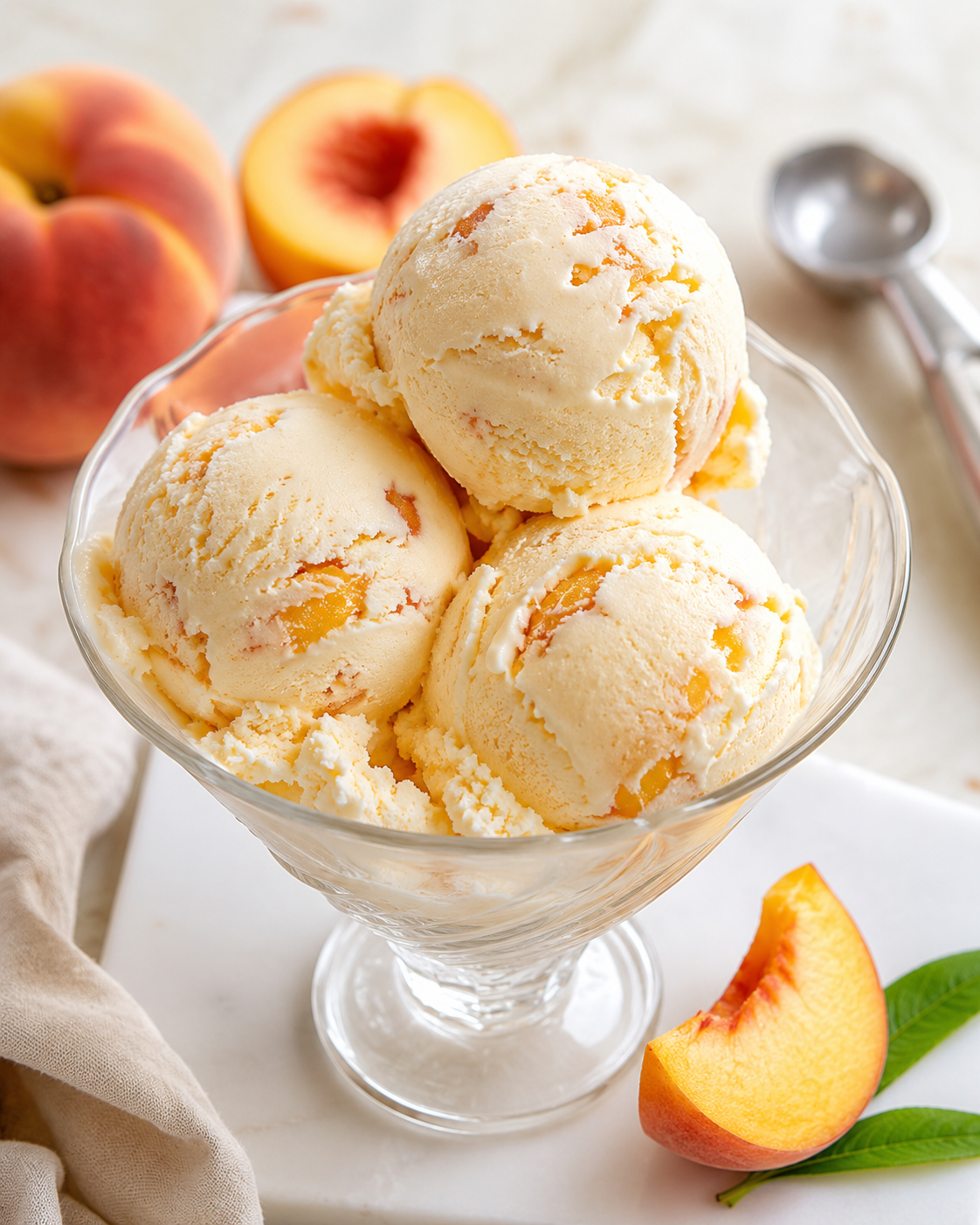
Homemade Peach Vanilla Ice Cream
Ingredients
Equipment
Method
- Combine diced peaches, ¼ cup sugar, and lemon juice in a bowl. Let sit for 15–20 minutes until juicy.
- Blend the peaches until smooth, leaving a few small chunks if desired. Refrigerate.
- In a saucepan, heat the milk, cream, and half the sugar until warm.
- In a separate bowl, whisk the egg yolks with the remaining sugar.
- Slowly add some warm cream mixture to the eggs while whisking. Return everything to the saucepan.
- Cook over medium-low heat, stirring constantly, until the mixture thickens slightly and coats the back of a spoon.
- Remove from heat and stir in vanilla extract and salt.
- Cool the custard completely and refrigerate for at least 3 hours.
- Mix the chilled custard with the peach puree.
- Pour into an ice cream maker and churn according to the manufacturer’s instructions.
- Transfer to a freezer container and freeze for 2–4 hours until firm.
- Scoop into bowls or cones and garnish with fresh peach slices.
Notes
- Fresh peaches provide the best flavor.
- Frozen peaches may also be used after thawing.
- For extra texture, reserve some diced peaches and fold them in after churning.
- Store in the freezer for up to 2 weeks.
What Trips People Up
Pick peaches that give slightly when you press them near the stem. I’ve used underripe ones in a pinch and the purée always comes out flat and a little flavorless. Not worth the disappointment when you’ve already done all the work. After peeling and dicing, let them sit with sugar and lemon juice for at least fifteen minutes. I know it feels like a step you could skip, but it really does soften the fruit and pull out more flavor than you’d expect.
When you’re making the custard, keep the heat medium-low and stir constantly. I use a wooden spoon because I can feel the texture change better than with a whisk. You’re looking for a mixture that lightly coats the back of the spoon. I rushed this step early on more times than I’d like to admit, trying to speed things along, and ended up with grainy, slightly scrambled eggs every single time. If that happens to you too, don’t toss it. Strain it through a fine mesh sieve right away and cool it over an ice bath. It saves the batch almost every time.
Chilling the base thoroughly before churning matters more than people think. A cold mixture freezes faster in the machine, which means smaller ice crystals and a creamier scoop. If I have the patience for it, I’ll let the custard sit in the fridge overnight. The texture the next day is noticeably richer.
For storage, I press a piece of parchment paper directly against the surface before sealing the container. It’s a small thing but it really does cut down on ice crystals forming, and mine stays smooth for up to two weeks in the freezer. Assuming it lasts that long in my house, which it rarely does.
Other Flavours That Work
This recipe bends easily depending on what I’m in the mood for. Folding in extra diced peaches right after churning gives you these little juicy pockets throughout, which I almost always do now. Plain blended peach just doesn’t have the same surprise factor. A sprinkle of cinnamon nudges it toward peach pie territory, and a few crushed amaretti cookies folded in add this subtle almond note that I genuinely didn’t expect to love as much as I do.
For a lighter version, swapping half-and-half in for part of the heavy cream works, though I’ll be honest. It loses some of that luxurious richness that makes this recipe special in the first place. I’ve made a dairy-free batch with full-fat canned coconut milk for a friend with a dairy allergy, and the coconut flavor stayed mild enough that it didn’t fight with the peach at all.
White nectarines and apricots both work beautifully in place of peaches using the exact same custard base. I tried roasted plums once on a whim. The deeper, slightly caramelized flavor was unexpected but really good, almost like a grown-up version of the original.
Texture, and What Ruins It
Texture in a frozen dessert comes down to one thing: the size of the ice crystals. Small crystals read as smooth, large ones read as icy. Crystals grow when water freezes slowly and when a partly thawed mixture refreezes, which is why the freezer door matters as much as the recipe.
Two ingredients work against large crystals. Sugar lowers the freezing point, so more of the water stays liquid at freezer temperature. Fat physically blocks crystals from joining up. That is why a low-fat, low-sugar version of the same recipe always comes out harder and grainier, and why cutting the sugar “to make it lighter” backfires.
Commercial ice cream is softer for two reasons you cannot fully copy at home: stabilisers that bind free water, and overrun, which is air whipped in during churning. A tub from the shop can be up to half air by volume. A homemade batch is much denser, so it freezes harder.
What does work at home: a tablespoon or two of a liquid that will not freeze, such as corn syrup or a spirit, keeps the mixture softer without changing the flavour much. Freeze in a shallow container rather than a deep one so the whole batch passes through the crystal-forming range quickly. Press a sheet of plastic wrap directly onto the surface before the lid goes on, which keeps ice from forming on top. And let it sit at room temperature for ten to fifteen minutes before scooping.
Frequently Asked Questions
- Q: Can I use frozen peaches? Yes, I do this every winter when I’m craving this and fresh peaches are nowhere to be found. Thaw them completely and drain off the excess liquid before blending. The flavor is a touch milder than peak-summer peaches but it still turns out great.
- Q: Why is my ice cream rock hard straight from the freezer? Homemade ice cream doesn’t have the stabilizers store-bought versions do, so this is completely normal. I let mine sit on the counter for five to ten minutes before scooping, makes a huge difference.
- Q: Can I make this without an ice cream maker? Yes, though it takes more patience. Freeze the chilled mixture in a shallow container and stir vigorously every thirty minutes for a few hours. It comes out a bit denser, but still creamy and full of flavor.
- Q: How do I prevent an icy texture? Chill the custard thoroughly, try to avoid extra water from the fruit, and get the finished ice cream into the freezer soon after churning. I learned the hard way that letting it sit out too long before freezing is what usually causes ice crystals.
- Q: Can I cut back on the sugar? You can, but go easy. Sugar affects texture as much as sweetness here. I tried reducing it more than I should have once and ended up with a block of ice instead of scoopable ice cream.
I’d love to know. Did you go with peaches, or try one of the variations like nectarines or roasted plums? And if you found a combination you loved, tell me about it in the comments. Hearing how you make these recipes your own is honestly my favorite part of running this blog. 🍑


Good