The Best Very good Boston Cream Doughnuts
Learn how to make soft and fluffy Boston cream doughnuts filled with rich vanilla pastry cream and topped with a smooth chocolate glaze. Easy homemade bakery-style recipe!
📋 Table of Contents
Why You’ll Love This Recipe
The pastry cream is where this recipe is won or lost, and there is one step that people skip without knowing why it matters.
The custard has to reach a full boil and stay there for a minute or two, stirring constantly. This is not only about thickening the starch. Egg yolks contain an enzyme, alpha-amylase, that digests starch and will turn a perfectly thick pastry cream back into liquid over the next few hours in the fridge. Only sustained boiling destroys it. A custard that thickened but never properly boiled is the reason a filling mysteriously goes runny overnight.
Cool it with plastic wrap pressed directly onto the surface, not stretched over the bowl. Any gap lets steam condense and drip back in, thinning the top layer.
Fill only once the doughnuts are completely cool. Warm dough melts the cream and turns the inside soggy within minutes.
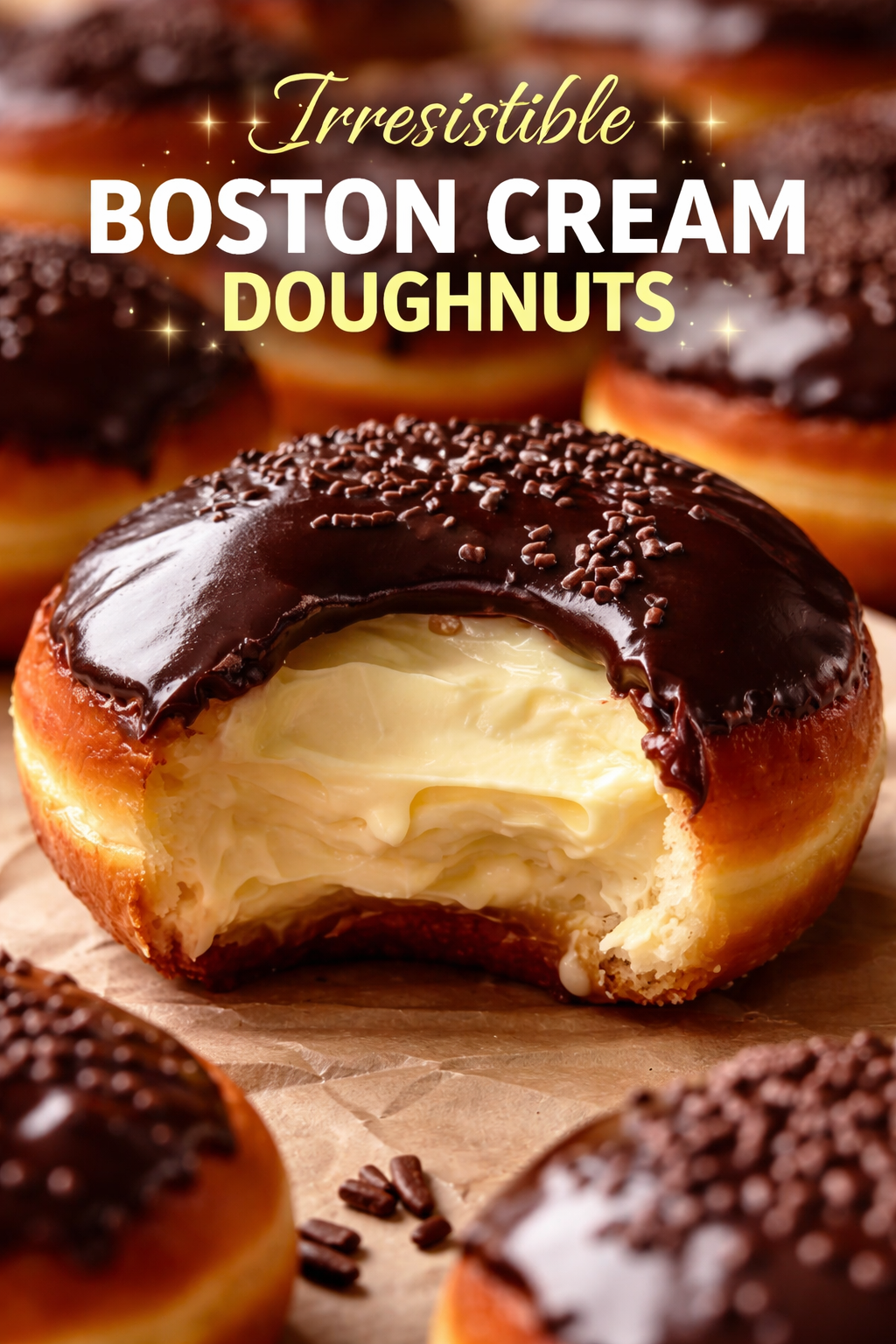
Irresistible Boston Cream Doughnuts
Ingredients
Equipment
Method
- Activate Yeast:
- Mix warm milk and yeast with a pinch of sugar. Let sit 5–10 minutes until foamy.
- Make Dough:
- Add sugar, egg, butter, flour, and salt. Knead until smooth and soft.
- First Rise:
- Cover and let rise 1–1.5 hours until doubled.
- Shape Doughnuts:
- Roll dough to 1/2-inch thickness. Cut rounds and place on tray. Let rise 30 minutes.
- Fry:
- Heat oil to 350°F (175°C). Fry until golden on both sides. Cool completely.
- Make Pastry Cream:
- Heat milk. Whisk sugar, yolks, and cornstarch. Slowly add milk, then cook until thick. Stir in butter and vanilla. Cool.
- Make Glaze:
- Heat cream and pour over chocolate chips. Stir until smooth, add butter.
- Fill Doughnuts:
- Pipe pastry cream into each doughnut.
- Glaze:
- Dip tops into chocolate glaze. Let set.
- Serve:
- Enjoy fresh for best flavor and texture!
Notes
- Make sure oil stays at 350°F for perfect frying
- Doughnuts taste best the same day
- You can bake instead of fry (375°F for ~10–12 min, but texture will differ)
Common Missteps
Start with warm milk, not hot milk. Yeast wakes up best in milk that feels warm to the touch, around the temperature of a comfortable bath. If the milk is too hot, it can weaken or kill the yeast, leaving the dough slow to rise. If your yeast mixture does not become foamy after 10 minutes, replace it before adding the flour; flat yeast almost always leads to dense doughnuts.
Knead until the dough is smooth and elastic, but still soft. A small amount of tackiness is helpful because enriched dough with butter and egg should not feel dry. Adding too much flour makes the finished doughnuts bready instead of pillowy. During testing, the best batch came from stopping the flour as soon as the dough pulled from the bowl but still felt supple.
For frying, use a thermometer and adjust the burner often. Doughnuts cool the oil when they go in, so avoid crowding the pot. Fry two or three at a time and let the oil return to 350°F before adding more. Drain on a rack or paper towels, then cool fully before piping.
Pastry cream needs steady whisking. Cornstarch thickens quickly once heated, and the cream should bubble for a short time to cook out any starchy taste. If lumps appear, strain the hot cream through a fine sieve before chilling. Press plastic wrap directly on the surface so it stays glossy and does not form a skin.
Fillings and Finishes
For a deeper chocolate finish, use bittersweet chocolate chips in the glaze instead of semi-sweet. The glaze will taste less sweet and more cocoa-forward, which works especially well with the vanilla custard filling. For a softer milk-chocolate topping, replace half the semi-sweet chocolate with milk chocolate, but keep the butter for shine and smoothness.
You can flavor the pastry cream with vanilla bean paste, orange zest, or a small spoonful of espresso powder. Add citrus zest while heating the milk, then strain it out for a clean, fragrant custard. For a richer bakery-style filling, fold a few tablespoons of softly whipped cream into the chilled pastry cream right before piping; this makes the filling lighter and more mousse-like.
Baking is possible at 375°F for about 10 to 12 minutes, but the texture will be different. Baked doughnuts are softer and more bread-like, without the delicate fried shell. For dietary adjustments, use a dairy-free milk and plant-based butter in the dough, and choose a dairy-free glaze, though the pastry cream will require careful thickening and will not taste exactly like the classic version.
Proofing and Frying, by Feel and by Thermometer
Rising times in a recipe are an estimate, not an instruction. Dough responds to the temperature of your kitchen, so the same dough can take fifty minutes in July and over two hours in a cold room. Judge it by the dough itself.
Use the poke test. Flour a fingertip and press about a centimetre into the dough. If the dent springs back immediately, it needs more time. If it springs back slowly and stays slightly visible, it is ready. If it does not spring back at all and the surface sighs or deflates, it has gone too far, and the finished crumb will be coarse with a faint alcoholic edge.
Enriched doughs behave differently from lean ones. Butter, eggs, and sugar all slow yeast down, so a sweet dough takes noticeably longer than a plain bread dough of the same weight. That is normal, not a sign the yeast is dead.
If the recipe is fried, oil temperature is the whole game. Hold it at 175 °C (350 °F). Below roughly 165 °C the dough sits in the oil too long and absorbs it, which is exactly what makes a doughnut greasy. Above about 190 °C the outside colours before the middle is cooked. Every piece you add drops the temperature, so fry in small batches and let the oil come back up between them. This is one of the few places in baking where guessing does not work.
Frequently Asked Questions
- Q: Why are my Boston cream doughnuts greasy? The oil was likely too cool or the pot was overcrowded. Keep the oil close to 350°F and fry in small batches so the doughnuts cook quickly instead of absorbing oil.
- Q: Can I make the pastry cream ahead of time? Yes. Make it up to two days ahead, cover it directly with plastic wrap, and refrigerate. Whisk it briefly before filling so it becomes smooth and pipeable again.
- Q: How do I know the dough has risen enough? The dough should look doubled and feel light, puffy, and elastic. After cutting, the rounds should rise again until slightly swollen before they go into the oil.
- Q: Can I fill the doughnuts while they are warm? It is better to wait until they are completely cool. Warm doughnuts can melt the pastry cream, making the filling loose and causing leaks.
- Q: How long do homemade Boston cream doughnuts stay fresh? They taste best the same day, especially within a few hours of filling. Refrigerate leftovers because of the custard, then let them sit briefly at room temperature before serving.