The best Delicious Butterscotch Pie
Learn how to make a rich and creamy butterscotch pie recipe with a smooth homemade filling and fluffy meringue topping. This easy classic dessert is perfect for holidays or family gatherings.
📋 Table of Contents
Why You’ll Love This Recipe
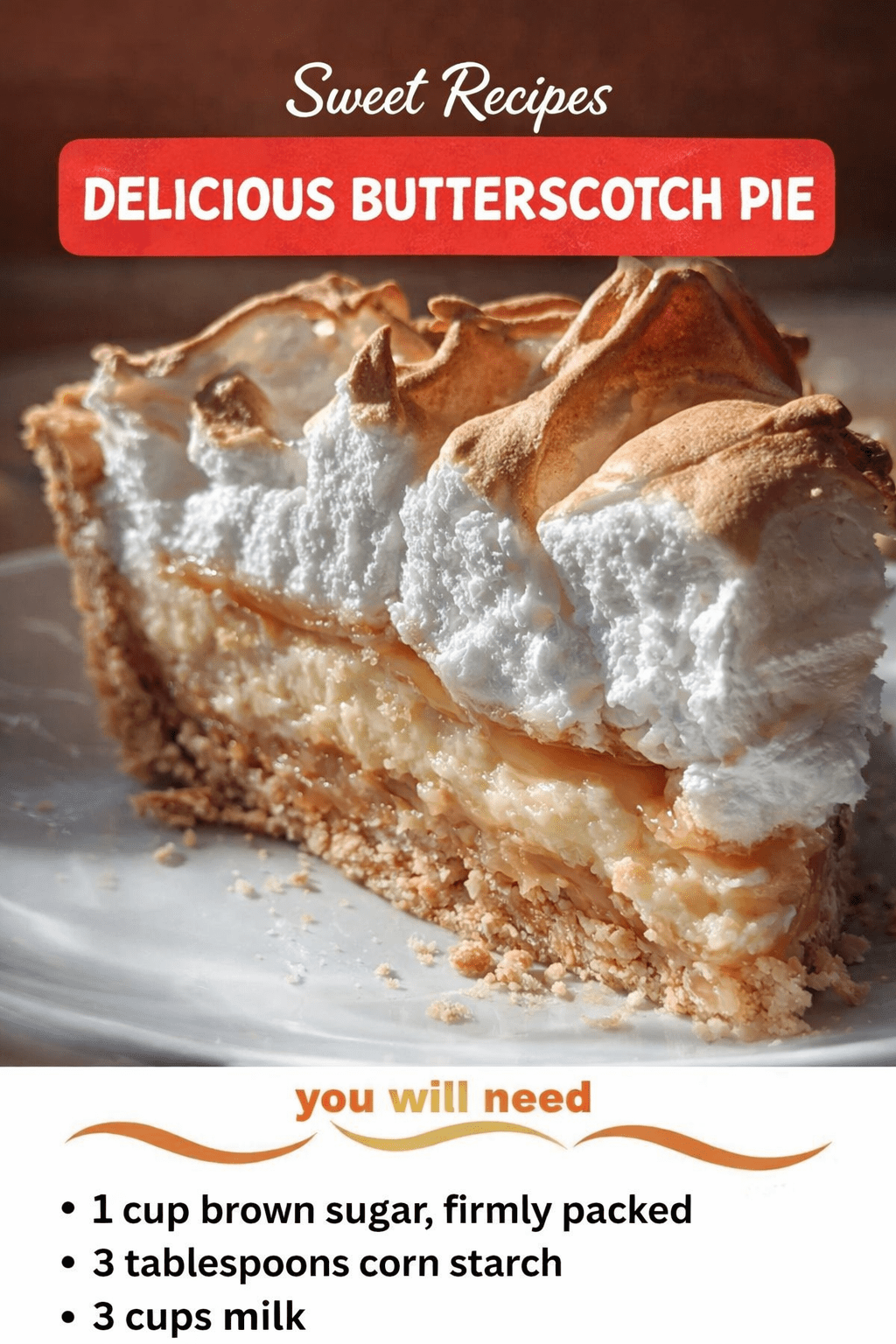
This Delicious Butterscotch Pie has the old-fashioned charm of a diner dessert, but the filling is smoother and deeper than many quick versions. The brown sugar melts into the milk and butter until the kitchen smells warm, caramel-like, and faintly toasted. When it is cooked properly, the custard slices cleanly but still feels creamy on the tongue, with a soft butterscotch sweetness balanced by the light, airy meringue on top.
The part I pay closest attention to is the filling. Butterscotch pie can go from silky to grainy if the sugar and cornstarch are not whisked well before the milk goes in. I have rushed this step before and ended up chasing tiny lumps around the saucepan. The fix is simple: combine the brown sugar and cornstarch thoroughly first, then add the milk gradually while whisking. That early mixing helps the starch disperse evenly, so the custard thickens into a glossy, spoon-coating texture instead of clumping.
The egg yolks give the pie its richness, but they need gentle handling. Tempering works because a small splash of hot filling slowly raises the temperature of the yolks before they return to the pan. Add the heat too quickly and the yolks can scramble, leaving little yellow flecks in the custard. If that happens, strain the filling through a fine mesh sieve before pouring it into the crust. The flavor will still be good, and the texture can usually be saved.
What makes this homemade butterscotch pie especially satisfying is the contrast: flaky baked crust, warm buttery filling, and a cloud of meringue with lightly browned peaks. Spreading the meringue over hot filling helps it bond to the custard and seal against the crust, which reduces shrinking and weeping. Let the finished pie cool completely before slicing; the waiting time allows the filling to set into that soft, creamy cut that makes each forkful taste rich, nostalgic, and carefully made.
Delicious Butterscotch Pie
Ingredients
Equipment
Method
- Prepare the filling
- In a saucepan, combine brown sugar and cornstarch.
- Gradually whisk in the milk until smooth.
- Cook over medium heat, stirring constantly until thick and bubbly.
- Add egg yolks
- Stir a small amount of the hot mixture into the beaten egg yolks.
- Pour the egg mixture back into the saucepan.
- Cook for 2 more minutes, stirring constantly.
- Finish the filling
- Remove from heat and stir in butter and vanilla.
- Pour the filling into the baked pie crust.
- Make the meringue
- Beat egg whites until soft peaks form.
- Gradually add sugar, beating until stiff peaks form.
- Mix in vanilla.
- Bake
- Spread meringue over the hot filling, sealing edges to the crust.
- Bake at 350°F (175°C) for 10–12 minutes until lightly browned.
- Cool
- Let the pie cool completely before slicing.
Notes
Where This One Goes Wrong
For the smoothest butterscotch filling, keep the heat at medium and stir along the bottom and corners of the saucepan. Brown sugar can settle and scorch before the custard looks thick on top. A whisk is best early in the cooking, but once the mixture begins to bubble, I like switching between a whisk and rubber spatula so nothing sticks. The filling should look glossy and thick enough to leave a soft trail when stirred.
Do not skip the extra two minutes of cooking after the yolks go back into the pan. Cornstarch needs enough heat to fully activate, and the egg yolks need time to stabilize the custard. If the pie is cut too soon and the center slumps, it usually means the filling was undercooked or not cooled long enough. Let it cool at room temperature first, then chill if you want neater slices.
For the meringue, use a clean, dry bowl with no trace of yolk. Fat prevents egg whites from whipping properly, so even a small smear of yolk can leave the topping flat. Spread the meringue all the way to the crust edge while the filling is still hot; this seals in steam and helps prevent beads of moisture from forming later.
Store leftover pie loosely covered in the refrigerator for up to 3 days. The crust will soften slightly after chilling, but the flavor becomes rounder as the brown sugar and vanilla settle into the custard.
Keeping the Bottom Crust Crisp
Every problem with a fruit bake traces back to water. Fruit is mostly water, heat drives it out, and it has to go somewhere. Left alone it soaks the pastry and thins the filling.
For the base, the goal is to set the crust before the juice reaches it. Blind-baking the shell gets you most of the way. Sealing the baked surface with a brush of egg white or a thin layer of melted chocolate adds a waterproof barrier. And baking on a preheated tray or baking steel on a low rack drives heat into the base from below, which does more than any other single change.
For the filling, the thickener matters more than the amount. Cornstarch is common but has to reach a genuine boil to thicken fully, and acidic fruit weakens it, so a sharp filling that only simmered will stay loose. Tapioca starch handles acid better and survives freezing without weeping. Flour works but stays cloudy and needs roughly twice the quantity.
There is a step worth adding that most recipes skip. Toss the cut fruit with its sugar and leave it for thirty minutes. It will release a surprising amount of juice. Drain that off, reduce it in a pan until syrupy, then stir it back into the fruit. You have removed the water without cooking the fruit to mush, and the flavour concentrates at the same time.
Other Fruit That Works
For a deeper salted butterscotch pie, add a small pinch of fine sea salt to the filling with the butter and vanilla. Salt does not make the pie taste savory; it sharpens the buttery caramel notes and keeps the sweetness from feeling flat. Dark brown sugar gives the boldest flavor, while light brown sugar makes a milder, more delicate custard.
A graham cracker crust works well if you prefer a crumbly, buttery base instead of a flaky pastry crust. Bake it briefly before filling so it has enough structure to hold the warm custard. For a gluten-free version, use a certified gluten-free pie crust or gluten-free cookie crumb crust, and check that the cornstarch is labeled gluten-free if cross-contact matters in your kitchen.
If meringue is not your favorite, top the cooled pie with lightly sweetened whipped cream instead. The pie will taste creamier and softer, though it will miss the toasted, marshmallow-like aroma of baked meringue. For a nutty finish, sprinkle toasted pecans over whipped cream or add a few chopped pecans to the crust before filling.
Frequently Asked Questions
- Q: Why is my butterscotch pie filling runny? The filling may not have cooked long enough after thickening. Let it bubble while stirring, then cook the yolk-enriched custard for the full 2 minutes so the cornstarch and eggs can set properly.
- Q: How do I prevent lumps in the custard? Mix the brown sugar and cornstarch before adding milk, then pour the milk in slowly while whisking. If lumps still appear, strain the hot filling before it goes into the crust.
- Q: Why does meringue shrink after baking? Meringue often shrinks when it is spread over a cool filling or not sealed to the crust. Apply it while the filling is hot and press it gently to the crust edge.
- Q: Can I make this pie ahead of time? Yes. Bake and cool the pie completely, then refrigerate it. For the freshest meringue texture, serve within 24 hours, when the topping is still light and tender.
- Q: Can I use whole eggs instead of yolks? Yolks are better here because they add richness without making the filling rubbery. Whole eggs can firm the custard too aggressively and change the silky texture.