The best Salted Caramel Cheesecake Cookies
Soft salted caramel cheesecake cookies filled with creamy cheesecake and topped with rich caramel and sea salt. Easy bakery-style dessert recipe.
📋 Table of Contents
Why You’ll Love This Recipe
A cookie carrying a cheesecake filling has to hold something soft inside something that spreads, and the two work against each other in the oven.
The filling needs to be frozen solid before it goes in. A frozen core takes longer to warm, so the dough around it sets before the filling liquefies and escapes. Portion it, freeze it hard, then wrap the dough completely around it with no thin spots.
Chill the assembled cookies as well. Cold dough spreads less, which matters more than usual here because a cookie that spreads too far leaves the filling exposed at the surface.
The salt is not decoration. It suppresses the bitterness that develops in darker caramelised sugar, which is why salted caramel tastes rounder and less sharp than the same caramel without it. Flaky salt added after baking stays perceptible; salt mixed into the dough disappears into the background.
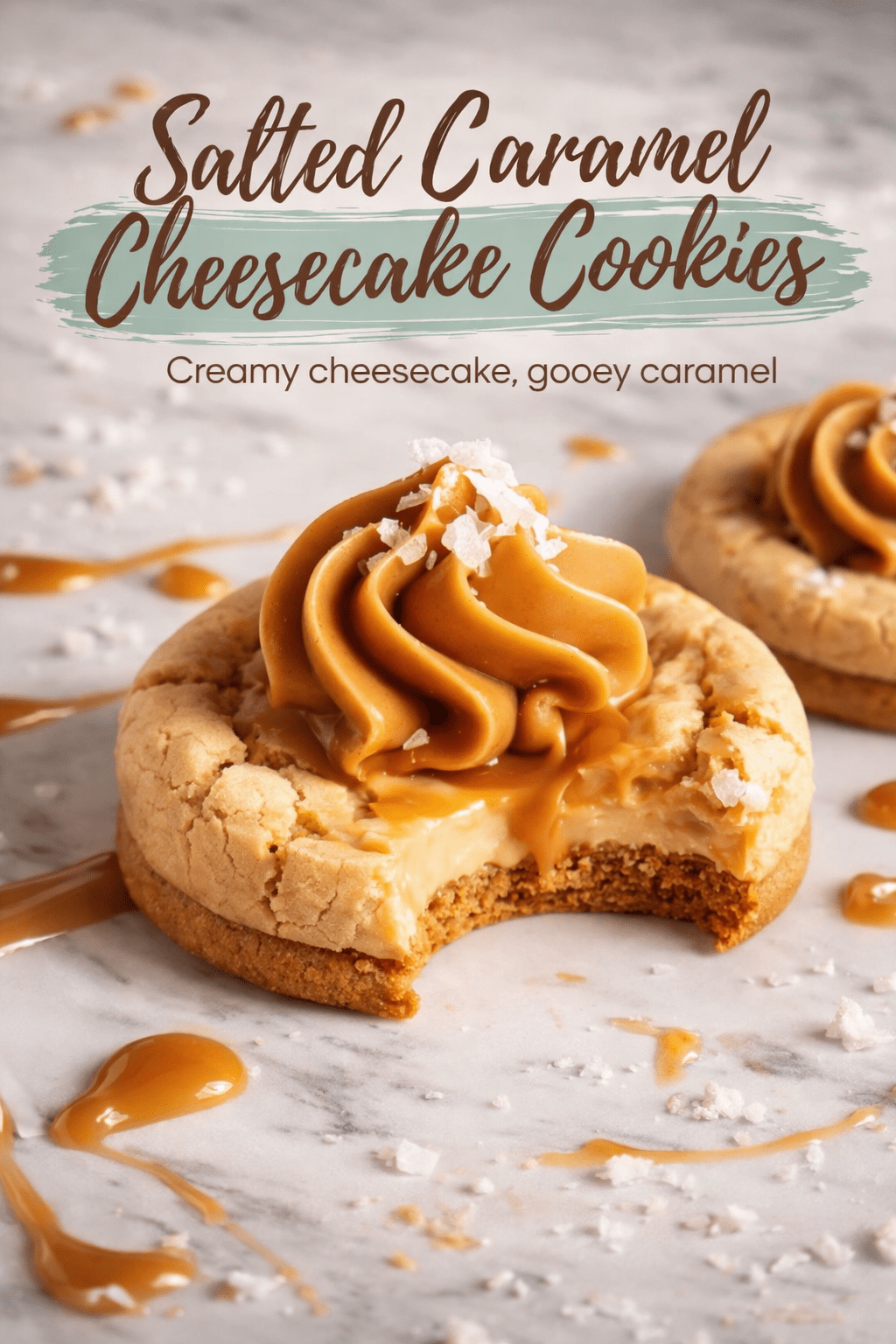
Salted Caramel Cheesecake Cookies
Ingredients
Equipment
Method
- Numbered steps (important for schema):
- Preheat oven to 350°F (175°C).
- Mix dry ingredients in one bowl.
- Cream butter and sugars in another bowl.
- Combine and form cookie dough.
- Prepare cheesecake filling.
- Scoop dough, add filling in center.
- Bake 10–12 minutes.
- Drizzle with caramel and sprinkle sea salt.
Notes
• Don’t overbake — cookies should stay slightly soft in the center.
• Add flaky sea salt right after drizzling caramel for best flavor.
• Store in the fridge up to 4 days in an airtight container.
• Freeze unbaked cookie dough balls for up to 2 months.
Notes on the Method
For bakery-style salted caramel cheesecake cookies, temperature control is one of the most important details. Softened butter should still feel cool to the touch. If the butter becomes too warm, the dough spreads too quickly and the cheesecake center may leak out during baking. Professional pastry kitchens often chill stuffed cookie dough for 15 to 20 minutes before baking because it creates thicker cookies with cleaner layers inside.
When mixing the dough, cream the butter and sugars just until fluffy. Overmixing introduces too much air, which can cause the cookies to puff dramatically in the oven and collapse while cooling. The goal is a dense, soft center with slightly crisp edges. Using parchment paper also helps the bottoms bake evenly without becoming overly dark.
Another useful technique is freezing the cheesecake filling in small scoops for 10 minutes before assembling. This makes stuffing the cookies much easier and prevents the filling from blending into the dough. If your caramel sauce feels too thick for drizzling, warm it gently for a few seconds rather than adding milk or water, which can dilute the flavor.
Store leftover cookies in an airtight container in the refrigerator for up to four days. The texture stays best when the cookies are brought back to room temperature before serving. For longer storage, freeze the unbaked cookie dough balls separately on a tray before transferring them to a freezer bag. Baking directly from frozen usually requires an extra one to two minutes in the oven.
Baking It Without Splitting the Top
A crack is a structural failure, not bad luck. It has two causes, and they compound.
The first is over-baking. Egg proteins set, then keep tightening if the heat continues, squeezing water out and pulling the surface apart. The second is the cake shrinking as it cools while its edges are still stuck to the pan. The middle pulls inward, the rim holds, and the top tears between them.
Air is the third factor. Beating vigorously after the eggs go in whips bubbles into the batter. Those bubbles expand in the oven, lift the surface, then collapse. Mix on low speed once eggs are in, and only until combined.
A water bath is not fussiness. Surrounding the pan with hot water caps the temperature at the edges near 100 °C and keeps the oven humid, so the outside cannot race ahead of the centre. Wrap the pan base well, or set it inside a larger pan rather than directly in the water.
For doneness, use the jiggle test rather than a timer. Nudge the pan. The outer few centimetres should be set, and a circle in the middle roughly the size of your palm should still wobble like loose jelly. It looks underdone, and it is meant to. It carries on setting as it cools. A cheesecake firm all the way through in the oven is already over-baked.
Then run a thin knife around the rim as soon as it comes out, so the cake can shrink freely, and cool it slowly: oven off, door ajar, an hour inside before it goes anywhere near the fridge.
Crusts and Toppings
These cookies adapt well to different flavors without losing their creamy texture. For a deeper caramel flavor, swap part of the white sugar with dark muscovado sugar. It creates a richer molasses aroma and darker golden edges after baking. Chocolate lovers often add mini dark chocolate chunks to the dough, which melt into the caramel for a more intense dessert-style cookie.
If you need a gluten-free version, use a high-quality 1:1 gluten-free flour blend that contains xanthan gum. The dough may appear softer at first, but chilling it before baking improves structure. For a lighter variation, reduce the caramel drizzle slightly and add toasted pecans for crunch and balance.
A seasonal variation we tested during autumn included cinnamon in the dough and a small pinch of espresso powder in the caramel. The espresso does not taste like coffee, but it deepens the caramel flavor naturally. You can also replace vanilla extract with maple extract for a warmer finish that pairs beautifully with sea salt and cream cheese.
Frequently Asked Questions
- Q: Why did my cheesecake filling leak out during baking? This usually happens when the filling is too soft or overfilled. Chill the filling before assembling and completely seal the cookie dough around the center.
- Q: Can I make these cookies ahead of time? Yes. The dough freezes very well for up to two months. Many bakers prefer baking them fresh from frozen because the cookies stay thicker and softer in the center.
- Q: What type of caramel sauce works best? Thick homemade caramel sauce gives the richest flavor and glossy finish, but a high-quality store-bought caramel also works well. Avoid very thin dessert syrups because they soak into the cookies too quickly.
- Q: How do I keep the cookies soft after baking? Do not overbake them. The centers should still look slightly underdone when removed from the oven. Residual heat finishes the baking process while cooling.
- Q: Can I use salted butter instead of unsalted butter? You can, but reduce the added sea salt slightly. Using unsalted butter gives better control over the final balance between sweet and salty flavors.
GOOD RECIPE