The best Salted Caramel Cheesecake Cookies
Soft salted caramel cheesecake cookies filled with creamy cheesecake and topped with rich caramel and sea salt. Easy bakery-style dessert recipe.
📋 Table of Contents
Why You’ll Love This Recipe
These salted caramel cheesecake cookies combine three bakery favorites in one bite: soft brown sugar cookies, creamy cheesecake filling, and warm caramel finished with flaky sea salt. The contrast in texture is what makes this recipe memorable. The outside stays lightly crisp around the edges while the center remains rich, creamy, and almost mousse-like once cooled. When the caramel warms slightly over the freshly baked cookies, the aroma fills the kitchen with buttery notes that smell closer to a pastry shop than a home oven.
One of the biggest differences between this recipe and standard stuffed cookies is the balance of sweetness. The cream cheese filling adds a subtle tangy flavor that keeps the caramel from becoming too heavy. During testing, we found that using dark brown sugar gave the dough a deeper caramelized flavor and a softer crumb after baking. The cookies also spread more evenly when the butter was softened but not melted. Melted butter made the centers greasy and caused the cheesecake filling to leak during baking.
A common mistake with cheesecake cookies is overfilling the center. The first batch we tested looked beautiful going into the oven, but too much filling caused several cookies to split open and lose their creamy center. Using a small cookie scoop and keeping the filling cold solved the problem immediately. Chilled cream cheese filling stays compact while the cookie dough spreads naturally around it in the oven.
The sea salt matters more than many people expect. Fine table salt disappears into the caramel, while flaky sea salt adds tiny crunchy bursts that balance the sweetness on the tongue. Adding it immediately after drizzling the caramel helps the flakes stick without dissolving completely. That finishing touch gives these cookies the same polished look and flavor you would expect from a high-end bakery display.
These cookies are especially good for holiday trays, dinner parties, and make-ahead dessert boxes because the flavor improves slightly after a few hours in the refrigerator. The caramel settles into the cookie surface while the cheesecake center becomes silkier and more structured. Serve them slightly cool for a firmer cheesecake texture or let them sit at room temperature for 10 minutes if you prefer a softer, creamier bite.
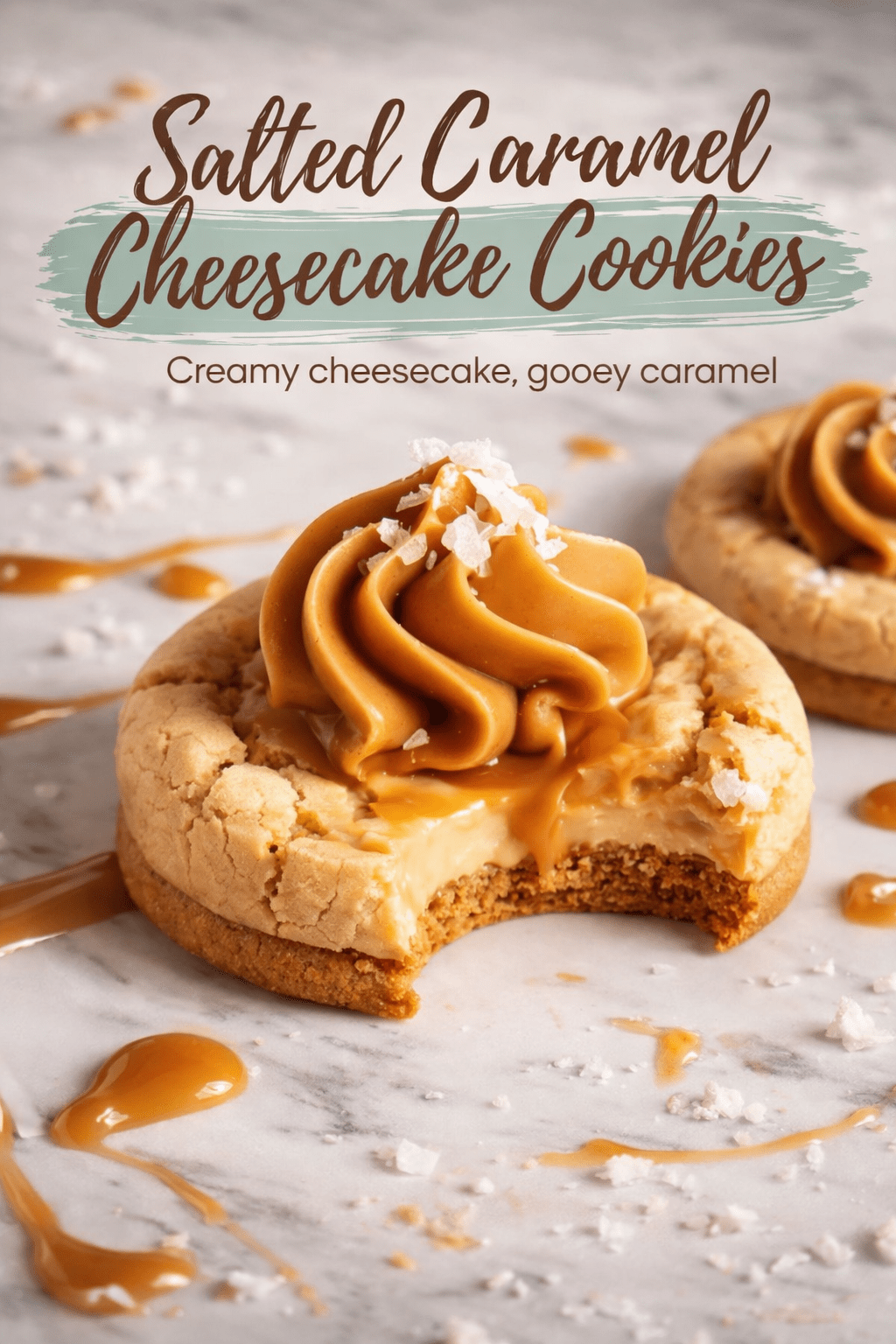
Salted Caramel Cheesecake Cookies
Ingredients
Equipment
Method
- Numbered steps (important for schema):
- Preheat oven to 350°F (175°C).
- Mix dry ingredients in one bowl.
- Cream butter and sugars in another bowl.
- Combine and form cookie dough.
- Prepare cheesecake filling.
- Scoop dough, add filling in center.
- Bake 10–12 minutes.
- Drizzle with caramel and sprinkle sea salt.
Notes
• Don’t overbake — cookies should stay slightly soft in the center.
• Add flaky sea salt right after drizzling caramel for best flavor.
• Store in the fridge up to 4 days in an airtight container.
• Freeze unbaked cookie dough balls for up to 2 months.
Expert Tips & Techniques
For bakery-style salted caramel cheesecake cookies, temperature control is one of the most important details. Softened butter should still feel cool to the touch. If the butter becomes too warm, the dough spreads too quickly and the cheesecake center may leak out during baking. Professional pastry kitchens often chill stuffed cookie dough for 15 to 20 minutes before baking because it creates thicker cookies with cleaner layers inside.
When mixing the dough, cream the butter and sugars just until fluffy. Overmixing introduces too much air, which can cause the cookies to puff dramatically in the oven and collapse while cooling. The goal is a dense, soft center with slightly crisp edges. Using parchment paper also helps the bottoms bake evenly without becoming overly dark.
Another useful technique is freezing the cheesecake filling in small scoops for 10 minutes before assembling. This makes stuffing the cookies much easier and prevents the filling from blending into the dough. If your caramel sauce feels too thick for drizzling, warm it gently for a few seconds rather than adding milk or water, which can dilute the flavor.
Store leftover cookies in an airtight container in the refrigerator for up to four days. The texture stays best when the cookies are brought back to room temperature before serving. For longer storage, freeze the unbaked cookie dough balls separately on a tray before transferring them to a freezer bag. Baking directly from frozen usually requires an extra one to two minutes in the oven.
Variations & Alternatives
These cookies adapt well to different flavors without losing their creamy texture. For a deeper caramel flavor, swap part of the white sugar with dark muscovado sugar. It creates a richer molasses aroma and darker golden edges after baking. Chocolate lovers often add mini dark chocolate chunks to the dough, which melt into the caramel for a more intense dessert-style cookie.
If you need a gluten-free version, use a high-quality 1:1 gluten-free flour blend that contains xanthan gum. The dough may appear softer at first, but chilling it before baking improves structure. For a lighter variation, reduce the caramel drizzle slightly and add toasted pecans for crunch and balance.
A seasonal variation we tested during autumn included cinnamon in the dough and a small pinch of espresso powder in the caramel. The espresso does not taste like coffee, but it deepens the caramel flavor naturally. You can also replace vanilla extract with maple extract for a warmer finish that pairs beautifully with sea salt and cream cheese.
Frequently Asked Questions
- Q: Why did my cheesecake filling leak out during baking? This usually happens when the filling is too soft or overfilled. Chill the filling before assembling and completely seal the cookie dough around the center.
- Q: Can I make these cookies ahead of time? Yes. The dough freezes very well for up to two months. Many bakers prefer baking them fresh from frozen because the cookies stay thicker and softer in the center.
- Q: What type of caramel sauce works best? Thick homemade caramel sauce gives the richest flavor and glossy finish, but a high-quality store-bought caramel also works well. Avoid very thin dessert syrups because they soak into the cookies too quickly.
- Q: How do I keep the cookies soft after baking? Do not overbake them. The centers should still look slightly underdone when removed from the oven. Residual heat finishes the baking process while cooling.
- Q: Can I use salted butter instead of unsalted butter? You can, but reduce the added sea salt slightly. Using unsalted butter gives better control over the final balance between sweet and salty flavors.
GOOD RECIPE