The best Salted Caramel Cake
Try this moist salted caramel cake layered with rich caramel buttercream and silky caramel drip. An easy homemade dessert perfect for any occasion.
📋 Table of Contents
Why You’ll Love This Recipe
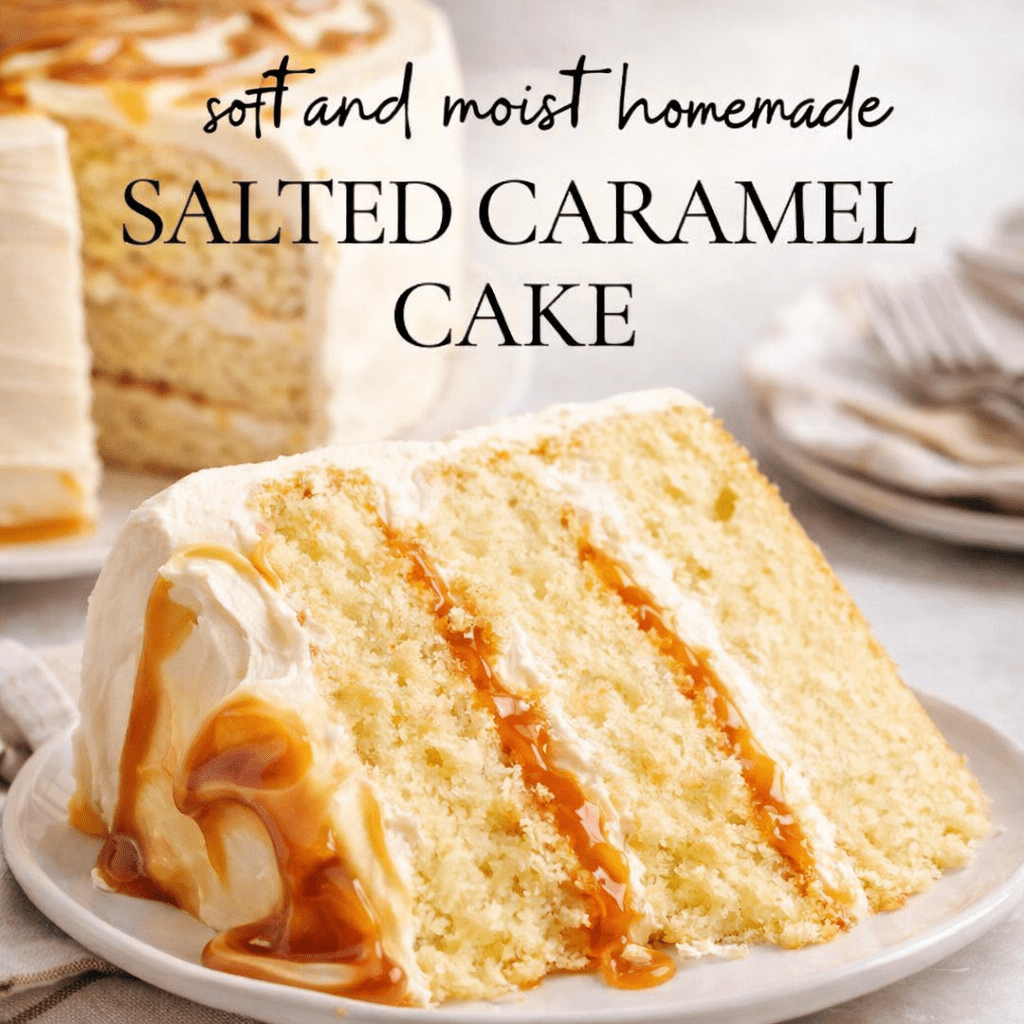
This salted caramel cake was developed after several rounds of testing to create a layer cake that stays soft for days without becoming heavy or overly sweet. The vanilla cake layers bake up tender with a fine crumb, while the salted caramel buttercream adds a smooth, rich finish that tastes balanced rather than sugary. The caramel drizzle settles gently over the chilled frosting and creates glossy drips down the sides that make the cake look straight from a bakery display case.
One of the most noticeable things when slicing into this cake is the contrast between the airy vanilla sponge and the buttery caramel filling. The aroma alone is worth mentioning. As the sugar melts into amber caramel, the kitchen fills with warm toasted notes that smell almost like butterscotch and brown butter combined. Once sea salt is added, the flavor sharpens slightly and keeps the caramel from tasting flat.
During recipe testing, one mistake happened repeatedly: rushing the caramel. Sugar can look pale for several minutes and then suddenly darken very quickly. In an early batch, the caramel turned bitter because the pan stayed over medium-high heat too long. Lowering the heat slightly and watching for a deep honey color instead of a dark brown solved the problem immediately. A heavy-bottomed saucepan also helps distribute heat evenly, preventing burnt spots.
Another detail that makes a noticeable difference is using room-temperature ingredients for the cake batter. Cold eggs and milk tend to create a dense texture because the batter struggles to emulsify properly. When the butter, eggs, and milk are all at room temperature, the batter becomes silky and traps air more efficiently during mixing. That trapped air expands in the oven, giving the cake its soft, moist structure.
This cake works especially well for birthdays, holiday tables, and dinner parties because the flavor develops even more after a few hours in the refrigerator. The buttercream firms slightly while the caramel settles into the layers, creating cleaner slices and a deeper caramel flavor. A light sprinkle of flaky sea salt just before serving adds texture and balances every bite with a subtle crunch against the creamy frosting.
Salted Caramel Cake
Ingredients
Equipment
Method
- 1️⃣ Make the Cake Layers
- Preheat oven to 350°F (175°C). Grease and line two 8-inch round cake pans.
- In a bowl, whisk flour, baking powder, and salt.
- In a large bowl, beat butter and sugar until light and fluffy (3–4 minutes).
- Add eggs one at a time, mixing well after each. Stir in vanilla.
- Alternate adding dry ingredients and milk, beginning and ending with dry ingredients.
- Divide batter evenly between pans.
- Bake 30–35 minutes or until a toothpick inserted comes out clean.
- Cool in pans 10 minutes, then transfer to a wire rack to cool completely.
- 2️⃣ Make the Salted Caramel
- Heat sugar in a saucepan over medium heat, stirring constantly until melted and amber in color.
- Add butter carefully (it will bubble). Stir until combined.
- Slowly pour in heavy cream while stirring.
- Remove from heat and stir in sea salt.
- Let cool completely before using.
- 3️⃣ Make the Buttercream
- Beat butter until creamy (2–3 minutes).
- Gradually add powdered sugar, mixing well.
- Add caramel sauce and vanilla.
- Add cream as needed for smooth, spreadable consistency.
- Beat 2–3 minutes until fluffy.
- 4️⃣ Assemble the Cake
- Level cake layers if needed.
- Spread a thick layer of buttercream on the first layer.
- Drizzle salted caramel on top.
- Place second layer and frost entire cake.
- Chill 20–30 minutes.
- Finish with caramel drip and sprinkle flaky sea salt on top.
Notes
- Room Temperature Ingredients: Butter, eggs, and milk should be at room temperature for a smooth batter and even baking.
- Caramel Safety: Melted sugar is extremely hot. Stir carefully and avoid splashes when adding butter and cream.
- Caramel Thickness: If caramel becomes too thick, gently reheat for a few seconds until pourable.
- Frosting Consistency: Add heavy cream 1 tablespoon at a time to reach a smooth, spreadable texture.
- Extra Moist Cake: Brush cake layers lightly with simple syrup before frosting if desired.
- Clean Caramel Drip: Chill the frosted cake 20–30 minutes before adding the caramel drip.
- Salt Level: Start with less salt in the caramel and adjust to taste. Flaky sea salt on top enhances flavor.
- Make Ahead: Caramel sauce can be made up to 1 week in advance and stored in the refrigerator.
Mixing and Baking Notes
For the softest salted caramel cake layers, avoid overmixing once the flour is added. Mixing too long develops excess gluten, which can make the cake slightly chewy instead of tender. Professional bakers often alternate the dry ingredients and milk because it keeps the batter smooth without overworking it. The finished batter should look creamy and light, not overly thick.
One of the most important steps in this recipe is cooling the caramel completely before adding it to the buttercream. Warm caramel melts the butter and creates a loose frosting that slides when layering the cake. If the buttercream ever becomes too soft, refrigerate it for 10–15 minutes and whip again briefly until fluffy.
To achieve clean cake layers, many pastry chefs use a kitchen scale to divide the batter evenly between pans. Uneven layers tend to bake at different speeds, leaving one dry and the other underbaked. Chilling the frosted cake before adding the caramel drip also improves the finish dramatically. Warm caramel flows more slowly over cold buttercream, creating controlled drips rather than running straight down the sides.
Storage matters with caramel cakes because sugar attracts moisture. Keep the cake covered in the refrigerator, but let slices sit at room temperature for about 20 minutes before serving. This softens the buttercream and brings out the buttery caramel aroma more fully. If making the cake ahead, the caramel sauce can be prepared several days in advance and gently reheated until pourable.
Doneness, and Why the Toothpick Lies
The toothpick test is the standard advice and it is unreliable for anything rich. In a batter containing melted chocolate or a lot of fat, the streaks left on the skewer are simply the fat, not raw batter, so a fully baked cake reads as underdone and gets returned to the oven. That is a common route to a dry result.
Internal temperature is the honest measure. Most butter cakes are done between 93 and 96 °C. Leaner sponges run a little higher, around 96 to 99 °C. An instant-read thermometer in the centre removes the guesswork entirely, and once you have checked a few bakes against it you start recognising the visual cues properly.
Those cues are worth learning. The edges pull very slightly away from the sides of the tin. The top springs back rather than holding a fingerprint. And the sound changes: a baking cake hisses quietly as steam escapes, and that noise fades as it finishes.
One more thing decides the crumb, and it happens early. Do not open the oven during the first two thirds of the bake. Until the structure sets, the batter is essentially a liquid held up by expanding gas, and the temperature drop from an open door is enough to collapse it. Once the top has domed and coloured, a quick look does no harm.
Frostings and Finishes
This salted caramel cake adapts beautifully to different flavor profiles. For a deeper flavor, replace part of the granulated sugar in the cake with light brown sugar. It creates a warmer, slightly caramelized taste and adds extra moisture to the crumb. Chocolate lovers can add a thin layer of dark chocolate ganache between the cake layers for a richer dessert with balanced bitterness.
A coffee variation also works surprisingly well. Adding a teaspoon of espresso powder to the caramel intensifies the toasted sugar flavor without making the cake taste like coffee. During autumn testing, a small amount of cinnamon added to the batter created a warm bakery-style aroma that paired especially well with the sea salt topping.
For gluten-free baking, use a reliable 1:1 gluten-free flour blend containing xanthan gum. The cake layers may bake slightly faster, so checking a few minutes early helps prevent dryness. If you prefer a lighter frosting, reduce the powdered sugar slightly and whip in extra cream for a silkier texture.
Frequently Asked Questions
- Q: Why did my caramel turn grainy? Grainy caramel usually happens when sugar crystals form on the sides of the pan. Stir gently and avoid splashing sugar onto the pan walls while melting.
- Q: Can I make this cake a day ahead? Yes. In fact, the flavor often improves overnight because the caramel settles into the cake layers and the frosting firms slightly for cleaner slices.
- Q: How do I keep my cake layers moist? Avoid overbaking and measure flour carefully. A digital kitchen scale gives the most consistent results and prevents dry cake texture.
- Q: What if my buttercream feels too sweet? Add a small pinch of sea salt or an extra spoonful of caramel sauce. Both help balance the sweetness naturally.
- Q: Can I freeze the cake? Yes. Freeze unfrosted cake layers tightly wrapped for up to two months. Thaw overnight in the refrigerator before assembling.
- Q: Why is my caramel drip sliding off the cake? The cake likely was not chilled long enough. Cold buttercream slows the caramel and helps create neat decorative drips.