Advanced Cooking Techniques: Elevate Your Culinary Skills
Beyond basic sautéing and roasting lies a world of culinary innovation. Advanced cooking techniques, once reserved for professional kitchens, are now accessible to ambitious home chefs. Mastering these methods can transform everyday ingredients into extraordinary dishes, unlocking new textures, intensifying flavors, and creating truly memorable dining experiences. Join us as we explore some of the most impactful advanced techniques that will elevate your cooking from good to gourmet.
By Sweet Recipe Team | May 9, 2026
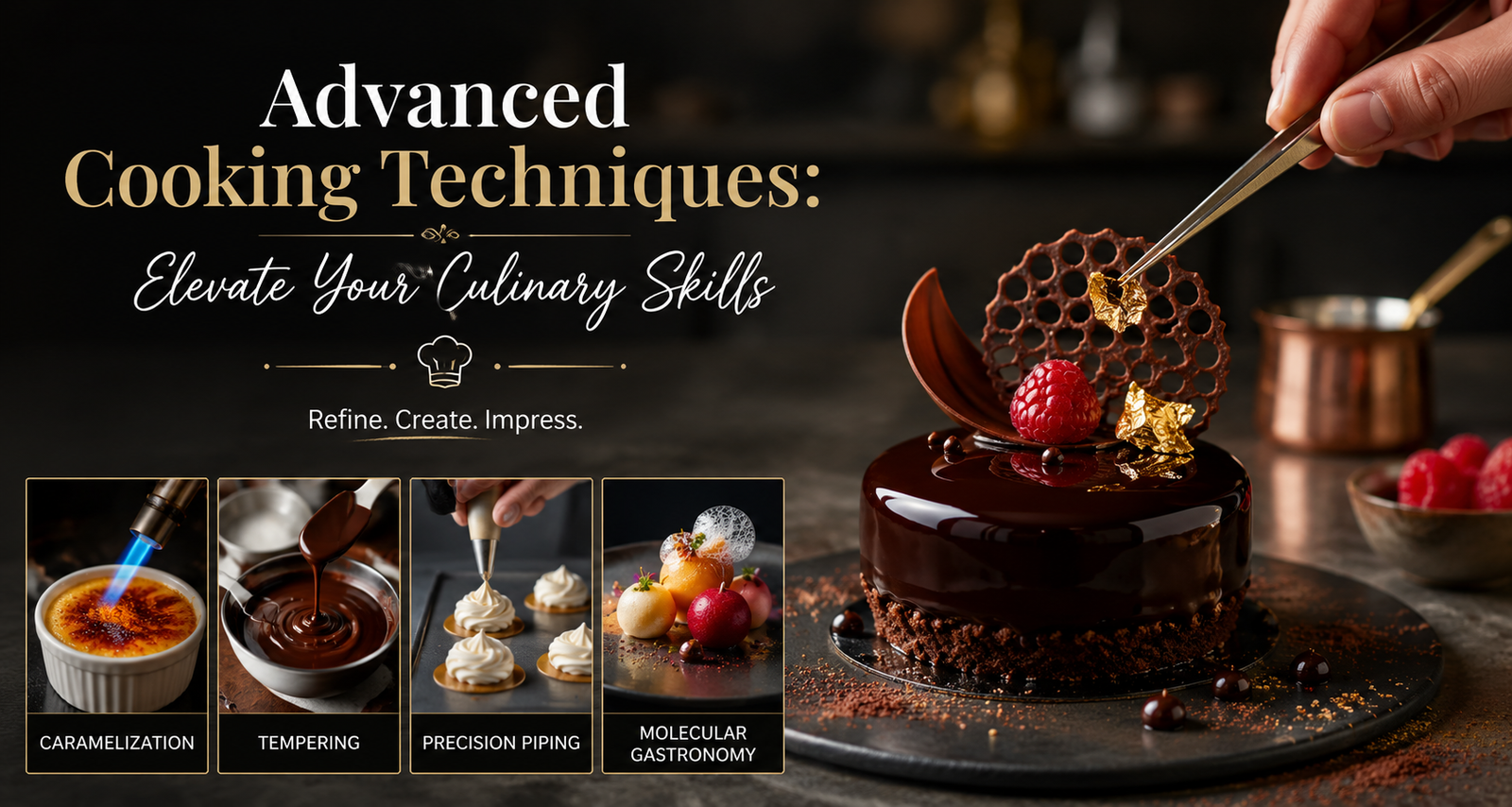
The Art of Precision and Transformation in the Kitchen
Advanced cooking isn’t just about fancy gadgets; it’s about understanding the science behind food and applying precise methods to achieve superior results. These techniques allow for unparalleled control over texture, temperature, and flavor infusion, leading to dishes that are consistently perfect and surprisingly delicious. From the tender embrace of a water bath to the vibrant burst of encapsulated liquids, prepare to redefine what’s possible in your kitchen.
1. Sous Vide: Precision Temperature Cooking
Sous Vide, French for “under vacuum,” involves cooking food sealed in a vacuum-sealed bag in a precisely controlled water bath. This method ensures that food is cooked to an exact internal temperature from edge to edge, preventing overcooking and preserving moisture. Imagine a steak cooked to a perfect medium-rare throughout, with a juicy, tender bite and a rich, beefy aroma that fills the air. The texture is uniformly succulent, a stark contrast to the gradient of doneness often found in traditionally cooked meats.
Tip: After sous vide cooking, always sear meats or poultry in a very hot pan for a short time to develop a delicious, crispy crust (Maillard reaction). This adds a crucial textural contrast and deepens the savory flavors, making the dish visually appealing and incredibly satisfying to the palate.
2. Fermentation: Cultivating Complex Flavors
Fermentation is an ancient technique experiencing a modern resurgence. It involves using microorganisms (bacteria, yeast, mold) to break down food components, creating new, complex flavors and often enhancing nutritional value. Think of the tangy, effervescent bite of homemade sauerkraut, the deep umami of miso, or the sharp, refreshing zest of kombucha. The process introduces a vibrant, sometimes pungent, aroma and a delightful acidity that can cut through richness and brighten dishes.
Tip: Start with simple ferments like lacto-fermented vegetables (pickles, sauerkraut). Ensure proper sanitation to prevent unwanted microbial growth. Experiment with different spices and vegetables to discover a spectrum of unique flavors and textures, adding a new dimension to your meals.
3. Spherification: Edible Liquid Spheres
A hallmark of molecular gastronomy, spherification transforms liquids into small, spherical pearls with a thin, gel-like membrane and a liquid interior. This technique creates an exciting textural surprise – a delicate pop followed by a burst of intense flavor. Imagine tiny spheres of balsamic vinegar bursting over a caprese salad, or sweet mango spheres dissolving on the tongue in a dessert. The visual appeal is striking, and the sensory experience is truly unique, offering a playful contrast of textures and concentrated tastes.
Tip: There are two main types: basic spherification (liquid + calcium chloride dropped into sodium alginate bath) and reverse spherification (liquid + sodium alginate dropped into calcium chloride bath). Reverse is often easier for beginners as the spheres are more stable. Practice with fruit juices or flavored broths to perfect your technique.
4. Dehydration: Concentrating Flavors and Textures
Dehydration removes moisture from food, concentrating its natural flavors and creating new, often crispy or chewy textures. This technique is excellent for preserving ingredients and adding intense flavor bombs to dishes. Consider the sweet, chewy intensity of sun-dried tomatoes, the earthy crunch of mushroom chips, or the vibrant, concentrated essence of dried fruit powders. The aroma becomes more potent, and the texture can range from brittle to pliable, offering versatility in culinary applications.
Tip: Use a food dehydrator for best results, ensuring even drying and preventing spoilage. Experiment with thinly sliced fruits, vegetables, and even herbs. Dehydrated ingredients can be rehydrated, powdered for flavor dusts, or used as crispy garnishes, adding depth and visual interest to your plates.
5. Emulsification: Stable Blends of Oil and Water
Emulsification is the process of blending two immiscible liquids, like oil and water, into a stable, homogeneous mixture. This technique is fundamental to creating creamy sauces, dressings, and foams that hold their structure. Think of the rich, velvety texture of a hollandaise sauce, the smooth tang of a homemade mayonnaise, or the light, airy foam topping a delicate soup. A well-executed emulsion offers a luxurious mouthfeel and carries flavors beautifully, coating the palate with a harmonious blend.
Tip: The key to a stable emulsion is to add the oil very slowly in a thin stream while continuously whisking or blending. Egg yolks, mustard, or lecithin can act as emulsifiers. Pay attention to temperature; some emulsions are best made with warm ingredients, others cold. A stable emulsion should feel smooth and uniform on the tongue.
6. Clarification: Achieving Purity in Liquids
Clarification is the process of removing impurities from liquids to achieve a crystal-clear product, often enhancing flavor and presentation. This is commonly seen in consommé, clarified butter (ghee), or even clear cocktails. A perfectly clarified consommé boasts a pure, intense flavor of its base ingredients, with a shimmering, jewel-like appearance. Clarified butter offers a clean, nutty aroma and a higher smoke point, ideal for searing. The absence of cloudiness allows the true essence of the liquid to shine through, both visually and on the palate.
Tip: For consommé, use a raft of egg whites and ground meat/vegetables to trap impurities. For butter, gently melt and skim the foam, then carefully pour off the clear butterfat, leaving the milk solids behind. Patience is crucial for a truly clear result, ensuring a pristine visual and taste experience.
7. Confit: Preserving and Tenderizing in Fat
Confit is a traditional French technique where food, typically meat (like duck or pork), is slowly cooked and preserved in its own fat. This low-temperature cooking renders the meat incredibly tender, succulent, and deeply flavorful. The resulting texture is melt-in-your-mouth soft, with a rich, savory aroma that is both comforting and luxurious. The fat also acts as a natural preservative, allowing the confit to be stored for extended periods, intensifying its robust taste over time.
Tip: While traditionally done with duck, you can confit vegetables (garlic, tomatoes) in olive oil for equally delicious results. Ensure the food is fully submerged in fat and cooked at a very low temperature for several hours. The reward is an intensely flavored, incredibly tender product that can be crisped up before serving for textural contrast.
8. Smoking: Infusing Deep, Aromatic Flavors
Smoking is a technique that infuses food with the complex, aromatic compounds from burning wood, adding a distinctive depth of flavor and often a beautiful color. Whether hot smoking (cooking and smoking simultaneously) or cold smoking (infusing flavor without cooking), the results are transformative. Imagine the smoky, savory notes of slow-cooked brisket, the delicate aroma of smoked salmon, or even the subtle hint of smoke in a cheese. The flavor profile becomes robust and earthy, with a lingering warmth that tantalizes the senses.
Tip: Choose your wood chips wisely (hickory, apple, cherry, mesquite each impart different flavors). Maintain a consistent temperature and airflow for even smoking. Start with milder woods and shorter smoking times until you understand the intensity you prefer. The goal is a balanced smoky flavor that complements, rather than overwhelms, the main ingredient.
9. Tempering Chocolate: Achieving a Perfect Snap and Sheen
Tempering chocolate is a crucial technique for creating professional-looking confections with a glossy finish, a firm snap, and resistance to blooming (white streaks). It involves carefully controlling the chocolate’s temperature to stabilize its cocoa butter crystals. Untempered chocolate can be dull, soft, and prone to melting easily. Properly tempered chocolate, however, has a beautiful shine, a satisfying crisp break, and a smooth, luxurious melt on the tongue, releasing its full, rich cocoa aroma.
Tip: Use a good quality couverture chocolate and a reliable thermometer. The seeding method (adding solid tempered chocolate to melted chocolate) or tabling method (spreading on a cool surface) are common. Practice is key to understanding the visual cues of properly tempered chocolate – it should thicken slightly and coat a spoon evenly.
10. Reverse Searing: The Ultimate Steak Technique
Reverse searing is a method primarily used for thicker cuts of meat, where the meat is cooked slowly at a low temperature until almost done, then finished with a quick, high-heat sear. This technique ensures an incredibly even cook from edge to edge, a tender interior, and a perfectly caramelized, crispy crust. Unlike traditional searing, which can leave a gray band, reverse searing delivers a consistent pink throughout, with a rich, savory aroma and a delightful textural contrast between the crust and the juicy, yielding interior.
Tip: Use an oven or a grill for the low-temperature cook, and a cast-iron skillet for the high-heat sear. An internal meat thermometer is essential to monitor doneness. Let the meat rest adequately after searing to redistribute juices, ensuring every bite is as succulent and flavorful as possible.
Conclusion: Unlock Your Inner Gourmet Chef
Embracing advanced cooking techniques opens up a world of culinary possibilities, allowing you to create dishes that are not only delicious but also visually stunning and texturally exciting. While some techniques require precision and practice, the rewards are immense: deeper flavors, perfect textures, and the immense satisfaction of transforming simple ingredients into gourmet masterpieces. Don’t be intimidated; start with one technique, master it, and gradually expand your repertoire. Your culinary journey is just beginning!
FAQ: Advanced Cooking Techniques
Q: Do I need special equipment for advanced cooking techniques?
A: While some techniques like Sous Vide (immersion circulator) or Spherification (syringes, calcium chloride, sodium alginate) benefit from specialized tools, many can be adapted with common kitchen equipment. For example, fermentation can be done with jars, and dehydration with a low oven. Start simple and invest as your interest grows.
Q: Are advanced techniques only for savory dishes?
R: Absolutely not! Many advanced techniques are versatile. Spherification can create fruit juice pearls for desserts, dehydration can make fruit leathers, and even sous vide is fantastic for custards and cheesecakes. Experiment across sweet and savory applications to discover new dimensions.
Q: How can I ensure food safety with techniques like fermentation?
R: Food safety is paramount. For fermentation, ensure all equipment is meticulously clean and sterilized. Use appropriate salt concentrations for lacto-fermentation and maintain correct temperatures. Always research reputable sources and follow guidelines for each specific technique to prevent harmful bacterial growth.