Mastering Sourdough: A Beginner’s Guide to Artisan Bread
The aroma of freshly baked sourdough bread is one of life’s simple pleasures. With its chewy crust, open crumb, and distinct tangy flavor, artisan sourdough has captivated bakers worldwide. While it might seem intimidating, mastering sourdough is a rewarding journey that begins with understanding a few fundamental principles. This guide will walk you through every step, from cultivating your own vibrant starter to baking your first perfect loaf, transforming you into a confident artisan baker.
By Sweet Recipe Team | May 9, 2026
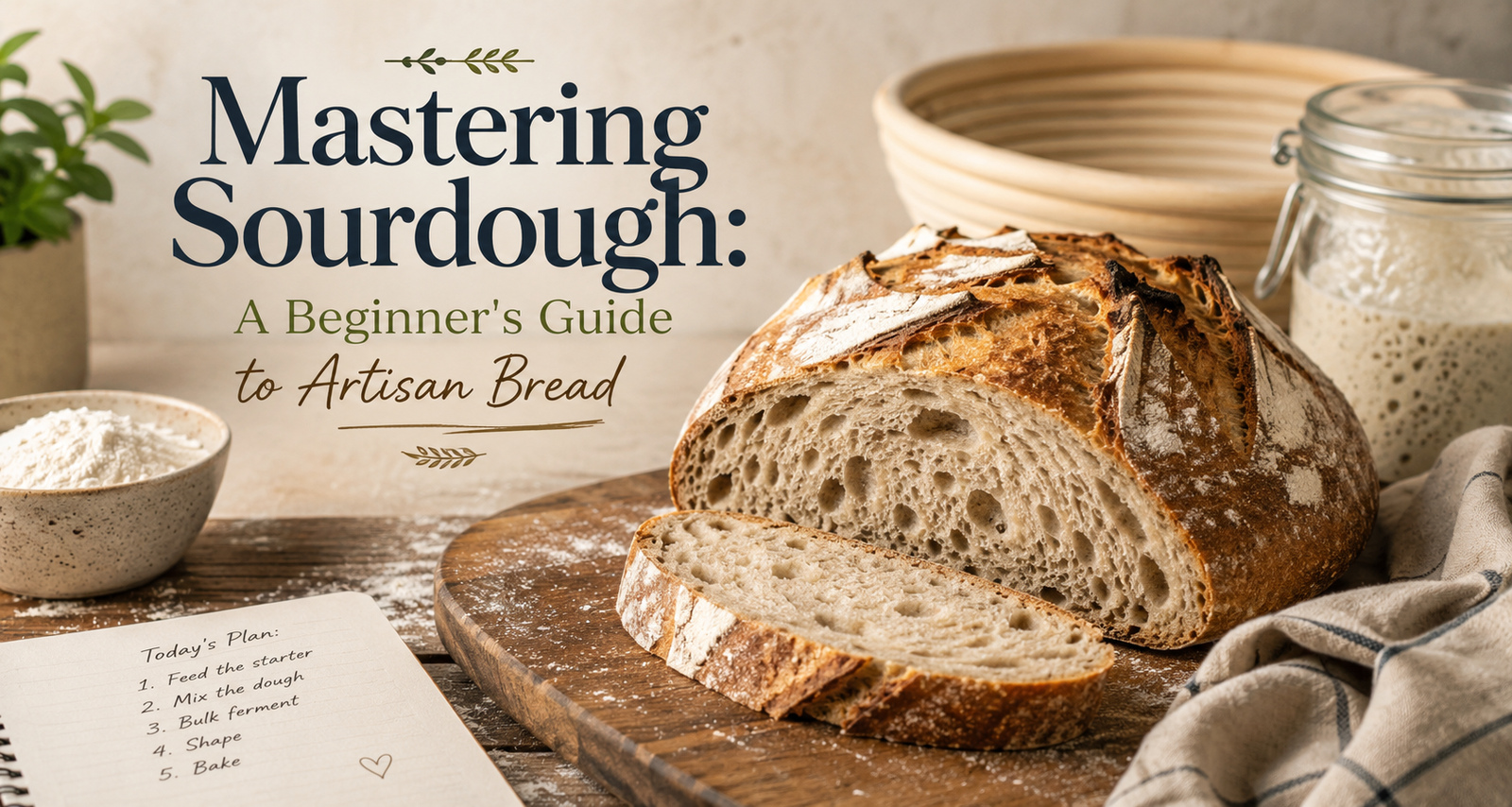
The Magic of Sourdough: Patience, Flour, and Water
Sourdough baking is a testament to natural fermentation, relying on a ‘starter’ – a living culture of wild yeasts and bacteria – to leaven the bread. This ancient method not only gives sourdough its characteristic tang but also contributes to its unique texture, digestibility, and extended shelf life. Forget commercial yeast; with sourdough, you’re harnessing the power of nature to create bread that’s truly alive. It’s a process that teaches patience and rewards with unparalleled flavor and satisfaction.
1. Creating Your Sourdough Starter: The Foundation
Your sourdough starter is the heart of your bread. It’s a simple mixture of flour and water that, over several days, captures wild yeasts and bacteria from the environment. This living culture will be responsible for making your bread rise and giving it its distinctive flavor. The process involves daily feeding, where you discard a portion of the starter and replenish it with fresh flour and water, encouraging the microbial activity. You’ll notice bubbles, a pleasant sour smell, and an increase in volume as it becomes active and ready to bake with.
Tip: Use unbleached all-purpose or whole wheat flour for your starter, as they contain more nutrients for the microbes. Maintain a consistent feeding schedule and temperature (around 70-75°F or 21-24°C is ideal) to encourage robust activity. A healthy, active starter should double in size within 4-8 hours after feeding, smelling yeasty and slightly acidic.
2. Understanding Hydration: The Water-Flour Ratio
Hydration refers to the ratio of water to flour in your dough. Higher hydration (more water) generally leads to a more open, airy crumb, but can be trickier to handle. Lower hydration results in a denser crumb and a dough that’s easier to work with. The feel of the dough – its stickiness, elasticity, and how it holds its shape – is directly influenced by hydration. A well-hydrated dough will feel supple and extensible, stretching without tearing, while a dry dough will be stiff and resistant.
Tip: For beginners, start with a hydration level between 65% and 70%. This provides a good balance of manageability and an open crumb. As you gain experience, you can gradually increase hydration to achieve a more open, custardy interior. Pay attention to how the dough feels in your hands; it’s a tactile process.
3. Autolyse: Enhancing Dough Development
Autolyse is a simple yet powerful technique where you mix only flour and water and let it rest for 20-60 minutes before adding the starter and salt. This resting period allows the flour to fully hydrate, and enzymes naturally present in the flour begin to break down starches into sugars, which feed the yeast. It also kickstarts gluten development without any kneading, making the dough more extensible and easier to work with later. The dough will feel smoother and more pliable after an autolyse.
Tip: Don’t add salt during the autolyse, as it can inhibit enzyme activity. This step significantly reduces the amount of kneading required and helps achieve a more open crumb structure. It’s a moment of quiet transformation, preparing the dough for its journey.
4. Bulk Fermentation (First Rise): Building Strength and Flavor
Bulk fermentation, or the first rise, is the longest and most crucial stage of sourdough development. During this period, the starter ferments the dough, producing gases that create air pockets and developing complex flavors. It’s not just about the dough doubling in size; it’s about building strength through a series of folds. The dough will become noticeably gassier, softer, and more elastic, with a subtle, pleasant tang developing.
Tip: Monitor your dough, not the clock. Factors like ambient temperature and starter activity will influence the bulk fermentation time. Look for visual cues: the dough should increase in volume by 30-50%, feel airy, and show small bubbles on the surface. Perform a series of ‘stretch and folds’ every 30-60 minutes during this phase to build gluten strength.
5. Shaping: Creating Structure and Tension
Proper shaping is essential for a well-structured loaf that holds its form during baking and achieves a good oven spring. The goal is to create surface tension, which helps the bread rise upwards rather than spreading outwards. Different shapes (boule, batard) require specific techniques, but the principle remains the same: gently degas the dough, then fold and tuck it to create a taut skin. The dough should feel firm and resilient after shaping, ready for its final proof.
Tip: Work on a lightly floured surface to prevent sticking, but avoid using too much flour, which can inhibit the dough from sealing. Practice makes perfect; watch videos and feel how the dough responds to your hands. A well-shaped loaf will have a beautiful, even crust and a consistent crumb structure.
6. Cold Proofing (Retardation): Deepening Flavor and Manageability
Cold proofing, or retarding the dough in the refrigerator, is a game-changer for sourdough. This slow, cold fermentation significantly deepens the flavor, allowing complex acids to develop, resulting in a more pronounced tang. It also makes the dough much easier to handle, as the cold slows down yeast activity, giving you more control over the final proof. The dough will firm up, making scoring easier and contributing to a better oven spring. The aroma after a long cold proof is distinctly more complex and inviting.
Tip: Proof your shaped dough in a floured banneton (proofing basket) or a bowl lined with a floured cloth. Cover it tightly to prevent a skin from forming. Cold proofing can last anywhere from 8 to 24 hours, or even longer, depending on your schedule and desired flavor development. This step is crucial for both flavor and convenience.
7. Scoring: Guiding the Oven Spring
Scoring, or slashing the surface of your dough just before baking, isn’t just for aesthetics; it serves a vital purpose. It allows the bread to expand in a controlled manner during oven spring, preventing uncontrolled tearing and ensuring a beautiful, even rise. A well-placed score guides the steam and gases trapped inside the dough, creating an ear (a flap of crust) and contributing to an open crumb. The sound of the blade gliding through the taut dough is a satisfying prelude to baking.
Tip: Use a very sharp razor blade (lame) or a sharp knife. Make quick, confident cuts about 1/4 to 1/2 inch deep. Experiment with different patterns – a single long slash, a cross, or intricate designs – to find what you like best. The goal is to create a path for the dough to expand, resulting in a visually stunning and perfectly risen loaf.
8. Baking with Steam: Achieving a Crispy Crust
Steam is crucial in the initial stages of baking sourdough. It keeps the surface of the dough moist, allowing it to expand fully before the crust sets. This results in a thinner, crispier crust and a better oven spring. Without steam, the crust would set too quickly, restricting expansion and leading to a denser loaf. The crackling sound of a perfectly baked, steamy crust is pure baking bliss, promising a delightful texture within.
Tip: Bake your sourdough in a Dutch oven or a covered pot for the first 20-25 minutes. The lid traps the steam released by the dough. Alternatively, you can place a tray of hot water at the bottom of your oven. Remove the lid or water tray for the remaining baking time to allow the crust to brown and crisp up beautifully.
9. Cooling: The Final, Crucial Step
After the glorious moment of pulling your golden-brown loaf from the oven, the hardest part is waiting. Cooling bread completely on a wire rack is absolutely essential. During this time, the internal structure of the bread sets, and moisture redistributes evenly throughout the crumb. Cutting into a hot loaf will result in a gummy, dense texture, as the starches haven’t fully gelatinized. The anticipation of that first slice, with its complex aroma and satisfying crunch, is part of the sourdough experience.
Tip: Resist the urge to cut into your sourdough for at least 1-2 hours, or even longer for larger loaves. The bread continues to cook and develop flavor as it cools. A properly cooled loaf will have a superior texture, a more pronounced flavor, and will slice cleanly, revealing its beautiful, open crumb.
10. Embracing Imperfection and Learning
Sourdough baking is a journey of continuous learning. Your first loaf might not be perfect, and that’s okay! Each bake offers valuable insights into your starter, your dough, and your oven. Embrace the process, learn from your mistakes, and celebrate every small victory. The beauty of sourdough lies in its organic nature and the unique character of each loaf. The joy of creating something so fundamental and delicious from scratch is incredibly rewarding, regardless of minor imperfections.
Tip: Keep a baking journal to note down your ingredients, timings, temperatures, and observations. This will help you identify what works and what doesn’t. Don’t be afraid to experiment with different flours, hydration levels, and techniques. The more you bake, the more intuitive the process will become, and the more confident you’ll feel.
Conclusion: Your Sourdough Journey Begins Now
Mastering sourdough bread is a deeply satisfying culinary endeavor. It connects you to an ancient tradition and allows you to create truly exceptional bread with just flour, water, and salt. By understanding your starter, managing hydration, and practicing each step with patience and attention, you’ll soon be pulling beautiful, tangy, and incredibly flavorful loaves from your oven. Embrace the process, enjoy the journey, and savor the unparalleled taste of your homemade artisan sourdough. Happy baking!
FAQ: Sourdough Baking for Beginners
Q: How often should I feed my sourdough starter?
A: If kept at room temperature, feed your starter every 12-24 hours. If stored in the refrigerator, you can feed it once a week. Always bring it to room temperature and feed it a few times before baking to ensure it’s active and strong.
Q: What if my sourdough starter isn’t active?
R: Several factors can affect starter activity: temperature (it prefers warmth), type of flour (unbleached is best), and consistency of feeding. Try feeding it more frequently, moving it to a warmer spot, or using a different flour. Patience is key; it can take time to become robust.
Q: Can I use sourdough starter directly from the fridge?
R: It’s generally recommended to take your starter out of the fridge and feed it at least once, preferably twice, at room temperature before using it for baking. This ensures it is active and strong enough to properly leaven your bread, contributing to a better rise and flavor development.